

Audio By Carbonatix
Chief Executive Officer of Ghana Athletics (GA), Bawa Fuseini, says Ghana has failed to complement the GA’s work by ensuring that athletes it sends abroad are able to transition from the collegiate system to the professional system.
In the past 10 years, Ghana has sent about 100 athletes to study and train in US colleges, however; only two athletes have since managed to secure contracts to become professional athletes.
According to Bawa Fusieni, the blame falls at the doorstep of the government for failing to provide a sustainable financial support system for student athletes to transition smoothly into professional athletics.
“In the Ghana situation, our athletes after the schooling, is the state willing to support them to transit from the student athlete to the professional athlete?” he quizzed on JoyNews’ PM Express.
Citing other countries’ programmes for athletes, he noted that it would be beneficial for the country to provide some form of financial support for athletes after they leave the collegiate system especially taking into consideration the cost of sustaining their fitness for competitions.
“When you go to Australia and UK and Canada, they have a financial [support] that they give to the athletes after each year’s performance. When you finish the world championship or when you finish an Olympic games those who had got to finals, or those who got medals they’ve got [an amount] of money that they’ll give them to the next Olympic games, those who got the finals they’ve got a certain amount that they’re going to give them to the next Olympic games, and those who have potential, they’re also being supported by the state,” he said.
Bawa Fuseini explained that the reason why athletes who perform extraordinarily well in the collegiate athletics programmes are unable to perform just as well in the non-collegiate athletics programmes is largely due to the fact that the state does not support them to train ahead of those competitions.
“The problem that we have in Ghana is that when they go to the school, the school prepares them to pick around May or first week in June and we can’t blame them for that because the schools are paying for them to come and run for them.
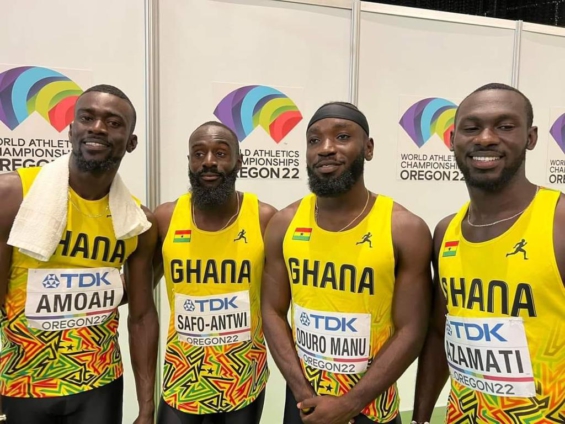
“The schools are not preparing them to pick in August or at the end of July. That’s why Azamati always has that time between April and May,” he said.
“It’s left within Ghana also to have resources to prepare them to also pick after July or even in August,” he suggested.
Latest Stories
-
Conflicts among care providers linked to maternal, neonatal deaths – Expert
59 minutes -
GIS marks 10th TIME conference, champions improved teaching practices
1 hour -
BRICS Or Balance? What Ghana’s bid really means
2 hours -
GPRTU wants full TRAFFITECH-GH implementation to start in 2027
2 hours -
Mahama announces plans to import electric wheelchairs for PWDs
2 hours -
KGL U17 Colts 2026: Western beat Prempeh Elite Academy to set up final final with Greater Accra Region
2 hours -
Late Solanke strike salvages 10-man Spurs draw at Man United
2 hours -
Gender Ministry to monitor welfare of Nana Akua Addo’s children amid domestic violence case
3 hours -
Benedict Okyere Yeboah: Ghana’s football problem goes beyond sacking a coach
3 hours -
GPL 2026/27: Darkwah Wiafe’s winner sees All Blacks beat Kotoko
3 hours -
ITF World Tour : Patel Wins Boys’ Singles Final at J100 Accra
3 hours -
Ghana must pursue BRICS partnership if it brings economic benefits – Kpebu
3 hours -
Success and Wright Claims J100 Accra Girls’ Doubles Championship
3 hours -
ITF J100: America’s Wright wins J100 Accra Girls’ Singles Title
3 hours -
Expedition hopes to find aviator Amelia Earhart’s plane on remote island
3 hours