

Audio By Carbonatix
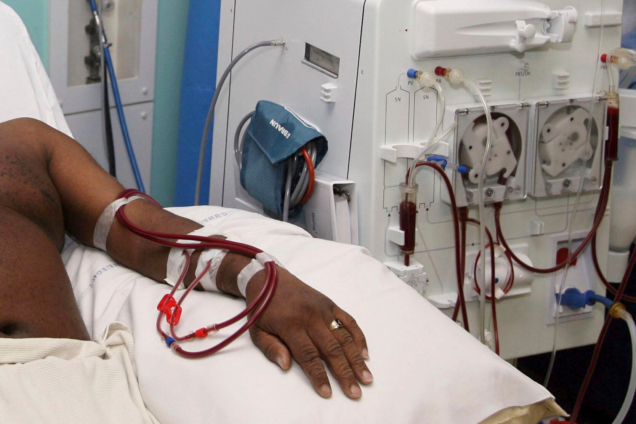
Over 90% of Ghanaian kidney failure patients who desperately need dialysis are being denied access to this life-saving treatment. This is according to a yet-to-be-published study titled "50 years of hemodialysis in Ghana - current status, utilisation, and cost of dialysis services."
This study authored by Elliot Koranteng Tannor and his dedicated team, has unveiled statistics that expose the harsh reality of the situation.
The report reveals alarming figures. In Ghana, the overall dialysis prevalence is just 38.8 patients per million population. To put it simply, only 38.8 out of every one million Ghanaians are receiving dialysis treatment. This prevalence rate falls far below not just the African average (79 per million) but also the global average (296 per million).
In fact, Ghana's rate is even lower than the average for other low and middle-income countries, standing at just 68 per million. These numbers paint a bleak picture, indicating that many Ghanaian patients in dire need of dialysis are unable to access this critical treatment.
Global estimates suggest that Ghana should have around 15,400 patients requiring dialysis. However, the current number of patients receiving dialysis is a mere 1195. This represents a mere 7.8% of the estimated demand for this life-saving treatment. The rest, a staggering over 90%, are left grappling with a lack of access to the care they need to survive.
Dialysis centres, though desperately needed, are grappling with limited capacity. The median number of patients per centre is just 20. However, despite these constraints, most centres are operating at or even over maximum capacity to meet the overwhelming demand.
The quality of dialysis care in Ghana is also under threat. A significant factor affecting quality is the limited nephrology workforce. Ghana has only 0.44 nephrologists per million population, well below the global average for low and middle-income countries (1.6 per million).
The shortage of nephrologists directly impacts the quality of care, with 57.5% of dialysis centres in Ghana lacking a resident or visiting nephrologist. Without specialised kidney care doctors, it is challenging to adequately monitor patients and provide appropriate treatment.
Adding to the crisis is the exorbitant cost of dialysis treatment in Ghana. The mean cost per dialysis session is a daunting $53.9. While public centres offer a glimmer of hope with a lower cost of $48.2 per session, private facilities charge $56.7 on average, approximately 18% more.
For the average Ghanaian, where the monthly minimum wage hovers around a meagre $55.70, these costs represent a staggering financial burden. The National Health Insurance Scheme, designed to provide a safety net, does not cover dialysis costs, leaving most patients to pay fully out-of-pocket.
Latest Stories
-
GH¢70k is no ordinary gift, it raises serious ethical questions – Edem Senanu
6 minutes -
Accra-Kumasi Expressway will be Ghana’s biggest infrastructure project – Kwakye Ofosu
20 minutes -
Cape Coast pulses with colour, sound ahead of Fetu Afahye
21 minutes -
Nigerians die after inhaling toxic fumes during alleged pipeline theft, community group says
22 minutes -
CSSPS placement results to be released tonight at 10:00 pm
22 minutes -
Accra-Kumasi Expressway to be fully funded locally – Government
24 minutes -
US diesel prices hit an all-time-high
26 minutes -
Horticulture Expo: Gov’t targets stronger agric value chain to boost horticulture exports
29 minutes -
Reckless driving incidents fall by 38% across Africa – Yango report
30 minutes -
It is ‘FAKE’ – Patricia Appiagyei reacts to memo alleging rejection of GH¢70,000 money
32 minutes -
ICE agent charged with lying about shooting Venezuelan man during crackdown
33 minutes -
Police arrest landlord’s wife for allegedly biting tenant’s ear during a fight
37 minutes -
US diesel prices hit a record high, pushing up transportation costs for a long list of goods
39 minutes -
300 entrepreneurs in Bono East battle for MTN-Innohub SME Support as programme enters 4th year
53 minutes -
Lawyer sues AG, GRA boss over passenger baggage exemption rules
54 minutes