

Audio By Carbonatix
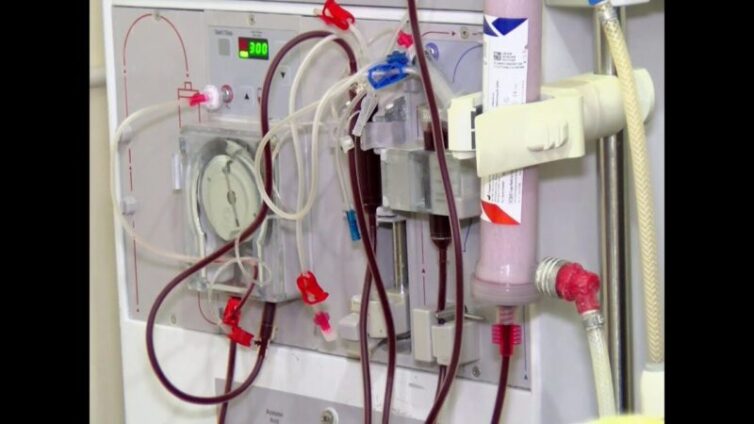
The Chief Executive Officer of the National Health Insurance Authority (NHIA), Dr Dacosta Aboagye, has announced that the government's free dialysis services will be available in 40 health facilities across the country from December 1, 2024.
The NHIA recently added dialysis services to its benefit package, and the policy is set to begin on December 1. This initiative aims to provide relief to many Ghanaians who cannot afford the cost of dialysis.
Currently, the cost of dialysis in the country ranges between GHC300 and GHC1,000, and available data suggests that between 4 million and 5.2 million citizens have some form of renal function impairment.
According to Dr Aboagye, patients will be able to access the service in 40 pilot health facilities, including private hospitals.
“We have currently listed about 40 of these centres that our patients would have to go to,” he said.
He explained that on Tuesday, November 26, the NHIA will engage the heads of these facilities to discuss how they will implement the service for patients.
Speaking on Joy News’ AM Show on Monday, November 25, Dr Aboagye further emphasised that the programme is sustainable, as the Authority has the necessary funds to implement it.
He also stated that a change of government will not affect the free dialysis treatment, as the service has already been incorporated into the NHIA's benefits package and is backed by the constitution.
Vice President Dr Mahamudu Bawumia, who is seeking to become the substantive president, has promised to provide free dialysis treatment to patients.
He earlier announced that the NHIA would begin the programme on December 1. According to him, the new free dialysis policy reflects his government’s commitment to improving the well-being of citizens suffering from renal diseases.
The pilot programme was launched earlier this year for patients over 60 and under 18 years of age.
Meanwhile, John Mahama of the NDC, who is seeking re-election, has promised to establish modern dialysis centres in regions that do not currently have one. The former president stated that the decentralisation of these centres would improve access to treatment.
Available data indicates that approximately 2,000 people are currently receiving dialysis in the country.
These individuals often seek alternative forms of treatment and access renal care only when the situation becomes acute. This negatively impacts their quality of life and life expectancy.
Latest Stories
-
NADMO mobilises over 1,000 mattresses as relief efforts continue for Hohoe flood victims
11 seconds -
President Mahama courts diaspora investment, highlights Ghana’s economic and energy gains at UNGA – Town Hall
47 seconds -
Hohoe floods: Volta Regional Minister assures affected residents of government support
7 minutes -
Ablakwa assures Ghanaians in New York of stronger consular support and recognition of diaspora contributions
11 minutes -
Gender Ministry prepares officers to monitor LEAP payments nationwide
15 minutes -
AMA reminds drivers of yellow-plated vehicles to obtain commercial driver’s licences from Assembly
16 minutes -
My focus is victory in 2028, those with Agenda 2032 can wait — John Boadu
38 minutes -
AK24 Entertainment wins Event Promoter of the Year at Ghana Entertainment Awards USA 2026
41 minutes -
KNUST, UNCDF host EU Ambassador to advance EU Pact for skills development initiative agenda
41 minutes -
Teachers’ strike: School in Wa turns ghost town; pupils forced onto ‘virtual holiday’
44 minutes -
Gov’t should not see bipartisan probe into 3.9-tonne cocaine haul as attack – Akuapem North MP
56 minutes -
The foundation of every boy’s upbringing is important – Kobby Kyei
58 minutes -
Middle East conflict pushed Ghana fuel prices higher in first half of 2026 – COMAC
1 hour -
President Mahama puts mining firms on notice over 2030 raw mineral ore export ban
1 hour -
Ghana’s fuel consumption rises 12.24% to 4.06 billion litres in first half of 2026
1 hour