

Audio By Carbonatix
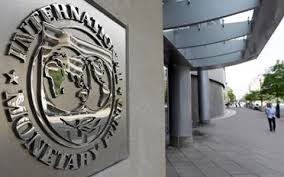
There is growing support to generally exclude the short-term debt from the restructuring perimeter, a Progress Report by the International Monetary Fund has revealed.
This means Treasury bills will not be affected by any debt restructuring despite the rising interest rates.
The Fund at a Global Sovereign Debt Roundtable in the ongoing spring meetings in Morocco said the exclusion of short-term debt is a common practice under Paris Club treatments and an explicit feature of the Common Framework.
“It is therefore important for restructuring countries as it helps maintain access to trade finance.
In recent and ongoing restructuring cases, including outside the Common Framework, the Fund, pointed out that the practice has similarly excluded short-term debt from restructuring perimeters”.
On the treatment of State Owned Enterprise debt, the Fund added that some participants suggested the exclusion of government-guaranteed debt of financially viable SOEs from the restructuring perimeter. Others underlined that, typically for low-income countries, the joint IMF-World Bank Debt Sustainability (DSA) Analyses include this debt in the DSA perimeter, with limited exceptions.
They recalled that the creditors and the restructuring country can always agree on a restructuring perimeter that differs from the DSA perimeter.
However, in doing so, the discussion would likely raise sensitive issues of burden sharing as the exclusion of some debt would require more effort on the debt remaining in the restructuring perimeter.
Restructuring Parameters
The IMF said cutoff dates are key for the restructuring process but also an important parameter to protect new financing to the restructuring country, including emergency support.
“As such, having early clarity on the cutoff date is critical. That said, flexibility seems warranted to account for case-specific circumstances”, it stressed.
“In practice, in recent restructuring cases, cutoff dates have been decided case-by-case by creditors, generally not later than the date of the staff-level agreement (SLA) reached between the authorities and IMF staff on an IMF-supported program, which protects new financing provided after the SLA”, it added.
In practice, the Common Framework includes three parameters to assess enforcing comparability of treatment (CoT), which build on Paris Club practices the changes in nominal debt service over the IMF program period; where applicable, the debt reduction in net present value terms; and the extension of the duration of the treated claims.
However, the Common Framework doesn’t specify which formula should be used to assess “the debt reduction in net present value terms”, nor the discount rate to be used to calculate the Net Present Value.
Latest Stories
-
Public money belongs to the people, not government officials – Ato Forson
2 minutes -
Power, politics and the battle for electoral credibility: Is Ghana’s electoral commission truly independent?
4 minutes -
Sports Fund Administrator urges boxing fraternity to pursue partnerships beyond government funding
7 minutes -
Total number of jobs advertised increased 32% year-on-year to 3,578 in 7 months of 2026
30 minutes -
KNUST to receive 2,000 additional laptops for One Million Coders Programme
33 minutes -
President Mahama urges churches to provide safe spaces for children and vulnerable people
38 minutes -
George Dadzie Junior highly tipped in NDC regional secretary race due to grassroots experience
46 minutes -
Passenger arrivals at airport improved by 23% in first 7 months of 2026
48 minutes -
Aklerh returns to reggae roots with new single ‘Wo Dor’
50 minutes -
Stacy Mense’s ‘W’ahyira Me’ gains airplay on radio, digital platforms
59 minutes -
Economic activities mixed in 7 months of 2026; Cement sales decline by 10%
1 hour -
GFA and Sports Ministry must not rush Black Stars head coach appointment – Nana Fitz
1 hour -
Nkrumah Showboy: Chief Moomen’s play to explore Ghana’s first President’s early years
1 hour -
SEC to develop Social Bond Guidelines; over half of listed firms report on ESG indicators
2 hours -
Insurance firms have up till January 2027 to incorporate ESG in financial reporting
2 hours