

Audio By Carbonatix
Renowned Ghanaian businessman Anthony Oteng-Gyasi believes that the International Monetary Fund (IMF) and World Bank can guide Ghana and other African countries from poverty to economic prosperity.
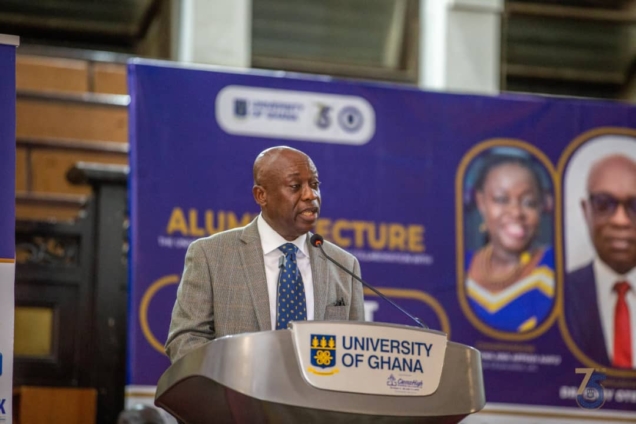
During the 2023 Alumni Lecture at the University of Ghana, Oteng-Gyasi highlighted the success of China and other Asian Tigers, asserting that these economies flourished under the guidance of the two international financial institutions.
Oteng-Gyasi debunked the common belief in Ghana that “no country has developed under the watch of IMF and World Bank.”
He argued that this notion is clearly untrue. He emphasized that while many countries diligently adhere to recommendations of international institutions, Ghana and other African nations, influenced by pride and indiscipline, approach such advice with less commitment, resulting in limited economic growth.
The Managing Director of Tropical Cable and Conductor Limited credited the IMF and World Bank with playing a role in developing the Asian Tigers. He acknowledged the valuable policy advice from these institutions, ranging from the free zones concept to technology centers and tax policy guidance, which, if embraced, could contribute significantly to national development.
Oteng-Gyasi's thought-provoking lecture covered topics such as economic development, policy formulations, public sector procurement, rent-seeking, and other intellectually stimulating subjects. He attributed Ghana’s historical underperformance in manufacturing to the absence of a pragmatic manufacturing promotion policy, the lack of established value chains, and the allure of easier profit through importation.
The Chairman of the Board of the Ghana Revenue Authority highlighted that the International Finance Corporation faced challenges in identifying viable manufacturing projects in Ghana. He noted that a significant number of the nation’s top talents were more inclined to pursue lucrative public contracts for imported goods and services, rather than investing in and developing manufacturing industries.
Oteng-Gyasi emphasized that the lax enforcement of laws, particularly regarding import duty regimes and local content rules, has favored traders and importers over local producers.
This imbalance, he argued, has transformed the nation into one dominated by traders, resulting in the loss of quality manufacturing jobs that traditionally supported the middle class. The situation influences political strategies focused on appeasing the majority through low prices and free social programs to secure and retain political power.
Latest Stories
-
ECG announces planned maintenance outages in parts of Ashanti Region
6 minutes -
Sexual harassment has no place in educational institutions – Education Ministry
43 minutes -
The growing culture of vacation classes in Ghana: Should students rest or continue schoolwork?
1 hour -
E.P. Church secures radio frequency, prepares to launch Bremen Radio
2 hours -
Two dead and hundreds evacuated as twin fires break out on Greek island
2 hours -
EPCG clears over GH¢11.7m in debt as outgoing moderator calls for tighter controls on borrowing
2 hours -
Mövenpick Ambassador Hotel Accra marks 15 years of premium hospitality
2 hours -
T-bills auction: Government exceeds target by 88%, interest rates tumble
3 hours -
Western North: Confusion erupts over NPP chairmanship election results
3 hours -
Bawumia congratulates newly elected NPP regional executives
3 hours -
Bawumia urges unity after NPP regional elections ahead of 2028
4 hours -
Russia says at least seven killed in largest Ukrainian attack of 2026
4 hours -
Ghana and Netherlands sign pact to combat illicit drugs and drug markets
4 hours -
Akandoh warns Boards against interfering in day-to-day management of health institutions
4 hours -
Rev. Prof. Frederick Amevenku elected 15th Moderator of E.P. Church Ghana
4 hours