

Audio By Carbonatix
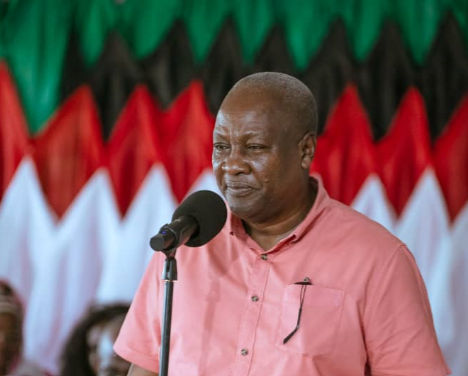
The Chamber for Local Governance (ChaLoG) has thrown its weight behind the flagbearer of the National Democratic Congress (NDC), John Dramani Mahama’s 24-hour economy policy.
According to the Association, the policy has the potential to increase the revenue generation drive and subsequently improve service delivery in the public service.
In a press release signed by the President, Dr Richard Fiadomor and other executives, the group said “ChaLoG wishes to endorse the 24-hour Economy Policy in its entirety as well as agree totally with the Trades Union Congress (TUC’s) description of the Policy as a GAME CHANGER.”
The release emphasised that the policy will transform the local governance system of the country and “give true meaning to the concept of decentralisation and citizens participation.”
On the back of this, the November 22 release highlighted key areas ChaLoG believes would be positively impacted if the former president's 24-hour economy is actualised.
“It will improve local economic development and lead to an automatic increase in revenues shared with Metropolitan, Municipal and District Assemblies through the District Assemblies Common Fund,” the statement added.
It continued that, "Most assemblies struggle to collect taxes like property rates because people are often not home during the day, this policy will enable assemblies to properly collect revenues and exercise development control even at night."
Finally, ChaLoG called on all well-meaning Ghanaians to endorse the policy because it is sound, pragmatic, and properly thought through.
Former President Mahama's 24-hour economy policy has been a topical issue since he mentioned it on his Build Ghana Tour.
Mr Mahama contends that this policy will address the pressing issue of Ghanaian youth embarking on perilous journeys across the Sahara and the Mediterranean in search of better opportunities in Europe.
However, the Vice President, Dr Mahamudu Bawumia asserted that Mr Mahama lacks an understanding of the policy he is promising to Ghanaians.
He highlighted that various sectors of the economy, such as healthcare, security services, and digital transactions, already operate 24 hours due to the digitalisation agenda he has championed since 2017.
Latest Stories
-
Nigeria set to launch National Digital Address System 9 years after Ghana showed the way
3 minutes -
Policy rate decision takes time to reflect in lower lending rates – BoG
13 minutes -
Western Regional Minister applauds Karpowership’s role in Ghana’s power sector
38 minutes -
Livestream: Road safety crises: Where are we getting it wrong?
40 minutes -
Enterprise Life celebrates 25 years of protecting families and building trust
48 minutes -
ICC London rules in favor of Ghana against Tullow over $400m tax charge
58 minutes -
We are disappointed in ICC’s ruling over our corporate income tax assessment in Ghana – Tullow Oil
1 hour -
Cost of building inflation for August 2026 increases to 4.6% – GSS
1 hour -
Today’s front pages: Wednesday, September 30, 2026
2 hours -
Bawumia highlights agricultural, compulsory insurance reforms in IBAG engagement
2 hours -
Ghana will secure Tullow tax revenues while protecting Jubilee, TEN investments – Ato Forson
2 hours -
Ghana wins $393m Tullow tax arbitration as tribunal upholds GRA assessment
2 hours -
Gender Minister assures women’s group of action on Affirmative Action, Development Bank
3 hours -
Over 2,000 teachers in Dormaa comply with strike – GNAT Secretary
3 hours -
Food Buffer Stock seeks stronger liquidity buffer despite record profit
3 hours