

Audio By Carbonatix
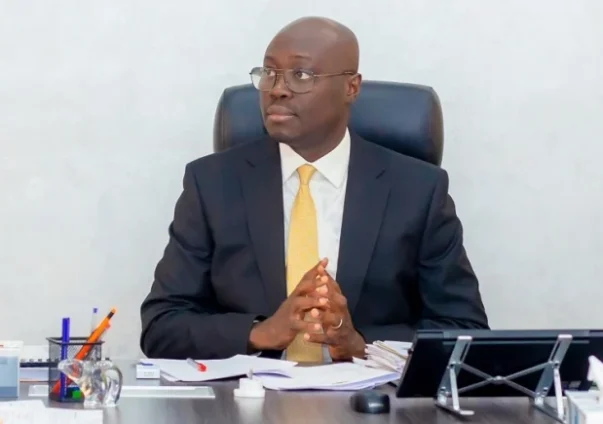
The Minister for Finance, Dr Cassiel Ato Forson, has officially announced a sweeping crackdown on the Ghana Cocoa Board (COCOBOD), ordering a simultaneous forensic audit and criminal investigation into the institution's operations over the past eight years.
Addressing a high-stakes press conference in Accra today, Thursday, 12th February 2026, Dr Forson revealed that Cabinet has sanctioned the Attorney-General to spearhead the probe to uncover the root causes of the board’s crippling GH¢32.9 billion debt stock.
The Finance Minister’s directive comes amid a storm in the cocoa sector, characterised by a liquidity crunch that has left over 50,000 metric tonnes of cocoa beans stranded at ports and Licensed Buying Companies (LBCs) owing banks more than GH¢10 billion.
A legacy of 'uncontrolled’ spending
A central focus of the investigation will be what the Minister described as "wasteful and uncontrolled expenditure practices" that have persisted since 2017.
Dr Forson highlighted several financial "black holes" that have allegedly bled the board dry, including:
The Jute Sack Scandal: Reports of 80,000 bales of jute sacks valued at $48 million being ordered in 2024 despite a pre-existing stockpile of 150,000 bales at the ports.
Cocoa Road Contracts: Inherited contracts for cocoa roads totalling GH¢26 billion, with over GH¢21 billion incurred without budgetary allocations between 2018 and 2021.
Rollover Contract Losses: The servicing of "legacy contracts" for 333,767 tonnes sold at $2,600 per tonne—a price far below current farmgate rates, leading to massive losses for the state on every tonne delivered.
“Cabinet has directed the Ministry of Finance to initiate immediate reforms at COCOBOD to streamline operations and cap costs. Wasteful and uncontrolled expenditure practices must be curtailed immediately,” Dr Forson declared, reaffirming that accountability is no longer optional.
Immediate reforms and expenditure caps
As part of the sector reset strategy, the Ministry of Finance is moving to implement a new "domestic funding model" to end Ghana's 30-year reliance on expensive syndicated loans from international banks.
The 2024/2025 season saw a catastrophic breakdown of this system after lenders lost confidence in COCOBOD’s ability to honour its supply contracts.
The government’s emergency reform package includes:
Administrative Spending Caps: A total prohibition on non-essential procurement, including high-end vehicle fleets.
LBC Liquidity Injection: Plans to address the $185 million owed to private buyers to ensure farmers are paid promptly.
Audit of 'Coco Rehab': A probe into the $350 million rehabilitation fund intended for 156,000 hectares, of which only 40,000 hectares were allegedly delivered.
The 'Too Expensive' Cocoa Problem
The crisis is further complicated by a global market downturn. While international prices have dropped to approximately $4,000 per tonne, Ghana’s internal production and logistics costs have ballooned to $6,300 per tonne.
This mismatch has left Ghanaian cocoa "uncompetitive," with international buyers increasingly sourcing from cheaper markets like Ecuador and Nigeria.
Farmer groups, represented by COCOSHE, have warned that the payment delays are forcing cocoa farmers to sell their lands to illegal miners (galamsey), a move that Dr Forson noted would be "national suicide" if not arrested immediately.
Latest Stories
-
Ghana ‘showing up differently’ on global stage – Joyce Bawah Mogtari
6 minutes -
Ghana’s tuna industry in crisis as 20 hook-and-line vessels collapse
45 minutes -
South Tongu MP launches apprenticeship programme for 159 young people
58 minutes -
The Pusiga connection behind Gertrude Atongi’s work in New York
1 hour -
Teachers took promotion exams in December to beat government clearance deadline – GNAT
1 hour -
NPA launches 2026 staff welfare week with focus on teamwork and employee wellbeing
1 hour -
Ghana, Saint Kitts and Nevis sign labour deal to strengthen protections for Ghanaian nurses
2 hours -
Delayed promotions put teachers’ retirement benefits at risk – GNAT
2 hours -
No ‘Bawumia candidates’ in NPP executive elections – Anthony Karbo
2 hours -
Over 3,000 displaced as flooding overwhelms Hohoe communities
2 hours -
Sunyani East NPP executives begin reconciliation drive ahead of 2028 polls
2 hours -
Agric Minister engages Ga Mantse on agriculture transformation agenda
2 hours -
Aayalolo expansion targets private car users, not trotro operators – Mahama Ayariga
2 hours -
KNUST, GMTF explore AI partnership to transform healthcare delivery
2 hours -
MTTD records 9,000 preventable crashes, over 900 deaths in eight months
2 hours