

Audio By Carbonatix
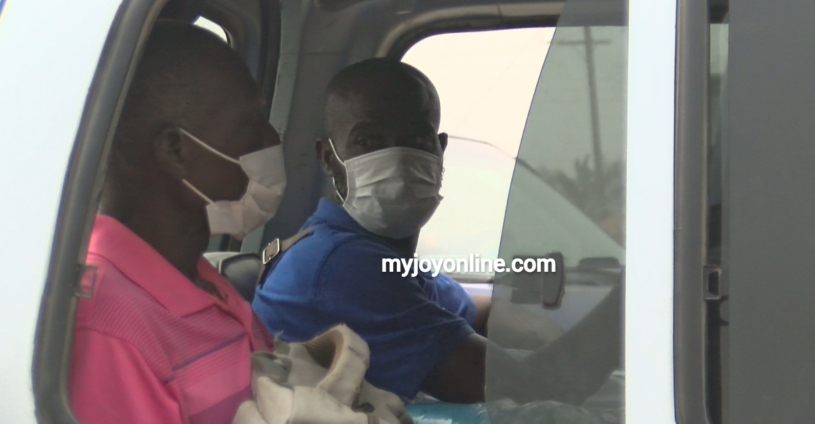
If you abandoned your masks, it’s time to grab them as Accra earns the unenviable title of one of the cities in the world with the worst air quality.
IQAir, an air quality monitoring centre with more than a dozen sensors around the country, has ranked Accra's air quality as the worst, surpassing Mumbai in India and Wuhan in China.
Researchers are warning that this year’s harmattan is about to get worse, with the dust season expected to peak in the coming days.
Analysts with Clean Air Fund, including Victoria Owusu Tawiah, expressed concern, stating that "during February, we reach the peak of the harmattan.
"Mostly, the dust levels and concentration are quite high in February. Getting to the latter parts of February, conditions are expected to improve, thereby improving air quality over Accra."
Joshua Asamoah, a Senior Meteorologist with the Ghana Meteorological Agency, emphasises the variability of seasons, noting that "when we compare this year to that of last year, we can see we are getting the peak somewhere around late January into February."
The World Health Organisation (WHO) underscores the severe impact of air pollution on health, especially PM2.5 (tiny particles in the air).
Annual average concentrations of PM2.5 should not exceed 5 μg/m3, yet Accra's current situation surpasses these limits. Ghana’s air quality predicament is significantly attributed to the ongoing harmattan season, exacerbating pollution levels.
As Accra braces for the intensifying harmattan, residents are urged to take immediate precautions. With experts advising on the need for face masks, especially for children, and the importance of indoor activities, the city is on high alert for the challenges posed by this year’s relentless harmattan.
Dr. Sandra Kwarteng Owusu, a Paediatric Pulmonologist and air pollution advocate, advises parents and caregivers to "keep the children indoors as much as possible.
"If they need to come outdoors, we encourage them to wear face masks."
She underscores the impact of the current humidity, stating, "A lot of children are coming down with respiratory tract sections.
"So we need to encourage caregivers and parents to hydrate children adequately, but we can wear the face mask."
This story was a collaboration with New Narratives. Funding was provided by the Clean Air Fund. The funder had no say in the content of the story.
Latest Stories
-
Amrahia Dairy Farms property owners petition Mahama over alleged demolition of properties
2 minutes -
Taxi rank executives arrested over alleged attempted murder
5 minutes -
More than 20 African countries fail WHO air pollution guideline in 2025 – AfriCAN 2026 Report
10 minutes -
PTA council demands technical review of 2026 BECE results
13 minutes -
Senegal, Cape Verde breathed unsafe air for more than 120 days in 2025 – AfriCAN 2026 Report
14 minutes -
AFCON 2027Q: Carlos Queiroz to ‘soon submit’ Black Stars squad
15 minutes -
KATH CEO praises Ghana Medical Trust Fund for its impact in just a year
15 minutes -
‘NPP should stop being hypocritical’ – Nukpenu challenges calls for GH¢49.7m evacuation procurement details
17 minutes -
Loans and advances increased by 39% to GH¢124.3bn in June 2026
20 minutes -
Private citizen sues Mahama over failure to replace Sophia Akuffo on Council of State
28 minutes -
Guinness Ghana DJ Awards 2026 opens public nominations
39 minutes -
Banking industry profit moderate to GH¢7.2bn in June 2026
46 minutes -
Evacuate to forestall any eventuality – GWL urges Weija residents ahead of spillage
47 minutes -
Gov’t repatriates Barosky from UK, offers psychosocial and financial support
47 minutes -
Jordan Ayew prioritised Europe over going to Saudi Arabia – Henry Asante Twum
53 minutes