


Audio By Carbonatix
In a bold move to reshape the energy sector and alleviate debt burdens while ensuring a steady power supply for industries, the government has initiated a series of measures, including quarterly tariff increments.
To align with the IMF’s revenue mobilization objectives, Ghana unveiled a comprehensive Medium-Term Revenue Strategy in September 2023.
This strategic framework focuses on crucial tax policies and revenue administration measures essential for achieving both Ghana's domestic goals and the IMF's program revenue objectives.
Watch video: JoyNews' Isaac Kofi Agyei explains why Government of Ghana is introducing a 15% VAT of electricity
Ghana has already taken significant strides towards enhancing revenue generation, implementing measures such as quarterly adjustments to electricity tariffs, raising the VAT rate from 12.5% to 15%, restructuring the E-levy, and eliminating discounts on customs benchmark values.
Looking ahead to 2024, the government plans to introduce additional measures, encompassing 12 tax reforms and the implementation of new tax mechanisms.
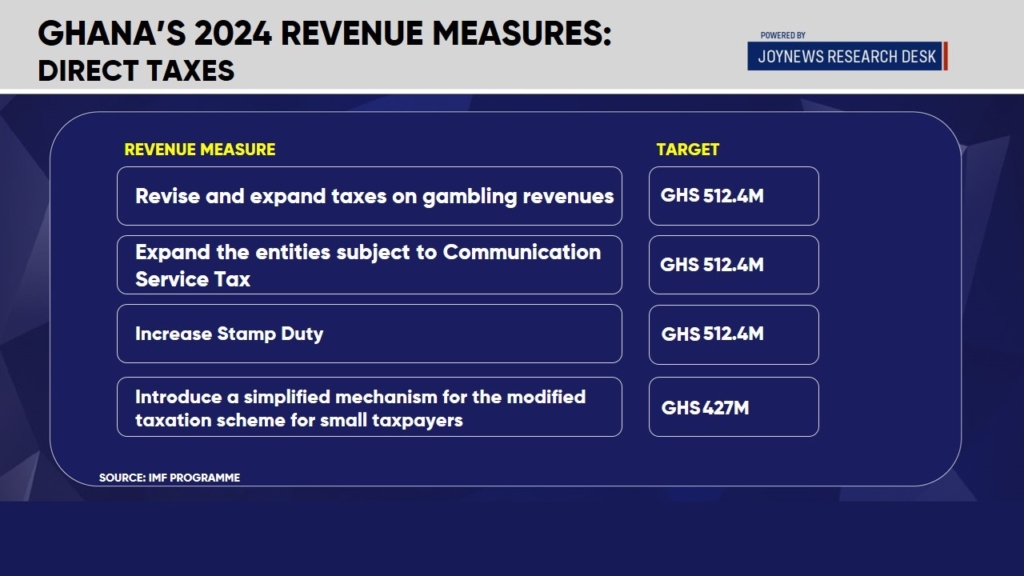
One of the pivotal strategies involves the removal of selected VAT exemptions, amounting to approximately GHS4.4 billion this year.
Also read: VAT on power consumption: From free electricity to taxing times
Additionally, there will be revisions to income-based taxes and a scrutiny of the headline rate of the Communication Services Tax (CST).
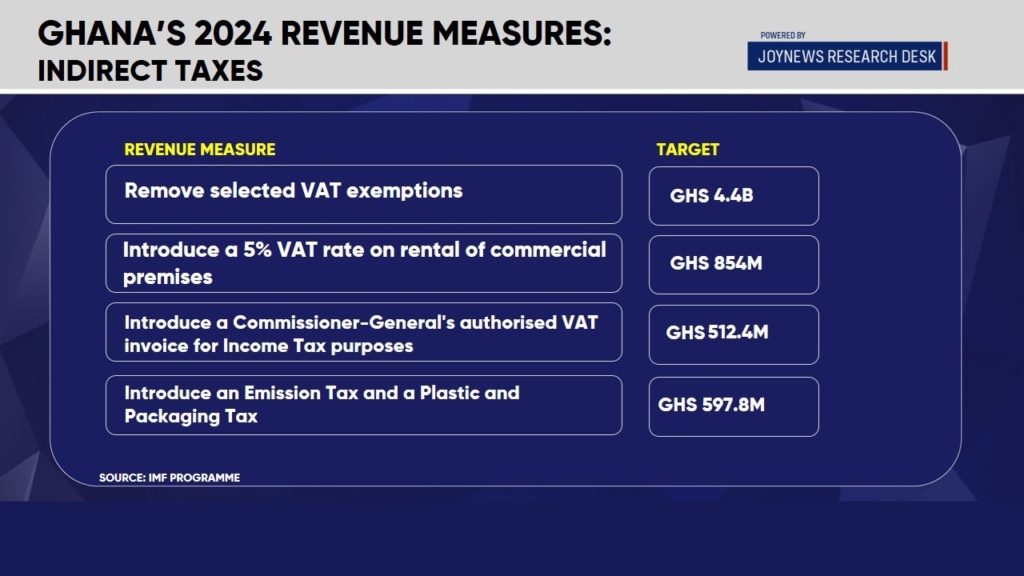
The Government of Ghana also aims to expand taxes on gambling revenues, heighten Stamp Duty, introduce a 5% VAT rate on the rental of commercial premises, and unveil new taxes, such as the Emission Tax and the Plastic and Packaging Tax.
Adding more, the government is set to strengthen the implementation of the Vehicle Income Tax (VIT) sticker mechanism and embark on the reform of corporate income tax by gradually phasing out tax holidays and exemptions.
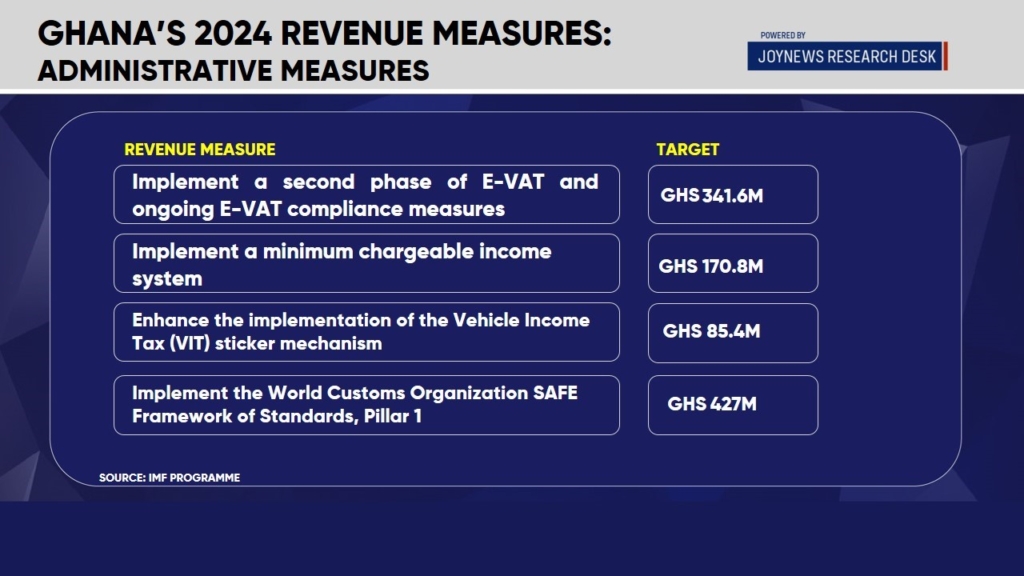
It is crucial to note that these measures are intrinsic to the government's independent revenue mobilization strategy and not dictated by the IMF.
As Ghana navigates these reforms, stakeholders and citizens alike will closely observe the impact on various sectors and the overall economic trajectory.
Latest Stories
-
No new denominations beyond GH¢200 under Heritage Series – BoG
6 minutes -
Police train 45 personnel ahead of Traffitech-GH rollout on October 1
9 minutes -
Asanko Gold expands agric support programme to 80 farmers in Ashanti Region
14 minutes -
DR Congo running short of health workers as Ebola outbreak intensifies, WHO says
16 minutes -
GBA condemns attempted arrest of Manhyia South MP at Accra High Court
26 minutes -
Richmond Amoateng Foundation drives youth development and community unity in Juaben
31 minutes -
AFCON 2027Q: ‘Why don’t we have VAR in Africa?’ – Queiroz reacts to controversial penalty
31 minutes -
Safe NCD care needs leadership, investment and patient involvement – PharmAccess
35 minutes -
Pope warns a ‘paradise of machines’ could undermine humanity as he opens France trip
36 minutes -
AFCON 2027Q: Hervé Renard declines to respond to Queiroz over controversial penalty
41 minutes -
Teacher unions declare nationwide strike over unpaid promotion arrears and delayed negotiations
1 hour -
Engage Now Africa and LDS church commission boreholes for five communities in Upper East
2 hours -
GPL 2026/27: Karela United bank on home form against Hearts of Oak
2 hours -
NPLs declined to 15.7% in August 2026
2 hours -
Existing Cedi notes to remain legal tender alongside Heritage Series – BoG
2 hours