

Audio By Carbonatix
The Dean of the University of Cape Coast (UCC) Business School, says, Dr Mohammed Amin Adam, the newly nominated Finance Minister can only continue with existing economic programmes.
Professor John Gatsi stated that with the time left for the current government to leave office, and the 2024 budget already approved, the new Minister-nominee could do little to transform the Ghanaian economy, which was faced with challenges.
Ghana is currently implementing a US$3 billion loan programme with the International Monetary Fund (IMF) to restore macroeconomic stability and debt sustainability and lay the foundation for a stronger and more inclusive growth.
“What you cannot do in seven years, you cannot do in 10 months, and even in the 10 months, we’re only going to see governance from now to June. From there, everyone will be actively involved in political campaigns,” Prof Gatsi said.
“He [Dr Amin Adam] has been involved in the preparation of the budget, and IMF discussions, so he’s not new to the Fund. The replacement is just a continuation, nothing will change,” the Economist said.
He explained that though the 2024 budget review presented an opportunity for some economic decisions to be made, “that will not bring any change – he [the new Minister] will only continue to drive the vehicle.”
“The reshuffle has come late; it’s not in response to the calls by Ghanaians nor the 98 Parliamentarians, but in response to the Party, therefore, meant for political gains,” he stated.
Prof Gatsi noted that such political decision had been made because some people “are tired and would not commit themselves to vigorous campaigning and resource mobilisation [in the 2024 elections].”
Therefore, the reshuffling, including that of the Ministry of Finance, was to pave way for new people, most of whom would be working hard and push financial resources in the campaigns to gain some favours later, he said.
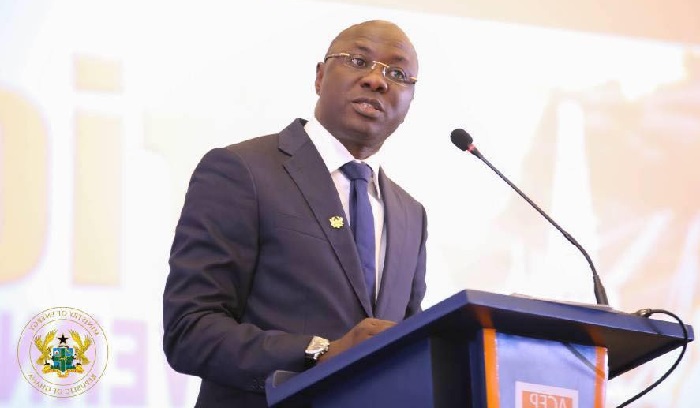
Dr Mohammed Amin Adam, Minister of State at the Finance Ministry, has been nominated as the Finance Minister designate, replacing Mr Ken Ofori-Atta, who has served in that capacity since 2017.
His appointment comes at a time that Ghana is implementing a US$3 billion loan programme with the International Monetary Fund (IMF) to revive the country’s challenging economy.
Post COVID-19 pandemic pushed Ghana’s economy into difficulties, with some people going to the extent of trekking long-distances to work, as inflationary pressures hit hard.
Recent figures from the Ghana Statistical Service and the first review of the IMF programme have shown some signs of recovery, nonetheless, it has been noted that the country ought to do more.
Latest Stories
-
Vendors promise quality, discounts at Joy FM Back-to-School Fair
2 minutes -
Ghana leather manufacturers demand lower tariffs, threaten demonstration over high costs
7 minutes -
Roads Minister threatens to terminate Techiman–Nkonsia–Wenchi road contract
18 minutes -
Beyond compliance: Industrial resilience as a strategic component of national security
22 minutes -
What if “I’m fine” isn’t fine?
42 minutes -
Nigerian music lawyer Akinyemi Ayinoluwa reveals factors driving Nigeria’s music success
53 minutes -
Boards’ dissolution: Mahama won’t tolerate indiscipline, poor performance – Secretary
1 hour -
Missing gospel musician Bernice Offei found
1 hour -
Chief Justice Baffoe-Bonnie explains why judges sit during Ghana’s legal vacation
1 hour -
‘Cases don’t go on leave’ – Chief Justice defends judges sitting during legal vacation
1 hour -
Woman charged with juror intimidation in Lindsay Clancy trial
2 hours -
Finance minister begins consultations with Trade Ministry on new economy programme
2 hours -
Ghana Credit Excellence Awards 2026 to honour banking and financial sector trailblazers
2 hours -
GCAA rejects GhATSEA allegations of unfair labour practices and intimidation
2 hours -
Revenue performance improves but below target, expenditure lines also below target – BoG
2 hours