

Audio By Carbonatix
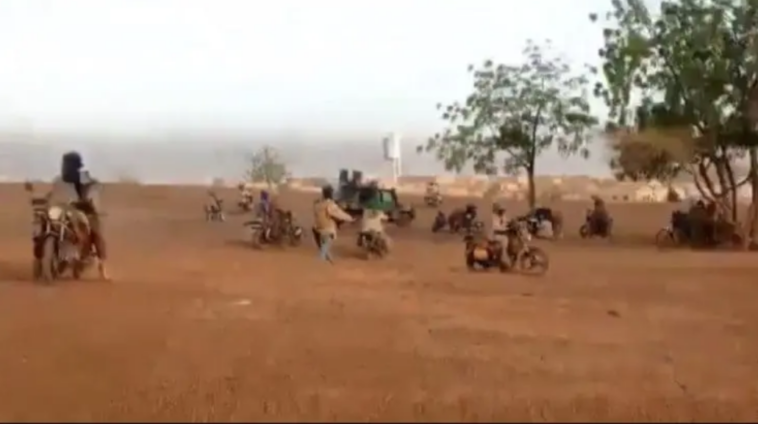
The Killing of Ghanaian Traders in Burkina Faso and What It Means for Our Security on 14 February 2026, eight Ghanaian tomato traders were killed in a terrorist attack in Titao, Burkina Faso.
What initially appeared to be another tragic episode in the Sahel’s ongoing insurgency has since revealed something more troubling: Ghana’s security is no longer confined to its territorial borders.
This was not random violence. It was a calculated attack on Ghanaian economic actors — civilians engaged in legitimate cross-border trade. And it forces us to confront a difficult truth: regional insecurity has become a direct national vulnerability.
According to Ghana’s Interior Minister, Mohammed Muntaka Mubarak, the attackers reportedly separated men from women before opening fire. The male traders were killed and burned alongside their truck. Reports from IMANI Africa further suggest that identification documents may have been checked prior to execution.
If accurate, this signals identity-based targeting. It means Ghanaian nationals were not merely in the wrong place at the wrong time — they were selected.
The perpetrators are believed to be linked to Sahel-based extremist groups such as Jama'at Nusrat al-Islam wal Muslimeen (JNIM) and Islamic State in the Greater Sahara (ISGS). These groups routinely target supply routes and commercial vehicles to assert territorial dominance and disrupt economic systems.
This is strategic violence. It is designed not only to kill but to intimidate, destabilize, and disrupt trade corridors that sustain regional economies.
President John Dramani Mahama directed the Ghana Armed Forces to evacuate the injured traders. The Ghana Air Force carried out a medical evacuation to the 37 Military Hospital in Accra.
The humanitarian response was prompt and commendable. Diplomatic channels were activated. Engagement with Burkinabè authorities followed.
But beyond emergency response lies a deeper issue: could this have been prevented?
If insurgent groups have the capacity to track and ambush traders along known commercial routes, then questions arise about early warning systems, intelligence coordination, and security advisories issued to Ghanaian traders operating in high-risk zones.
Prevention, not reaction, must define modern security policy.
The economic consequences were immediate. The Ghana National Tomato Traders and Transporters Association suspended tomato imports from Burkina Faso. The Ghana Union of Traders Association (GUTA) reported scarcity and sharp price increases across markets.
Transport operators refused to ply the dangerous route. Supply tightened. Prices rose.
This is how insecurity spreads, not just through fear, but through inflation.
Cross-border trade is not a peripheral activity. It is central to Ghana’s food supply chain and economic stability. When regional corridors become unsafe, domestic markets feel the shock almost immediately.
Investor confidence also suffers. Commerce thrives on predictability. Violence erodes it.
For years, Ghana has watched instability spread across Mali, Niger, and Burkina Faso. We have remained comparatively stable. But stability is not immunity.
The targeting of Ghanaian traders abroad demonstrates that threats are transnational. National borders are increasingly porous to ideologically motivated violence.
Compounding this challenge is Burkina Faso’s exit from the Economic Community of West African States (ECOWAS) framework, which complicates structured regional security cooperation. When multilateral mechanisms weaken, insurgent groups exploit the gaps.
The lesson is clear: regional instability must be treated as an extension of Ghana’s internal security environment. This tragedy demands strategic recalibration.
First, Ghana must enhance intelligence-led diplomacy. Embassies in high-risk countries should function as real-time security advisory hubs, not merely administrative outposts.
Second, structured security coordination with trade associations must be institutionalized. Traders operating in volatile corridors require pre-travel risk briefings and, where necessary, escorted convoys.
Third, Ghana must invest aggressively in domestic agricultural resilience. Expanding irrigation and boosting local tomato production would reduce dependence on supply chains running through conflict zones.
Fourth, bilateral security frameworks with neighbouring states must move beyond symbolic agreements and translate into operational border coordination.
Security today is economic, diplomatic, and strategic not merely military.
The killing of these innocent Ghanaian international traders in Burkina Faso is more than a tragic headline. It is a warning.
Regional insecurity is national insecurity. Trade corridors are strategic assets. Citizens operating abroad are extensions of the state’s economic presence.
Protecting them requires foresight, coordination, and political will.
If Ghana is to remain resilient in an increasingly unstable region, we must shift from reactive crisis management to proactive security architecture.
Because in today’s interconnected West Africa, what happens across the border does not stay across the border.
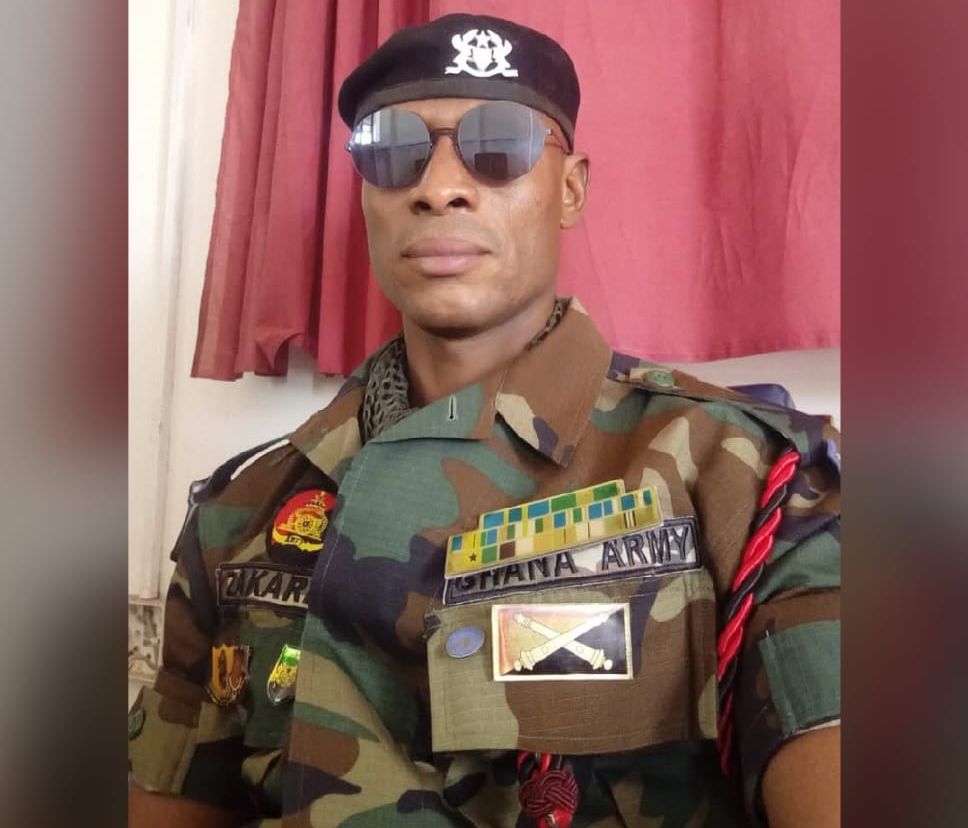
By WO1 Issifu Zakaria (Rtd.), Head of Security at Ho Technical University
Latest Stories
-
GAEC must retain nuclear scientists for Ghana’s nuclear ambitions – Minister
19 minutes -
Man reportedly mistaken for game and shot by hunter dead in forest
21 minutes -
19-year-old mason jailed 15 years for defiling seven-year-old pupil
26 minutes -
Ghana’s banking sector assets rise 20.47% to GH¢500.2bn – BoG Governor
30 minutes -
22 injured as Sprinter bus overturns at Sege after tyre burst
31 minutes -
UN housing expert urges Ghana to strengthen Rent Control Department amid housing affordability concerns
40 minutes -
Delta-BCI partnership reaches 166,000 people with breast cancer education
49 minutes -
Power restoration fault suspected in Kumasi Central Market fire
6 hours -
The 7-foot giant of Ngleshie Amanfro: Seven-foot Ghanaian Ephraim Saawa dreams of joining the national basketball team
7 hours -
Government promises support for Kumasi Central Market fire victims
7 hours -
Vibes The Movie: Big Ghun’s Ghanaian film earns five nominations at 2026 REFFA
7 hours -
‘I’m a fulfilled man’—Justice Korbieh on missing out on Supreme Court despite two nominations
7 hours -
MamaCare CEO warns unresolved conflicts among health workers could undermine maternal and neonatal care
8 hours -
Health professionals urged to translate medical knowledge into practice to save mothers
8 hours -
Retired judge Justice Francis Korbieh charges 1,568 new lawyers to uphold integrity
9 hours