

Audio By Carbonatix
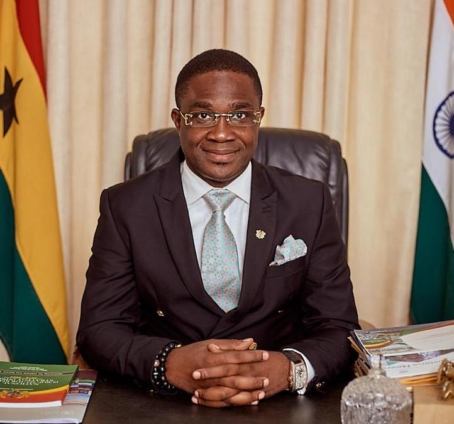
The President of the Ghana India Trade Advisory Chamber (GITAC), Dr Dominic Oduro Antwi, has raised concerns over the impact of the recent terrorist attack in northern Burkina Faso on Ghana’s agricultural trade.
Dr Oduro Antwi said the violence, which killed several Ghanaian tomato traders, has disrupted cross-border commerce and shaken investor confidence.
“This violence erodes investor confidence by destroying the predictability and safety required for regional commerce, effectively strangling the trade routes that connect West African markets,” he said.
He explained that while trade agreements in West Africa allow goods to move freely, they offer no protection for the traders themselves. “These rules focus only on business and ignore the safety of the traders. No single government or group takes clear responsibility for protecting traders on dangerous roads, and since Burkina Faso left ECOWAS, communication and cooperation on security has become even harder. The result is a big gap,” Dr Oduro Antwi said.
The GITAC president also highlighted the need for better cooperation between trade organisations and security forces. “Trade groups and security forces often work separately. Trade bodies focus on moving goods and making money, while security agencies focus on crime and terrorism.
"But when traders are attacked on highways, these two worlds need to come together. If they worked more closely, they could share information about dangerous areas, plan safe travel routes, and even arrange military escorts for traders when needed. Stronger collaboration would mean that before traders travel, they get security briefings, and during attacks, there are clear plans to rescue them. Without this teamwork, traders will continue to be easy targets,” he said.
On solutions, Dr Oduro Antwi urged the government to provide immediate protection for traders while keeping regional trade alive.
“First, provide immediate protection by working with neighbouring countries to secure safe travel routes, offering military escorts for traders when needed, and strengthening embassies to help in emergencies.
"Second, invest in long-term solutions like boosting local food production so Ghana depends less on imports from dangerous areas and push for a regional security fund within ECOWAS to protect trade roads across West Africa. This way, businesses stay safe without closing borders or stopping trade,” he said.
He spoke to Asaase News.
The attack took place on 14 February 2026 in Titao, northern Burkina Faso, where Islamist militants ambushed a truck carrying Ghanaian tomato traders.
At least eight traders were killed, three men and one woman were seriously injured, and seven women escaped unharmed. Reports say the attackers separated men from women before opening fire and burning the truck.
The incident has highlighted the growing threat posed by Islamist militants in the Sahel, where attacks on civilians and traders have intensified in recent years, affecting regional trade and security.
Dr Oduro Antwi’s warnings underscore the need for a combined approach that links trade facilitation with security measures to protect Ghanaian traders operating in high-risk areas.
Latest Stories
-
Power restoration fault suspected in Kumasi Central Market fire
5 hours -
The 7-foot giant of Ngleshie Amanfro: Seven-foot Ghanaian Ephraim Saawa dreams of joining the national basketball team
5 hours -
Government promises support for Kumasi Central Market fire victims
5 hours -
Vibes The Movie: Big Ghun’s Ghanaian film earns five nominations at 2026 REFFA
6 hours -
MamaCare CEO warns unresolved conflicts among health workers could undermine maternal and neonatal care
6 hours -
Health professionals urged to translate medical knowledge into practice to save mothers
6 hours -
Retired judge Justice Francis Korbieh charges 1,568 new lawyers to uphold integrity
8 hours -
Conflicts among care providers linked to maternal, neonatal deaths – Expert
8 hours -
GIS marks 10th TIME conference, champions improved teaching practices
8 hours -
BRICS Or Balance? What Ghana’s bid really means
9 hours -
GPRTU wants full TRAFFITECH-GH implementation to start in 2027
9 hours -
How 10-mile walks for basic education birthed a 50-year legal career for Justice Korbieh
9 hours -
Mahama announces plans to import electric wheelchairs for PWDs
9 hours -
KGL U17 Colts 2026: Western beat Prempeh Elite Academy to set up final final with Greater Accra Region
9 hours -
Late Solanke strike salvages 10-man Spurs draw at Man United
9 hours