

Audio By Carbonatix
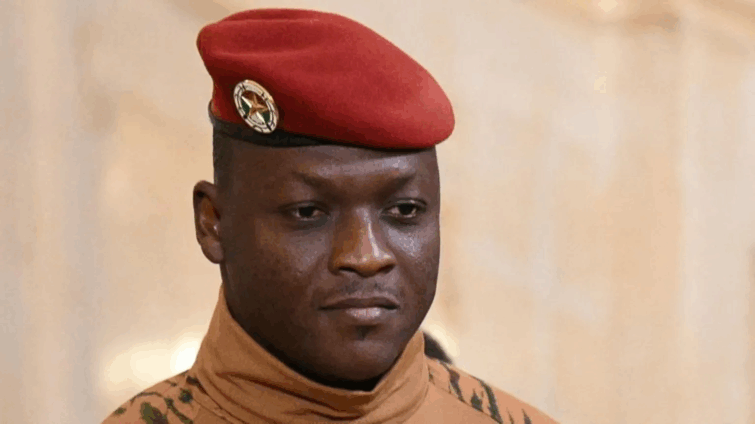
A landmark report by Human Rights Watch reveals a staggering escalation of violence in Burkina Faso. Since Captain Ibrahim Traoré seized power in a September 2022 coup, over 1,800 civilians have been killed. These deaths occurred across 57 documented incidents between January 2023 and August 2025. The findings suggest the military and allied militias are responsible for the vast majority of these fatalities. Researchers state that the scale of the violence now constitutes "war crimes and crimes against humanity."
Command Responsibility and Potential Prosecution
The report identifies President Traoré and six senior military commanders as potentially liable under the doctrine of command responsibility. It also names five jihadist leaders who may be culpable for systematic abuses. Human Rights Watch is now urging the International Criminal Court to open a preliminary investigation into all parties involved. This move seeks to address a culture of impunity that has permeated the Burkinabé security apparatus. "The scale of atrocities taking place in Burkina Faso is mind-boggling, as is the lack of global attention to this crisis," says Philippe Bolopion, HRW’s executive director.
Massacres in the Conflict Zones
One of the most devastating incidents occurred in December 2023 in the northern town of Djibo. The military and allied militias allegedly killed more than 400 civilians during that operation. Survivors described a scene of systematic execution and absolute brutality. A 35-year-old woman recounted how a militia member told his comrades to "make sure no-one is breathing before heading out." Her two daughters were killed instantly while she and her infant son suffered gunshot wounds. "Many survivors described the killings as 'butchery' and said they were left with deep psychological wounds," the report notes.
The Role of State Sponsored Militias
The junta relies heavily on the Volunteers for the Defence of the Fatherland, or VDP. These are civilian recruits tasked with supporting the regular army in its fight against insurgent groups. However, the VDP has been accused of committing horrific abuses alongside government troops. Critics and political opponents have reportedly been forced into the VDP as a form of punishment. Traoré has dismissed concerns regarding individual rights during this mobilization. He previously stated that "individual freedoms [are] not superior to national freedom" and that "a nation is not built on indiscipline and disorder."
Insurgent Brutality and Civilian Displacement
Jihadist groups linked to al-Qaeda continue to wage a bloody insurgency that targets those perceived as government sympathizers. The group known as JNIM remains the most prominent threat to stability. In August 2024, JNIM militants killed at least 133 people in a single two-hour span. These groups use widespread threats and violence to dominate local populations and enforce their authority. "All sides are responsible for the war crimes of willful killing, attacks on civilians and civilian objects, pillage and looting, and forced displacement," the report says.
Geopolitical Shifts and Worsening Insecurity
Despite the junta’s promise to restore security, violence has only intensified across the country. Burkina Faso has pivoted away from Western military partnerships, particularly with France, in favor of Russian assistance. This shift mirrors similar movements in neighboring Mali and Niger. While Traoré enjoys a following for his pan-Africanist rhetoric, the security situation on the ground continues to deteriorate. Civilians now describe a feeling of being "caught between a rock and a hard place," facing execution from insurgents and state forces alike. The junta continues to block independent reporting to hide the true extent of civilian suffering.
Global Pressure and Economic Implications
In light of the findings, Human Rights Watch has formally called upon Burkina Faso’s international partners and donors to reconsider their engagement with the current administration. The rights group is urging these entities to impose targeted sanctions and refrain from direct cooperation with the Burkinabé army. While the authorities have previously dismissed allegations of civilian targeted killings, the mounting evidence from satellite imagery and survivor testimony increases the pressure on the junta to allow for independent oversight. The international community now faces the challenge of addressing these humanitarian concerns while navigating the complex regional shift toward non-Western military alliances.
Escalating Repression and the 2026 Humanitarian Outlook
As of early 2026, the situation has grown increasingly complex with Burkina Faso’s formal announcement of its intent to withdraw from the International Criminal Court. This move coincides with new domestic legislation that further restricts civil liberties, including the criminalization of same-sex relations and the dissolution of the Independent National Electoral Commission. Concurrently, the humanitarian crisis has reached a breaking point, with over 4.5 million people currently in need of aid.
While the government claims success in returning over one million displaced persons to their homes, independent monitors warn that these returns are often forced and lack essential security guarantees. The deepening strategic alliance with Russia, formalized in early 2026, continues to redefine the Sahel’s security architecture, even as 30% of the country remains outside of state control.
Path Toward Accountability
The documented surge in violence highlights a deepening crisis where the quest for national security has become inextricably linked to widespread human rights violations. As the military government continues to prioritize state authority over individual protections, the civilian population remains vulnerable to both insurgent terror and state-sanctioned aggression. The path forward for Burkina Faso remains fraught, as the nation balances its sovereign aspirations against the urgent need for accountability and the protection of its own people.
Latest Stories
-
Labour Minister wants SOEs to help shape new public pay system
52 minutes -
IPEC will ensure Equity and Sustainability in SOEs Compensation
1 hour -
White House bars CNN from travelling with Trump on Air Force One
2 hours -
Fennis wins second consecutive ITF J60 title in Accra
2 hours -
Spain beat England in thriller after Kane penalty miss
2 hours -
GPL 2026/27: Zaidan’s late goal ends Hearts of Oak unbeaten start
2 hours -
CEOs demand clarity on pay harmonisation, board autonomy as FWSC engages SOEs bosses over IPEC transition
2 hours -
2026 Women’s Super Cup: FC Savannah, Epiphany Warriors maintain top spots ahead of final group games
3 hours -
‘Is EOCO responsible for determining lawyers’ fees?’ – Baffour Awuah
3 hours -
David Beckles claims second J60 Accra title
3 hours -
No France cocaine suspect linked to Mahama, Vice President’s security details – NACOC
3 hours -
Anwelle Foundation launched in Jirapa to tackle poverty, youth unemployment
3 hours -
Joy Sports Editor Fentuo Tahiru Fentuo to moderate inaugural Music Meets Football Summit in Zambia
4 hours -
Court premises too volatile for Baffour Awuah’s attempted arrest by EOCO – Inusah Fuseini
4 hours -
Drug bust: Under no circumstances will NACOC leadership be compromised – Twum-Barimah
4 hours