

Audio By Carbonatix
Health experts in the Eastern Region are making concerted efforts to contain the outbreak of Dengue Fever following the detection of nine cases in various districts.
The Ghana Health Service (GHS) has issued an alert, and measures are being implemented to treat those affected and prevent further spread.
Health experts, led by the Eastern Regional Director of Health, Dr. Winfred Ofosu, are holding an emergency review meeting to strategise on curbing the outbreak.
Read also: Ghana Health Service issues alert on Dengue Fever outbreak
In an interview with JoyNews, Dr. Ofosu mentioned that residents in the affected districts are being sensitised.
Dr. Ofosu also advised residents to wear protective clothing when going to the farm to avoid being bitten by mosquitoes and to seek medical care if they are unwell.
"We are engaging the community members, opinion leaders, district assemblies, traditional leaders to inform them about the symptoms and also educate them on preventive and control measures," he said.
Additionally, the Director of Public Health with the GHS, Dr. Franklin Asiedu Bekoe, stated that steps are being taken to address the issue and urged the public to understand that not every fever is malaria, discouraging self-medication.
"For now, it is a localized outbreak and we are having community engagement," he noted.
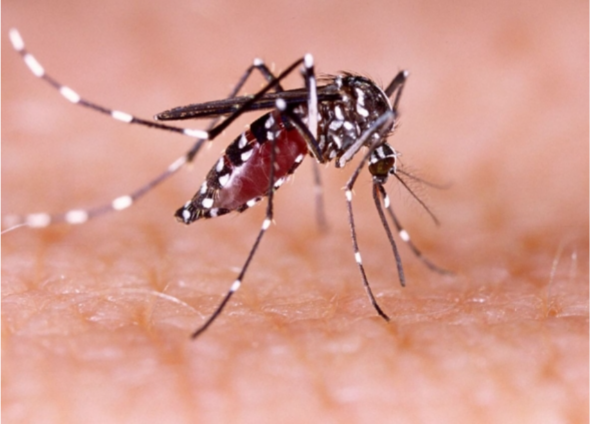
Overview of Dengue Fever: According to the World Health Organization (WHO), dengue is a viral infection transmitted to humans through the bite of infected mosquitoes.
Approximately half of the world's population is at risk, with an estimated 100–400 million infections occurring annually. Many dengue infections are asymptomatic or cause mild illness, but the virus can occasionally lead to severe cases and even death.
Danger and Prevention: Dengue is particularly dangerous because its prevention and control depend on vector control. There is no specific treatment for dengue or severe dengue. Early detection and proper medical care significantly reduce the fatality rates of severe dengue. Most people infected with dengue will not show symptoms, but common symptoms include high fever, headache, body aches, nausea, and rash.
Recovery typically occurs within 1–2 weeks, but severe cases may require hospitalization and can be fatal. The risk of dengue can be lowered by avoiding mosquito bites, especially during the day.
Symptoms of dengue fever include:
- High fever
- Severe headache
- Pain behind the eyes
- Muscle and joint pains
- Nausea
- Vomiting
- Swollen glands
- Rash
Latest Stories
-
Asantehene plants trees to commence Jimi Watercourse Rehabilitation destroyed by galamsey
12 minutes -
15 arrested, 6 trucks impounded over sandwinning activities on Kumasi-Accra Expressway
12 minutes -
OFFICIAL: Vinicius will miss El Clásico, suspended four games
15 minutes -
Prayer vigil held after four arson attack murders
22 minutes -
GRA fully recovers $154k legacy debt owed by foreign entities between 2022 and 2024
24 minutes -
Kwesi Pratt Jr warns bus preachers are adding to passengers’ stress with accident prophecies
25 minutes -
MTN Ghana to spend $1.1bn in 3 years, build 500 new sites as MoMo hits 44% Growth
26 minutes -
I have no regrets joining Assemblies of God – Mahama
27 minutes -
Starlink restrictions in Ukraine war linked to political situation, Zelensky aide says
30 minutes -
Furniture boost for Techiman North schools as MP donates to 20 institutions
30 minutes -
Assemblies of God to loan 10,000-seater dome for Ghana@70 celebrations
31 minutes -
Government to audit 2,016 community network sites – Communications Minister
31 minutes -
Heritage Series notes: BoG promises more inclusive cedi with improved sizes, tactile features
48 minutes -
‘We want answers’ – Family seeks probe into 14-year-old’s death 12 days after starting SHS
59 minutes -
No preacher has the right to impose beliefs on bus passengers – Kwesi Pratt Jr backs preaching ban
1 hour