

Audio By Carbonatix
The Director of Public Health at the Ghana Health Service (GHS), Dr Franklin Asiedu Bekoe, has emphasised the importance of early detection and treatment in addressing health issues.
In a recent interview, he cautioned the public against self-medicating if they experience fever, as it could be Dengue Fever, and stressed the importance of reporting to a hospital for early treatment.
"The focus is about early detection and that is what we are doing so when you have a fever, don’t assume that it is malaria then you self-medicate. Come to the hospital, we take your blood – we first find out whether it is malaria and examine the cause of the fever,” he said.
This warning follows the Ghana Health Service's statement on July 17, confirming 36 cases of Dengue Fever in the Central and Eastern regions over the past 72 hours.
The statement noted that the cases were identified using an appropriate case definition, with one patient being admitted and subsequently discharged.
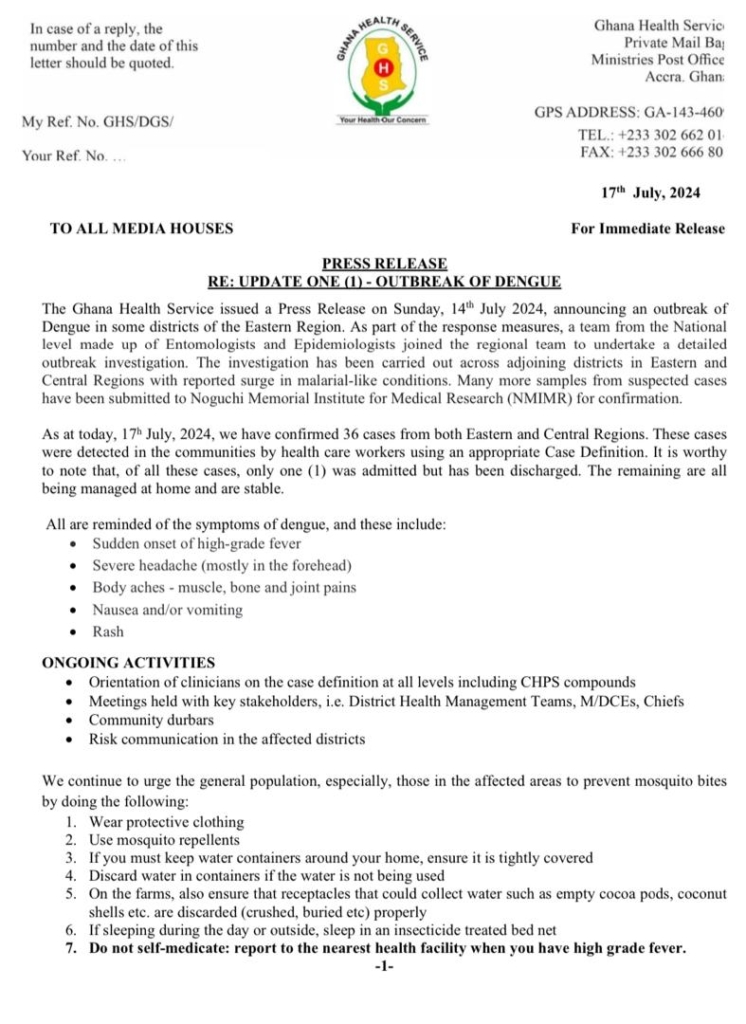
Dr Bekoe assured that the recorded cases are recovering well, as most are non-severe Dengue cases.
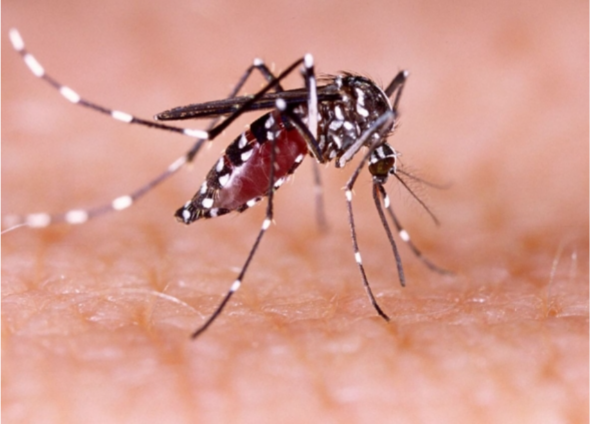
Dr Bekoe also detailed the Ghana Health Service's latest plans to slow the spread of Dengue Fever, which includes extensive community campaigns through information centers, radio stations, and public announcements to caution people about the Aedes mosquito, which spreads the virus.
Read also: Dengue Fever: Health experts sensitise affected region
Dengue Fever, a severe flu-like illness caused by a virus spread by Aedes mosquitoes, has the potential to spread to other areas if not properly managed.
Overview of Dengue Fever: According to the World Health Organization (WHO), dengue is a viral infection transmitted to humans through the bite of infected mosquitoes.
Approximately half of the world's population is at risk, with an estimated 100–400 million infections occurring annually. Many dengue infections are asymptomatic or cause mild illness, but the virus can occasionally lead to severe cases and even death.
Danger and Prevention: Dengue is particularly dangerous because its prevention and control depend on vector control. There is no specific treatment for dengue or severe dengue. Early detection and proper medical care significantly reduce the fatality rates of severe dengue. Most people infected with dengue will not show symptoms, but common symptoms include high fever, headache, body aches, nausea, and rash.
Recovery typically occurs within 1–2 weeks, but severe cases may require hospitalization and can be fatal. The risk of dengue can be lowered by avoiding mosquito bites, especially during the day.
Symptoms of dengue fever include:
- High fever
- Severe headache
- Pain behind the eyes
- Muscle and joint pains
- Nausea
- Vomiting
- Swollen glands
- Rash
Latest Stories
-
‘We want answers’ – Family seeks probe into 14-year-old’s death 12 days after starting SHS
2 minutes -
No preacher has the right to impose beliefs on bus passengers – Kwesi Pratt Jr backs preaching ban
6 minutes -
Africa Maritime Security Forum opens in Accra with call for stronger continental cooperation
6 minutes -
Techiman North MP fulfills promise with new CHPS Compound in Kokoago
17 minutes -
Enterprise Trustees, Sinapi Aba launch ‘Asetenapa Plan’ to promote retirement savings among informal workers
19 minutes -
Gov’t working to ensure GAUA strike is called off by October 16 – Haruna Iddrisu
23 minutes -
KAIPTC Commandant calls for continent-wide strategy to tackle Africa’s maritime security threats
35 minutes -
GRIDCo investigates Mallam substation fire as power restoration continues in Accra
36 minutes -
20% digital tax is not E-Levy – GRA boss
46 minutes -
Defence Minister calls for intelligence-sharing and regional cooperation to tackle maritime insecurity
50 minutes -
Afenyo-Markin failed to comply with procedural rules in defamation suit – Sammy Gyamfi’s lawyers
1 hour -
GRA recovered GH¢1.3bn out of about GH¢1.4 bn unpaid VAT from ECG – Anthony Sarpong
1 hour -
KMA to extend daily toll collection to nights and weekends
1 hour -
Ghana secures second consecutive term on UN Human Rights Council
1 hour -
KATH Catheterisation lab targets December completion amid specialist staffing concerns
1 hour