

Audio By Carbonatix
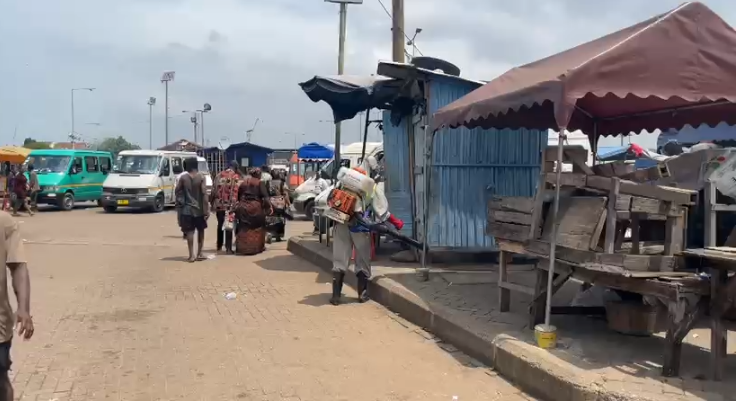
The Ghana Health Service (GHS) has begun fumigating flood-affected communities across Accra as part of efforts to prevent disease outbreaks, while the Korle Klottey Municipal Assembly continues to clear debris left behind by last week's floods.
The fumigation exercise, which covers markets, transport terminals and other public spaces, forms part of the government's post-flood sanitation response as the nationwide clean-up campaign enters its second day.
Speaking to JoyNews correspondent Stephen Mensah at the Korle Klottey Municipal Assembly, the Municipal Chief Executive, Alfred Gaisie, said the Assembly was working to clear large volumes of flood debris and expected to remove most of the waste by the close of the day or the following day.
Mr Gaisie said the volume of debris removed from affected homes had been overwhelming, but measures had been put in place to manage the situation.
"When we get into their houses, they remove everything from their rooms. We are overwhelmed, but we are managing the situation.
"We have over six trucks moving in and out. We are doing our best, so by the close of the day or tomorrow, we should be able to clear most of the debris," he said.
The Assembly has appealed to residents for patience and cooperation as the clean-up exercise continues.
Meanwhile, the Director-General of the Ghana Health Service, Dr Samuel Kaba Akoriyea, said although no cholera outbreak had been recorded following the floods, authorities could not afford to wait until cases emerged before taking preventive action.
"Every year, during the rainy season, we face these kinds of challenges. Fortunately, as we speak, we have not recorded any cholera outbreak, but we do not need to wait for one before taking action," he said.
Dr Akoriyea explained that preventing outbreaks was critical because treating diseases such as cholera placed significant pressure on the health system.
"It is extremely expensive to treat. People die, hospitals become overwhelmed, nurses are stretched, and we have to procure medications while battling the no-bed syndrome," he said.
He added that the Ghana Health Service had mapped hospitals across the Greater Accra Region and was prepared to respond if necessary, but stressed that prevention remained the most effective strategy.
The GHS has urged residents in affected communities to support sanitation efforts and avoid practices that could increase the risk of disease outbreaks in the aftermath of the floods.
Latest Stories
-
Girls must have equal place in Ghana’s digital future – Vice President
7 minutes -
High Court issues EOCO warrant to arrest Manhyia South MP Baffour Awuah
12 minutes -
Ghana at the heart of global PR excellence
19 minutes -
Ghana Institute of Architects clarifies position on ARC-ASG dispute amid ongoing case
21 minutes -
NDC supporters storm Fomena constituency office over alleged disqualification of chairman aspirant
23 minutes -
NPA CEO assures tanker drivers of action on welfare concerns
24 minutes -
Karpowership seeks contract extension as Ghana’s power demand grows
27 minutes -
Gender Ministry inaugurates committee to drive early childhood development
29 minutes -
Four Schools, One Crown: Prempeh, Corpus Christi, Mfantsipim and St Augustine’s battle for NIQ trophy
30 minutes -
HIV status cannot be used to deny employment under Ghana law – Ghana AIDS Commission
31 minutes -
Buffer Stock calls for expansion of national storage capacity as it falls below 50,000 metric tonnes
31 minutes -
Central Regional Minister urges use of religious platforms to change environmental, sanitation practices
54 minutes -
Henry Kweku Banning
55 minutes -
Execution of US murderer Christa Pike halted an hour before it was due to happen
57 minutes -
GoldBod generates US$1.87bn in FX in September, exceeds monthly target
1 hour