

Audio By Carbonatix
The Ghana Health Service (GHS) has assured the public that no cholera outbreak has been recorded following the devastating June 29 floods, while urging Ghanaians to continue observing proper sanitation and hygiene practices to prevent the spread of waterborne diseases.
The Service said that although the floods created conditions that could trigger disease outbreaks, ongoing preventive interventions are helping to minimise the risk.
It stressed that early action remains essential, warning that responding to an outbreak would be far more costly than preventing one.
To protect public health, the GHS is conducting a disinfection exercise in flood-affected communities following the nationwide clean-up campaign organised by the government. Health authorities say the exercise is aimed at eliminating disease-causing organisms in public spaces and reducing the likelihood of cholera, typhoid and other sanitation-related illnesses.
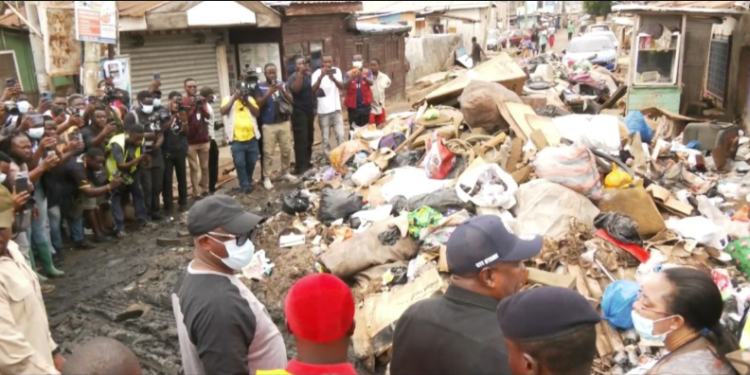
The intervention follows widespread flooding that left heaps of refuse, blocked drains and stagnant water in several communities, raising concerns about possible public health emergencies. The nationwide clean-up exercise, held on July 10 and 11, brought together government institutions, Metropolitan, Municipal and District Assemblies, security agencies, businesses and residents to clear waste and desilt drains.
Speaking during a disinfection exercise at Tema Station Market and the Adabraka Polyclinic on Saturday, July 11, Director-General of the Ghana Health Service, Dr. Samuel Kaba Akoriyea, said no cholera cases had been recorded so far but emphasised the importance of remaining vigilant.
“Fortunately, as of now, we don’t have any registered cholera outbreak. But prevention is key. We don’t need to wait for an outbreak before acting. Treatment is extremely costly,” he said.
Dr. Akoriyea explained that the disinfection campaign, undertaken in collaboration with the Korle Klottey Municipal Assembly and sanitation partner LCB Worldwide, forms part of broader post-flood interventions.
“After cleaning, the next step is disinfection and fumigation to avoid outbreaks of cholera, typhoid and other illnesses,” he stated.
Latest Stories
-
‘How does a bad settlement translate into criminality?’ – Atta Akyea questions EOCO
4 minutes -
Foreign Affairs Ministry launches ‘ECOWAS for All’ campaign to boost public awareness
12 minutes -
Baffour Awuah’s EOCO questioning centred on SIC matter – Bosome Freho MP
15 minutes -
Kwaku Bonsam appeals to Mahama, Ablakwa to facilitate his US travel for skin graft; says he’ll fund it
29 minutes -
Baffour Awuah arrested after surrendering to EOCO
31 minutes -
Baffour Awuah cooperating with investigators after surrender and arrest – EOCO
50 minutes -
Destruction of aspirants’ posters breaches democracy—Ashanti NPP Communications Director
60 minutes -
BNI investigates Ampofo Ankrah over alleged $623,000 World Cup visa scheme
1 hour -
NPP National Delegates Conference: Police announce road closures, diversions around Baba Yara Stadium
1 hour -
Agric Committee demands financing plan for Pwalugu Irrigation Project before 2027 Budget
1 hour -
Minority calls for the immediate suspension of Ghana-Colombia maritime agreement
2 hours -
Ghanaian professional Sydney Hushie appointed UNFPA Chief of Digital Centre of Excellence
2 hours -
GHS urges health managers to use community scorecards to improve healthcare delivery
2 hours -
Ekyeamamfrom-Pivot irrigation project 90% complete but stalled over unpaid certificates
2 hours -
When the Gavel speaks, where is the choir that once sang for Wontumi?
2 hours