

Audio By Carbonatix
The Founder of the Heritage and Cultural Society of Africa (HACSA), Ambassador Johanna Svanikier, has called for increased financial and institutional support to expand the Tech for Girls programme, saying greater investment is needed to equip more young women with digital skills for the future of work.
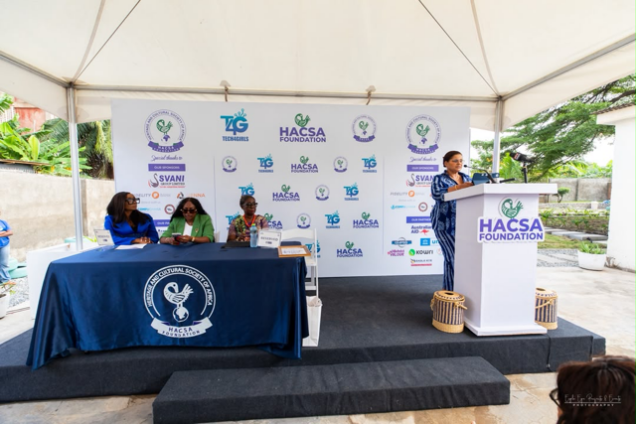
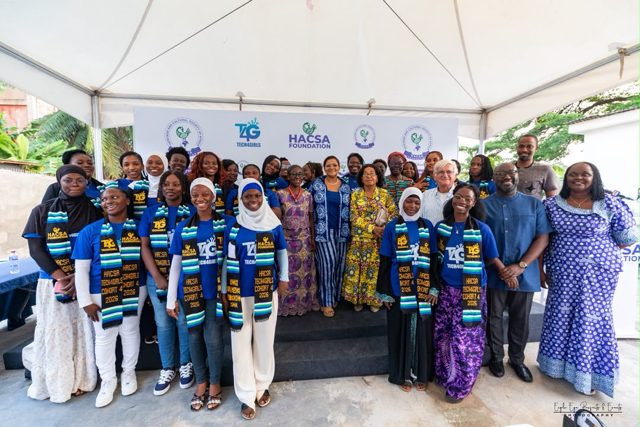
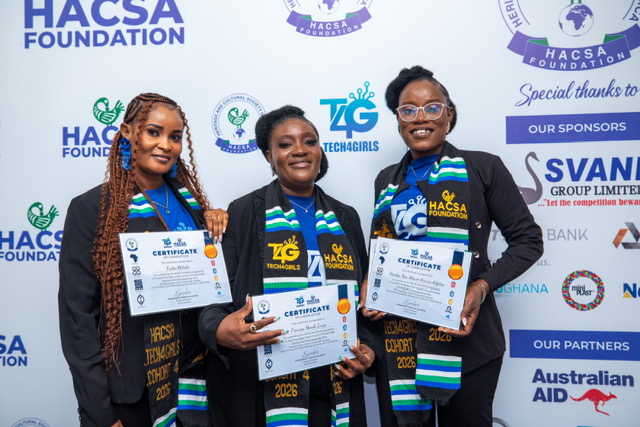
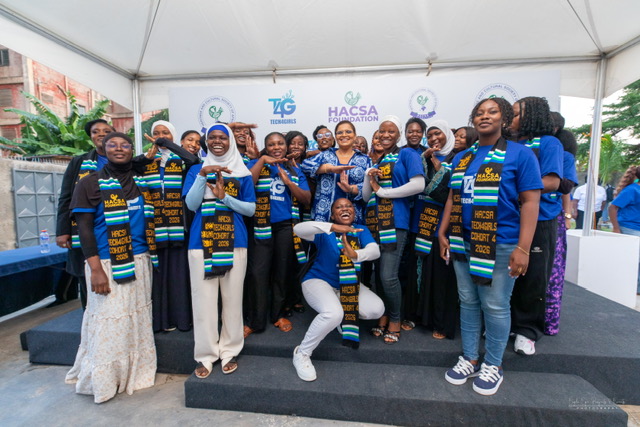
Speaking at the graduation ceremony for the programme's fourth cohort, Ambassador Svanikier said funding remains the biggest challenge to scaling the initiative despite growing demand for training in coding, innovation and digital technology.
"We cannot begin a new cohort without securing the necessary resources. As we grow, the demand for funding also increases," she said.
Ambassador Svanikier traced the origins of the programme to her tenure as Ghana's Ambassador to France and UNESCO, where she launched the Girls Can Code initiative to introduce coding to younger girls by training teachers to deliver lessons in schools.
"That initiative reached about 150 girls, with teachers returning to their schools to pass on the knowledge. The students later presented projects showcasing what they had learned," she said.
Building on that experience, she established Tech for Girls to target women between the ages of 18 and 35, in line with the United Nations' definition of youth.
"If you are a young woman within that age bracket and interested in coding, this programme is designed for you," she said.
She noted that the programme has grown significantly, moving from a rented facility to a permanent training centre with dedicated classrooms.
However, she said additional investment is needed to complete critical infrastructure, including a cafeteria for trainees.
"We no longer rent facilities, but we still need support to complete essential infrastructure like a dining space for the girls," she said.
Ambassador Svanikier revealed that enrolment has increased from just 20 participants in the early years to 80 trainees currently studying front-end and back-end software development.
She said the programme aims to increase enrolment to between 100 and 120 participants in future cohorts, with the possibility of training up to 160 women through a double-shift system if adequate funding becomes available.
Beyond coding, the initiative provides mentorship, internship placements and career guidance, with several graduates already securing employment or launching their own businesses.
"It's not difficult to place them. Once they acquire coding skills, they are in high demand," she noted.
She also stressed that empowering women with digital skills has a wider social impact.
"In many homes and communities, women play a central role in knowledge sharing. When you equip a woman with technology skills, she is more likely to transfer that knowledge to others," she said.
Reflecting on her own journey, Ambassador Svanikier said her early exposure to computer science shaped her career and strengthened her belief that digital literacy is becoming indispensable.
"We are moving into a world where technology is not optional. It is essential for participation in everyday life," she added.
The programme has so far been supported by family members, corporate organisations and development partners, including the Australian government through its Direct Aid Programme. She appealed to businesses, philanthropists and development partners to help sustain and expand the initiative.

Also speaking at the graduation ceremony, Ghanaian broadcast journalist and international relations correspondent Harriet Nartey urged the graduates to embrace their roles as innovators and leaders.
"Today, you are no longer simply learners. You are innovators, creators, problem solvers and future leaders ready to shape Ghana's digital future," she said.
She described technology as the new language of global diplomacy, enabling young people to collaborate across borders through innovation, artificial intelligence, fintech and digital trade.
"A young woman in Accra today can develop software for a company in Europe, collaborate with innovators in Asia or build solutions for clients across Africa and beyond," she said.
Ms Nartey also encouraged the graduates to mentor others and support future participants.
"The greatest measure of success is not how high we rise, but how many others we help rise with us," she said.
The graduation ceremony also highlighted preparations for the HACSA Foundation's 10th anniversary, which will be marked with a summit and international conference focused on celebrating the organisation's impact and mobilising support to expand initiatives such as Tech for Girls.
Latest Stories
-
If we don’t know Baffour Awuah’s charge, there’s a fishing expedition going on – Kofi Bentil
2 minutes -
Parliament questions continued detention of Baffour Awuah by EOCO, demands due process
41 minutes -
Baffour Awuah did not report to EOCO voluntarily; an arrest warrant forced him – Theophilius Dzimega
50 minutes -
Baffour Awuah case risks looking like a display of state power – Sulemana Braimah
57 minutes -
Campaign posters, billboards take over Kumasi as NPP goes to polls
1 hour -
‘I’ve been told I’m also involved’ – John Darko says he’ll cooperate with EOCO if invited over Baffour Awuah case
1 hour -
Follow the evidence, not assumptions, in Baffour Awuah case – Victoria Bright
2 hours -
48-hour detention rule is not an automatic entitlement for EOCO – Victoria Bright
2 hours -
Baffour Awuah’s arrest is a political witch-hunt – Kofi Bentil
2 hours -
MT Asharami Ghana arrives in Tema as government pushes stronger LPG infrastructure
2 hours -
Weweso JHS wins 5th edition of Otumfuo Reading Competition 2026
2 hours -
‘Criminal law can’t turn every poor commercial judgment involving state entity into an offence’ – Victoria Bright
2 hours -
Baffour Awuah has shown willingness to cooperate, qualifies for self-recognisance bail – Kofi Bentil
2 hours -
NPP elections: Here are the 46 candidates seeking votes of 7,163 delegates
2 hours -
EOCO is only carrying out its mandate, not violating Baffour Awuah’s rights – Dzimegah
3 hours