

Audio By Carbonatix
Tens of thousands of Sudanese people have fallen victim to dengue fever and other diseases, Sudan's health minister said, as seasonal rains further test infrastructure and hospitals devastated by conflict.
As millions of people displaced by fighting return to their homes in Sudan, while others continue to flee, the unusually high spread of diseases like dengue fever, cholera, and malaria this year highlights the hidden costs of almost 30 months of war.
The conflict between Sudan's army and the paramilitary Rapid Support Forces has created the world's worst humanitarian crisis and spread famine, and has shown no signs of slowing - although the army has recaptured the capital Khartoum and other parts of the country.
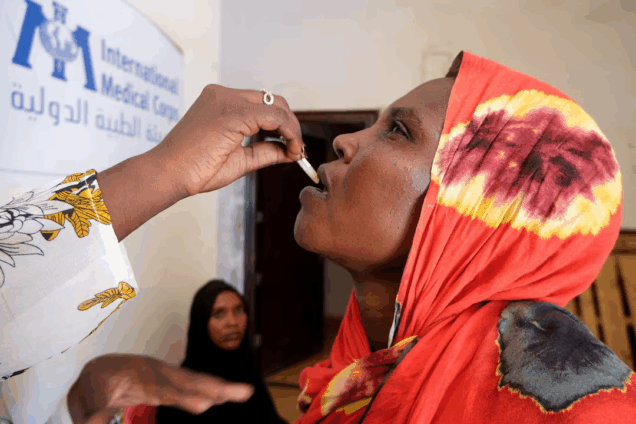
Exhausted patients lie under mosquito nets in packed wards in Omdurman Hospital as they receive intravenous paracetamol drips, the main treatment for the disease, which can be fatal on second exposure.
TENS OF THOUSANDS OF CASES
More than 2,000 cases of dengue fever were recorded nationwide over the week ending on Tuesday, mostly in Khartoum, according to the Ministry of Health, but the minister said the real numbers falling ill were likely much higher.
"80% of cases are minor and do not reach the hospital, so we expect it to be tens of thousands of cases in the past period across Sudan," Haitham Mohamed Ibrahim told Reuters.
The mosquitoes that carry the disease thrive in stagnant water, including inside homes. In Sudan, the rainy season has left pools of standing water across the country, while people have resorted to storing water at home after fighting in the capital has destroyed power grids and running water systems.
"The government isn't doing anything, the rainwater is stagnant in the street, trash is everywhere and the mosquitoes are growing more and more each day," said Salaheldin Altayib, a 65-year-old trader in Omdurman who said he and two other family members had fallen ill from dengue fever.
HIGH PREVALENCE OF MOSQUITOES
The minister said systems to spray insecticides had been damaged.
"The continuation of war for more than two years has had a direct impact on the environment, health, the build up of trash and waste, the destruction of water sources, has created a new reality ... of the high prevalence of mosquitoes," he said.
While efforts to vaccinate the population and treat water have resulted in a relatively controlled cholera outbreak in the capital, the Darfur region has seen the disease peak, with 12,739 cases over the past four months, the World Health Organisation said on Tuesday.
Some 61% are in the town of Tawila, which has sheltered hundreds of thousands of people fleeing the fighting in and around the city of al-Fashir, the current epicentre of the violence.
Efforts are also underway to vaccinate people there, the WHO said.
Global aid cuts have hampered the ability to treat these diseases, Ibrahim said. Some $39 million is needed to treat the several concurrent epidemics, he said.
Current U.N. data shows Sudan's donor-dependent healthcare appears to be less than a third funded.
Latest Stories
-
Asantehene plants trees to commence Jimi Watercourse Rehabilitation destroyed by galamsey
11 minutes -
15 arrested, 6 trucks impounded over sandwinning activities on Kumasi-Accra Expressway
11 minutes -
OFFICIAL: Vinicius will miss El Clásico, suspended four games
15 minutes -
Prayer vigil held after four arson attack murders
22 minutes -
GRA fully recovers $154k legacy debt owed by foreign entities between 2022 and 2024
23 minutes -
Kwesi Pratt Jr warns bus preachers are adding to passengers’ stress with accident prophecies
24 minutes -
MTN Ghana to spend $1.1bn in 3 years, build 500 new sites as MoMo hits 44% Growth
26 minutes -
I have no regrets joining Assemblies of God – Mahama
27 minutes -
Starlink restrictions in Ukraine war linked to political situation, Zelensky aide says
30 minutes -
Furniture boost for Techiman North schools as MP donates to 20 institutions
30 minutes -
Assemblies of God to loan 10,000-seater dome for Ghana@70 celebrations
30 minutes -
Government to audit 2,016 community network sites – Communications Minister
31 minutes -
Heritage Series notes: BoG promises more inclusive cedi with improved sizes, tactile features
48 minutes -
‘We want answers’ – Family seeks probe into 14-year-old’s death 12 days after starting SHS
59 minutes -
No preacher has the right to impose beliefs on bus passengers – Kwesi Pratt Jr backs preaching ban
1 hour