

Audio By Carbonatix
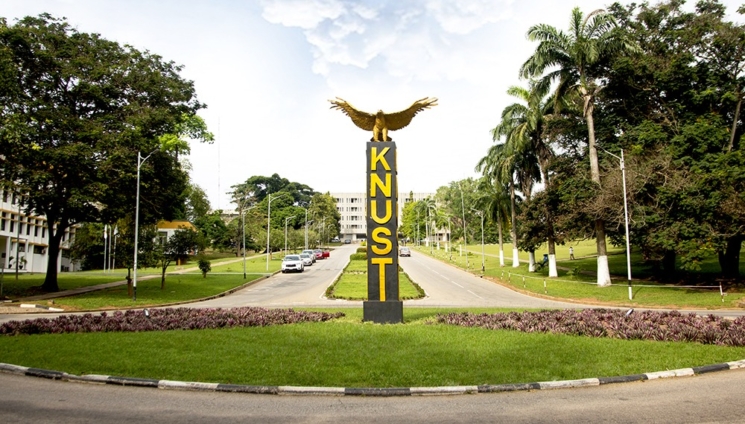
The Kwame Nkrumah University of Science and Technology (KNUST) is pursuing the Electricity Company of Ghana (ECG), the Social Security and National Insurance Trust (SSNIT), and three other entities for a debt of GH₵1.2 million.
According to the Auditor-General, this amount represents the cost of rented space for office and private hostel operations spanning several years.
Appearing before the Public Accounts Committee, the Vice-Chancellor of KNUST, Professor Rita Akosua Dickson, revealed that out of the total amount owed to them, only one entity has made a partial payment of GH₵25,000.
“With the Electricity Company of Ghana, what we have done is that we've kind of done a barter trade with them, so a settlement plan. We have huge bills from ECG, so now we've asked them to offset, we've written to ECG to offset what we owe them, take this money out so that we can proceed in that direction.
“With UBA, Honourable Chair, I'm happy to announce that they have paid everything that is owed us including a premium that they were supposed to have paid,” she added.
Prof Dickson said that her outfit has faced difficulties in recovering these debts, despite sending demand notices and consistently following up with these entities to settle their outstanding debts.
Meanwhile, the Committee has also raised concerns over Akenten Appiah-Menka University of Skills Training and Entrepreneurial Development (AAMUSTED)’s procurement of medical consumables from two unlicensed entities.
The Attorney General’s report cited the school for buying GH₵414,000 worth of drugs from two entities in 2022 but recommended that the school does its procurement from only registered entities moving forward.
"This is a very serious indictment. Before you can sell drugs, you need a license, and you are buying from them without them having a license. We must be careful in the entire procurement process so that when entities do not have the appropriate certification from the relevant bodies like FDA, Pharmacy Council, and the rest, we must not engage them because this has to do with human life and therefore, there's a need for appropriate certification for bodies that we've put in place.
"Maybe subsequently, when you are doing your procurement, make sure that when it has to do with health, such certifications are gotten from FDA, Pharmacy Council, and what have you," the Committee recommended.
Latest Stories
-
“We are one house – let’s settle this at home” – Atomaase Royal family calls for unity, rallies behind Twafohene
19 minutes -
The Missing Middle and the Overlooked Small: Why Ghana Must Serve Both the ‘S’ and ‘M’ in MSME’s
32 minutes -
Mahama returns from Angola after AU extraordinary summit
1 hour -
Ghana qualifies for quarterfinals of Africa Volleyball Nations Cup after beating Zambia
1 hour -
WAFU B WCLQ: Ampem Darkoa Ladies come from behind to beat Edo Queens
2 hours -
Photos: National Youth Authority Festival
2 hours -
Bawumia commissions St Jude’s Catholic Church he funded to completion at Weija
2 hours -
Government defends new beer exercise rates; sliding scale has not been abolished
2 hours -
Bolgatanga Assembly denies blanket ban on events beyond 8pm
2 hours -
Photos: Ghana Immigration Service removes 1,055 street beggars from Accra, Kumasi streets
2 hours -
‘He always comes to our aid’ – Fr. Campbell recounts Bawumia’s support for Church, poor
2 hours -
Remittances drop marginally year-on-year to US$3.65bn in half-year 2026
3 hours -
T-bills: Government exceeds target by 139%, interest rates tumble
3 hours -
Why Chelsea need more than a new goalkeeper to be title challengers
3 hours -
Outlook of Ghana’s external sector remains positive for second-half of 2026 – BoG
3 hours