

Audio By Carbonatix
If another major disaster were to occur in Ghana, the probability for the government to effectively manage it is low.
This is according to a policy brief by Col. Festus Aboagye (Rtd), which suggests deep-seated vulnerabilities in Ghana’s disaster management framework, along with a critical lack of foresight, preparation, and coordinated action.
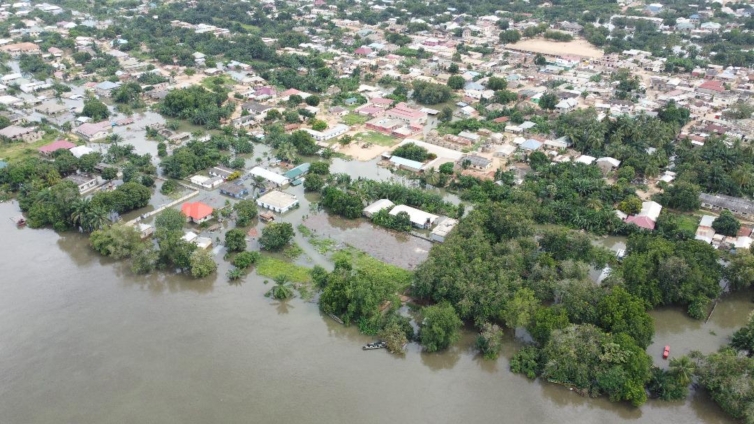
The policy brief, which used the Akosombo Dam spillage as a case study, highlighted the urgent need for a complete overhaul of Ghana’s approach to disaster preparedness and response.
Titled "From National Asset to National Ignominy: Ghana’s Akosombo Dam Disaster Exposes Government Negligence and Civil Society’s Heroic Response," the brief revealed a demand for a paradigm shift in disaster management.
According to the brief, although the spillage was controlled, it still managed to cause extensive damage to communities in the Lower Volta Area, impacting North Tongu, South Tongu, Central Tongu, and other districts.
However, the plight of these affected individuals was further worsened by government's lack of recovery response, even after a year.
It also pointed out that inadequate risk assessment, insufficient resource allocation, a lack of comprehensive planning, and delayed action were among the factors contributing to the government's failure to manage the crisis.
Additionally, uncoordinated responses and the government's refusal to accept responsibility for the crisis were also factors.
But for stakeholders such as Members of Parliament (MPs), the media, civil society organisations, private entities, and individuals, many of those affected would still be displaced, with little to show in terms of recovery.
On this basis, the brief recommended several steps for the government to be better prepared for future disasters. These include enhancing early warning systems by investing in advanced multi-channel weather forecasting and early warning dissemination systems to ensure timely and accurate information reaches all stakeholders.
It also suggested improving water management practices to prevent future flooding and undertaking community engagement and education programs to raise awareness about disaster preparedness and response.
Additionally, the brief recommended strengthening public-private partnerships to leverage resources, expertise, and technology from the private sector for disaster preparedness and response efforts.
Read policy brief:
Latest Stories
-
Ghana’s state-owned enterprises return to profit with GH¢19.8bn gain in 2025 — SIGA
7 minutes -
Fuel prices set to rise again from Sept 1; petrol could hit GH¢16.21 – COPEC
2 hours -
REGSEC restricts Akwasidae celebrations in Denkyira amid security concerns
2 hours -
Eric Adjei distributes free fertiliser to farmers in Jaman North
2 hours -
Akufo-Addo urges NPP factions to unite behind Bawumia for 2028 victory
2 hours -
NDC mourns Western Regional Elections Director Papa Assan
3 hours -
Minerals Commission warns against fake job recruitment schemes
3 hours -
10 recruits dismissed for defying phone ban – Interior Minister
3 hours -
IEAG commends GoldBod, BoG for improving forex stability
3 hours -
Bawumia donates GH¢50,000 to St Jude Catholic Church at Weija
3 hours -
Mahama calls for faster mobilisation of AU Peace Fund resources
3 hours -
Improved roads bring new vehicle options to Tumu-Bolga, Tumu-Tamale, Tumu-Wa routes
3 hours -
Cedi records 7.9% depreciation against US dollar in first half of 2026
3 hours -
GIS launches operation on anti-human trafficking and exploitative street begging
3 hours -
Awutu-Senya District Assembly organises clean-up ahead of Awubia Festival
4 hours