

Audio By Carbonatix
A representative of the World Health Organisation (WHO), Matthew Taylor, has urged journalists to avoid victim-blaming narratives in their reporting on road crashes.
He emphasised that such narratives downplayed the seriousness of road traffic issues, which result in fatalities and injuries, particularly among people in their productive years.
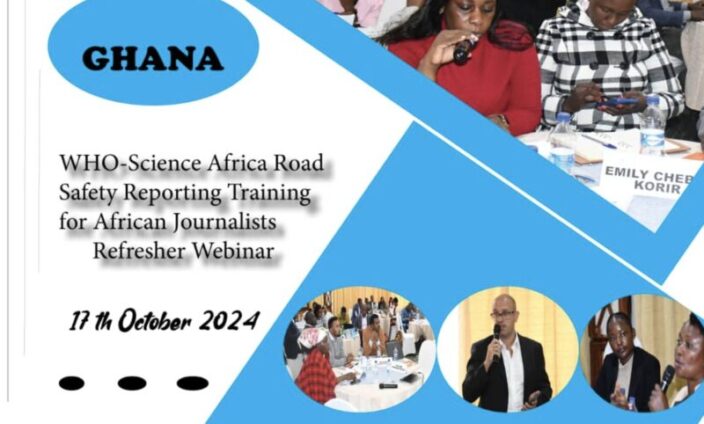
Mr. Taylor made these remarks while addressing Ghanaian journalists during the WHO-Science Africa Road Safety Reporting Training Refresher Webinar on Thursday, October 17, 2024.
He acknowledged that road crashes and collisions were inevitable, noting that fatalities were often seen as a byproduct of development.
However, he cautioned that that mindset led to unwarranted blame placed on individual drivers or pedestrians.
“Do we need to blame victims for crossing a busy road?” Mr Taylor asked, noting that referencing other crashes and making counterfactual statements could contribute to victim-blaming.
He cited instances where victims had been criticised for wearing dark clothing at night, emphasising that specific sentence structures could reinforce the perception of victim-blaming, urging journalists to be mindful of such practices.
To make a significant impact, Mr. Taylor encouraged journalists to include human elements in their stories by interviewing community members, family, friends, and experts.
He said that approach could help educate the audience, raise awareness, and influence decision-making.
Mr. Taylor acknowledged that while road crashes are inevitable, they are also preventable.
He emphasised the importance of framing stories to highlight the causes and effects of crashes, which could help draw policymakers’ attention to the necessity for improved road designs and safer transport systems.
He argued that prioritising that focus would save more lives than simply placing blame on victims.
Mr. Daniel Otunge, Science Africa Project Lead, underscored the need for solution journalism, noting that news reports should focus on addressing the identified problems associated with road crashes.
Latest Stories
-
GNFS contains fire outbreak at Teshie Lekma Road near Lekma Hospital
3 hours -
Samia Nkrumah rejects the narrative that Ghanaians were happy after Nkrumah’s overthrow
4 hours -
A Mother’s pain: Tribute by Ivan Baidoo’s mother
4 hours -
‘Forgive us for staying away’ — Samia Nkrumah leads family back to Nkroful, pledges to preserve Nkrumah’s legacy
5 hours -
Ernest Nuamah scores twice as Lyon beat Rennes
5 hours -
‘My dear Ivan’ – A father’s tribute to a son tragically killed
5 hours -
GNPC Explorco advances Voltaian Basin drilling preparations with 13.5km access road
5 hours -
Cabinet approves facility manager for Borteyman Sports Complex – Kofi Adams
6 hours -
Sanitation is improving; critics may be ‘living in another world’ – Salaga South MP replies Bekwai MP
6 hours -
Government must do more to tackle sanitation crisis – Bekwai MP
6 hours -
World Cleanup Day: GFF begins sanitation education in local communities
6 hours -
EU Ambassador, IGP discuss stronger cooperation on policing and security
6 hours -
Africa Nations Volleyball Championship: Ghana set up quarterfinal clash with Cameroon after beating Chad
6 hours -
Meet Dr Benjamin Appiah Osei — Ghana’s three-time tourism awards winner
7 hours -
UEFA & CONCACAF demand Fifa pays $10m to all 211 members
7 hours