

Audio By Carbonatix
Mr. Maxwell Ziyerley Agbambilla, lawyer for Bawku Naaba has disagreed with the suggestion that security lapses contributed to the recent disturbances in Bawku.
According to him, the notion that the national security apparatus has not been fully aware of the events occurring in Bawku township is untrue.
"I completely disagree that the national security or the security architecture of this country has never been fully aware of all the events that are happening in Bawku."
Speaking on JoyNews' Newsfile on Saturday, Mr Agbambilla asserted that the ongoing conflict in Bawku is largely driven by the perception among the Mamprusi community that, because they count the Vice President Dr. Mahamudu Bawumia as one of their own, they can use his position to perpetrate the violence currently affecting the area.
He noted that national security previously detected the potential for unrest and issued an injunction to prevent the funeral rites of a long-deceased chief—a decision many warned could lead to conflict.
“Then later we heard there was some purported enskinment in Bawku, the government issued an arrest warrant for the arrest of Seidu Abagre,” he said.
He stated that unless the government or security intelligence deliberately choose not to pursue you, if someone commits wrongdoing, they will certainly be found, suggesting that intelligence failures are not the main issue.
The lawyer for the Bawku Naaba argued that Seidu Abagre, whose return to Bawku has exacerbated tensions between rival factions and resulted in multiple clashes, is living as a free man after his arrest.
He questioned how someone who is supposedly hiding could have lawyers and give instructions to people going to court.
"The government did not want to act. National security just didn't want to act," he stressed.
He added, "I don't think that the security architecture is not aware of what is happening in Bawku. It is because some people think that by giving the Mamprusis in Bawku what they want, it may brighten the chances of Dr. Bawumia."
His comments followed remarks by a lecturer at the Kofi Annan International Peacekeeping Training Centre (KAIPTC), Dr Victor Doke, who pointed to lapses in security intelligence as a possible factors in the renewed conflict.
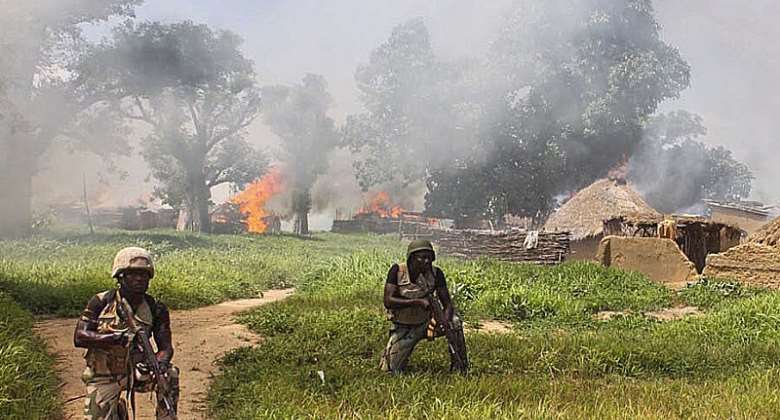
Dr Doke argued that inadequate intelligence monitoring and preventive measures may have allowed the recent violence, which resulted in approximately 19 deaths.
He expressed concerns about the readiness of security services, given the known tensions in the area.
Latest Stories
-
300 entrepreneurs in Bono East battle for MTN-Innohub SME Support as programme enters 4th year
3 minutes -
Lawyer sues AG, GRA boss over passenger baggage exemption rules
4 minutes -
Ashanti Region crowned 2026 MTN Elite U-19 Champions after epic seven-goal final
39 minutes -
Gomoa chiefs give IGP, National Security one week to close New Winneba North Police Station
40 minutes -
Pilgrims Affairs Office approves 42 Hajj agents for 2027 pilgrims
41 minutes -
Building Trust in Digital Entertainment: What users should Look for in an online gambling site
48 minutes -
Former Deputy CEO of SIF declares Nandom NPP bid, pledges to rebuild party unity
1 hour -
Jefferson Sackey to launch PURPOSE: A Memoir of Fearless Journalism, Diplomacy and Growth
1 hour -
GCB Bank Head of People & Culture shares workforce planning strategies at Mining HR Conference
1 hour -
Rising cost of political campaigns threatens inclusive participation – CDD-Ghana
1 hour -
Parents laud convenience, affordability at Joy FM Back-to-School Fair
1 hour -
End partisan recruitment into security agencies – Asiamah Amoako
1 hour -
Mahama Ayariga seeks Chief Imam’s prayers, guidance in his new ministerial role
1 hour -
Photos: Joy FM Back-to-School Discount Fair opens with busy first day
1 hour -
Overloaded tricycle kills one at Assin Gangan
2 hours