

Audio By Carbonatix
The recent decision by the US Embassy to impose visa restrictions on individuals who may disrupt Ghana’s democratic process ahead of the upcoming December elections has received significant praise as a measure to promote peace, stability, and political accountability in Ghana. This policy, aimed at curbing political violence, sends a strong message that any attempt to undermine democracy could have serious personal consequences for those involved.
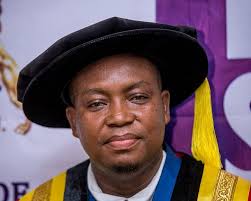
However, new information suggests that this policy may have roots in the work of a Ghanaian academic, Rev. Prof. Emmanuel Yao Nash. Between 2014 and 2016, Rev. Prof. Nash, a prominent peace advocate, conducted a comprehensive study on electoral violence and its prevention in Ghana. His research concluded with a recommendation that international embassies, including the US Embassy, halt the issuance of visas to politicians until elections were completed. He argued that denying politicians the ability to leave the country during election season would compel them to act with integrity and responsibility, knowing they were accountable to local laws and citizens.
Rev. Prof. Nash’s findings were widely publicised, including an article in Graphic Online in October 2016 titled, “Withhold Visas for Politicians Till Elections.” His appeal for embassies to adopt his approach to promote electoral decency stemmed from a foundation of academic rigor and peace advocacy.
Despite the depth of Rev. Prof. Nash’s research and his efforts to gain embassy support, this reporter has learned that the US Embassy did not acknowledge the professor's ideas or offer support. Furthermore, the embassy reportedly declined to attend the launch of the Ghana Peace Awards (GPA) in 2016, an event inspired by his research to honour individuals and organisations dedicated to promoting peace in Ghana.
Nevertheless, the US government now appears to have adopted Rev. Prof. Nash’s recommendation as its own. US Secretary of State Antony Blinken has since imposed similar visa restrictions in countries such as Sierra Leone, Bangladesh, and Liberia. These actions are framed as part of the US government's commitment to supporting fair elections worldwide, with visa restrictions serving as a deterrent to political actors who might undermine the democratic process.
While the implementation of Rev. Prof. Nash’s recommendations underscores their value, his contributions remain largely unrecognised. Formal acknowledgment from the US Embassy would not only honour Rev. Prof. Nash’s original work but also lend greater credibility to future research efforts aimed at fostering peace in Ghana, Africa, and beyond.
Latest Stories
-
Be careful with cross-border lending, foreign currency exposures – BoG advises financial institutions
4 minutes -
GPL 2026/27: Medeama go three clear as Hearts of Oak recover and Bechem stage stunning comeback
14 minutes -
Ntiamoah Foundation launches “BEYOND 20” anniversary campaign
34 minutes -
Credit Risk Management Directive: BoG to begin implementation for banks, others from July 1, 2027
51 minutes -
Ghana Brands Awards 2026: Leading brands, business trailblazers to shine on November 20
1 hour -
T-bills auction: Demand improves as government exceeds target by about 76%; interest rates soften
1 hour -
Ziope undertakes initiative to build a technologically inclined community, commissions self-help ICT lab
2 hours -
ECG announces power outage in parts of Tema, Central Region due to network fault, maintenance
2 hours -
When the Gospel Becomes a Weapon: The church, blackmail and the abuse of faith
2 hours -
JoyNews’ Jacqueline Ansomah Yeboah selected for UK Media Excellence for Emerging Technologies Fellowship
3 hours -
Mental Health Alliance urges government to operationalise Mental Health Fund
3 hours -
Ghana–Holy See agreement heads to Parliament after Cabinet approval
3 hours -
Luv FM Corporate Games 2026: Kumasi Central Prisons, Amanfiman Bank win big amid fun
3 hours -
WAFU B U17: Ghana top Group A after win over Togo
4 hours -
Ho Central Mosque reopens amid unresolved leadership dispute that led to closure
5 hours