

Audio By Carbonatix
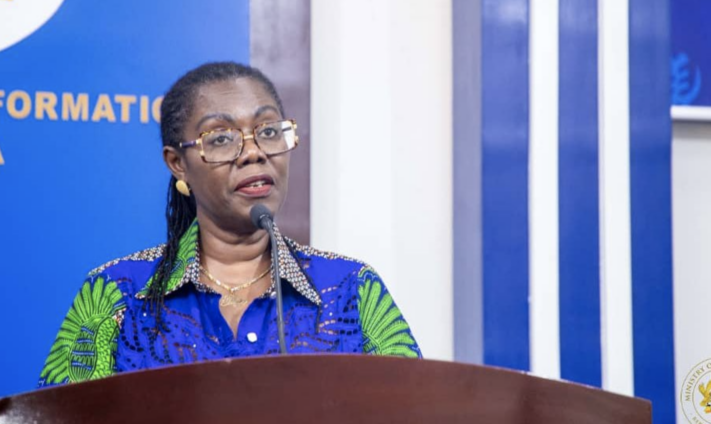
The Minister of Communications and Digitalisation, Ursula Owusu-Ekuful, on Thursday, launched Ghana’s Digital Economy Policy and Strategy to guide the implementation of the country’s technological advancement and consolidate the gains made.
The policy aims to leverage digital technologies to foster economic growth, improve public service delivery and ensure equitable access to digital resources.
At a media briefing in Accra to launch the policy document, Mrs Owusu-Ekuful highlighted the transformative power of digitalisation to the national economy, noting that access to digital technologies and services was no longer a luxury for the privileged few, but a human right.
The Minister mentioned the expansion of a high-speed e-Government network connecting 951 public institutions, backed by 3,500 kilometres of fibre optic cables laid in 2023 as a key milestone in bridging the digital divide.
She further stated that the Government was laying the groundwork for a digitally inclusive future, ensuring that every Ghanaian benefits from the opportunities of the digital era.
Madam Owusu-Ekuful highlighted five specific key areas of focus including entrepreneurship, digital skills, digital government, universal access, and emerging technologies, to deepen Ghana’s economic base.
She believed that the policy documents if fully implemented, would promote an ecosystem in which digital technology could drive inclusive growth and open opportunities for both individuals and companies.
Additionally, she said, the Government’s strategy was to leverage digital technologies to address Ghana’s present and future needs.
By aligning digital efforts with job creation and Gross domestic product (GDP) growth, she said, the policy would ensure that technology becomes a powerful tool for inclusive development, poverty alleviation and enhancing prosperity for all citizens.
“Through digital technologies, we are confident of seeing significant progress in entrepreneurship and efficient public service delivery,” Mrs Owusu-Ekuful stated.
The Minister acknowledged the support of key partners, including the World Bank and the Tony Blair Institute for Global Change in putting the policy documents together.
The Minister appealed for greater collaboration across various sectors of the economy to address connectivity gaps.
She reiterated the need for adaptive regulation to foster innovation and protect the citizens from risks such as fraud and misinformation while positioning Ghana as a leader in Africa’s digital future.
Latest Stories
-
GNFS contains fire outbreak at Teshie Lekma Road near Lekma Hospital
6 hours -
Samia Nkrumah rejects the narrative that Ghanaians were happy after Nkrumah’s overthrow
7 hours -
A Mother’s pain: Tribute by Ivan Baidoo’s mother
7 hours -
‘Forgive us for staying away’ — Samia Nkrumah leads family back to Nkroful, pledges to preserve Nkrumah’s legacy
7 hours -
Ernest Nuamah scores twice as Lyon beat Rennes
7 hours -
‘My dear Ivan’ – A father’s tribute to a son tragically killed
8 hours -
GNPC Explorco advances Voltaian Basin drilling preparations with 13.5km access road
8 hours -
Cabinet approves facility manager for Borteyman Sports Complex – Kofi Adams
8 hours -
Sanitation is improving; critics may be ‘living in another world’ – Salaga South MP replies Bekwai MP
9 hours -
Government must do more to tackle sanitation crisis – Bekwai MP
9 hours -
World Cleanup Day: GFF begins sanitation education in local communities
9 hours -
EU Ambassador, IGP discuss stronger cooperation on policing and security
9 hours -
Africa Nations Volleyball Championship: Ghana set up quarterfinal clash with Cameroon after beating Chad
9 hours -
Meet Dr Benjamin Appiah Osei — Ghana’s three-time tourism awards winner
10 hours -
UEFA & CONCACAF demand Fifa pays $10m to all 211 members
10 hours