


Audio By Carbonatix
A study conducted by Rivia, a network of tech-driven primary care clinics, from data collected in 2024, has indicated that Ghana is experiencing a rise in "silent" killer diseases.
According to the report, these illnesses, which develop insidiously, are taking a significant toll on individuals and the healthcare system.
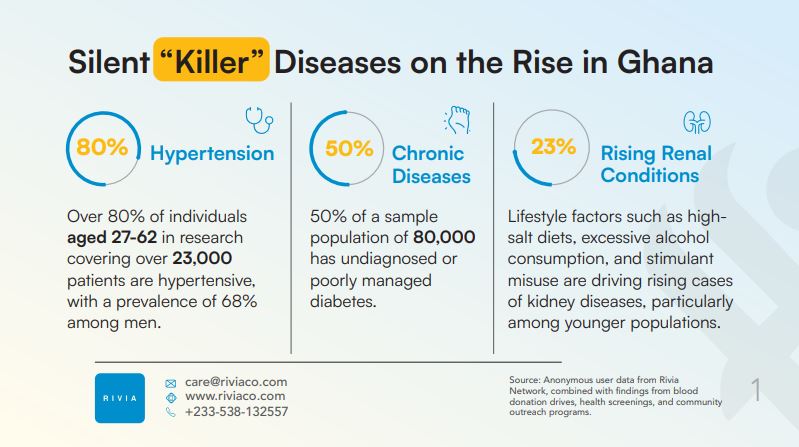
The findings from Rivia provide an alarming glimpse into the state of health in Ghana. The study revealed that over 80 per cent of individuals aged 27-62 in a sample of 23,000 patients are hypertensive, with men showing a 68 per cent prevalence.
It also found that 50 per cent of a sample population of 80,000 have undiagnosed or poorly managed diabetes.
Additionally, lifestyle factors such as high-salt diets, excessive alcohol consumption, and stimulant misuse have contributed to rising cases of kidney disease, particularly among younger populations, now affecting 23 per cent of them.
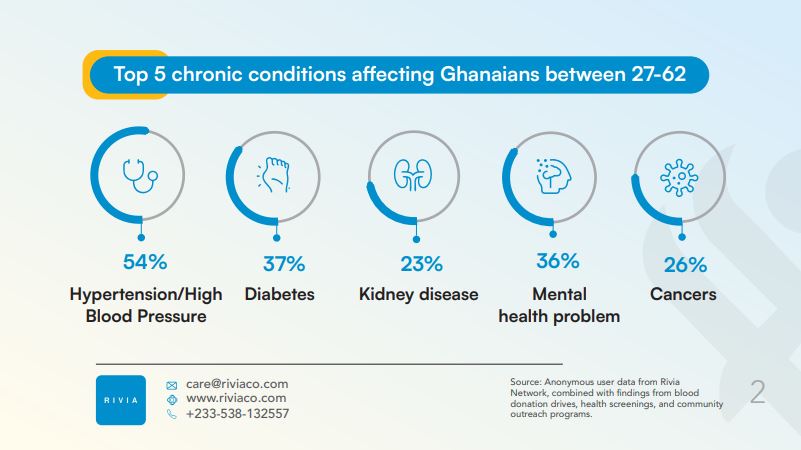
Among Ghanaians aged 27-62, the research indicated that the top five chronic conditions include hypertension, diabetes, kidney disease, mental health issues, and cancers.
To address this public health challenge, it stated that it requires a multi-faceted approach, encompassing government policies, workplace wellness initiatives, and preventive healthcare infrastructure.
The report suggested that government policies could play a significant role by offering tax incentives to encourage corporate health programmes and mandating subsidised annual health screenings promoted by companies, unions, and associations.
It also emphasised the need for stricter food labelling laws to reduce salt and sugar intake in processed foods, helping Ghanaians make healthier choices.
Furthermore, workplaces can foster healthier lifestyles by implementing regular health screenings for chronic diseases and offering programmes focused on stress management, mental health support, and physical fitness.
Employee health benefits, including partnerships with providers like RiviaCare, were highlighted as key to improving access to preventive care.
The report also called for mobile health units and the expansion of Community-based Health Planning and Services (CHPS) compounds to serve under-served areas.
Public campaigns to raise awareness about the importance of regular checkups and disease prevention were seen as crucial to empowering individuals to take proactive steps in managing their health.
Additionally, training healthcare workers in chronic disease management will ensure better care and outcomes for patients.
Latest Stories
-
Togo establishes autonomous agency to regulate medicines and health products
14 minutes -
Zoomlion disinfects public facilities in Sefwi Wiawso over health risks
15 minutes -
Aayalolo adds 48 buses to fleet as GAPTE moves to ease Accra traffic
2 hours -
Use digital platforms to build peace, not spread prejudice – Opoku-Agyemang to youth
2 hours -
Clinic says Nigerian influencer ignored doctor’s advice to split penis enlargement procedure
2 hours -
The grass is greener somewhere is an illusion – Barfuor Adjei-Barwuah tells Ghanaian youth
2 hours -
My marriage will be secret – Singer Joeboy
3 hours -
KATH hails Ghana Medical Trust Fund after GH¢4m equipment boost
3 hours -
Free Primary Healthcare reaches 135 districts
3 hours -
Tunisian journalists protest over media crackdown after colleague’s arrest
3 hours -
Equatorial Guinea police pull guns on migrants deported by Trump, witnesses say
3 hours -
Singaporean man pleads guilty in US to massive crypto heist
3 hours -
WHO says staff shortage, funding challenges hamper Congo Ebola response
4 hours -
IMF is not Father Christmas; Ghana must take charge – PUWU
4 hours -
More UK flight delays expected after hundreds cancelled by air traffic control glitch
4 hours