

Audio By Carbonatix
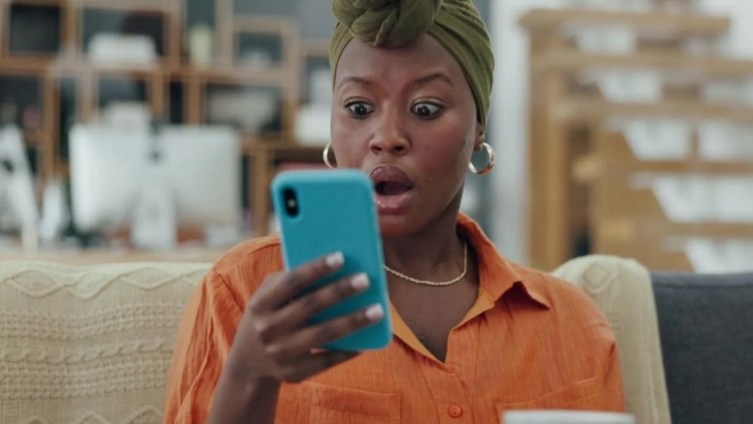
Nigerians are expressing outrage over a big jump in the price of mobile data charged by some of the country's major phone networks.
MTN - Nigeria's largest operator - trebled the cost of one of its most popular weekly offers. Airtel has also increased its tariffs.
A price jump was expected as the telecoms regulatory body had approved an increase, but in an announcement three weeks ago it said it had capped it at 50%. The phone companies wanted to boost their revenue in order to cover rising costs.
Nigerians have been living through a long cost-of-living crisis with inflation rates not seen for three decades. Any increase in prices adds to the struggle for many to make ends meet.
In response to customer complaints, MTN said on X that the price adjustment was necessary to serve subscribers better.
"We apologize for any inconvenience caused,” the company added. Airtel is yet to comment.
Subscribers only realised what had happened when they went to buy data over the past few hours.
The BBC has contacted Airtel for more information on the changes.
Many comments on social media called out the increase saying that it could cut off a lot of people at a time when the economy is in turmoil.
One target for criticism has been the rise in MTN's 15GB weekly bundle from 2,000 naira ($1.33; £1.08) to 6,000 naira ($3.99).
"What sort of outrageous increase is that?... Just making sure the masses suffer more," one commenter on X said.
"Triple the amount? The end time is near," another wrote.
Subscribers are also complaining that MTN's 1GB bundle has more than doubled in price and Airtel has trebled the cost of a similar offer.
People who use Globacom - the third largest network - say they have not been affected by increases.
The Nigeria Communications Commission, which regulates the telecom companies, is yet to react to the price rises which in some cases appear to exceed the cap that it had recommended.
Digital content creator Mubarak Uniquepikin told the BBC that the tariff hike could have a major impact for businesses that depend on being online.
"The economy is already comatose and for this to come in now when a lot of people can't rent shops and have taken their business online is bad," he said.
"Many young people already find it difficult to buy data and this would definitely make it worse for them."
Nigeria is experiencing its worst economic crisis in a generation. A rise in inflation caused by the war in Ukraine was exacerbated when in 2023 President Bola Tinubu's government dropped the fuel subsidy.
The authorities also followed a policy of currency devaluation.
Both measures were intended to restore long-term stability, but in the meantime, many people have suffered.
Latest Stories
-
Aayalolo adds 48 buses to fleet as GAPTE moves to ease Accra traffic
42 minutes -
Use digital platforms to build peace, not spread prejudice – Opoku-Agyemang to youth
51 minutes -
Clinic says Nigerian influencer ignored doctor’s advice to split penis enlargement procedure
52 minutes -
The grass is greener somewhere is an illusion – Barfuor Adjei-Barwuah tells Ghanaian youth
1 hour -
My marriage will be secret – Singer Joeboy
1 hour -
KATH hails Ghana Medical Trust Fund after GH¢4m equipment boost
1 hour -
Free Primary Healthcare reaches 135 districts
1 hour -
Tunisian journalists protest over media crackdown after colleague’s arrest
2 hours -
Equatorial Guinea police pull guns on migrants deported by Trump, witnesses say
2 hours -
Singaporean man pleads guilty in US to massive crypto heist
2 hours -
WHO says staff shortage, funding challenges hamper Congo Ebola response
2 hours -
IMF is not Father Christmas; Ghana must take charge – PUWU
2 hours -
More UK flight delays expected after hundreds cancelled by air traffic control glitch
3 hours -
Very hot drinks may damage the food pipe and increase cancer risk
3 hours -
Fix IPP pricing, not just ECG, PUWU tells IMF, World Bank
3 hours