

Audio By Carbonatix
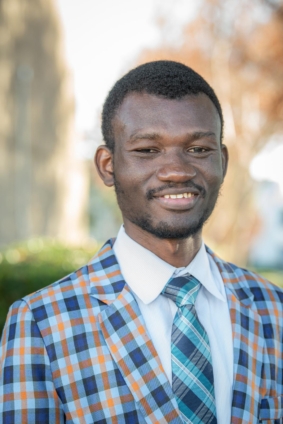
In a groundbreaking development, Ghanaian scientist and bioprocess engineer Emmanuel Mensah is making waves in the biopharmaceutical industry by harnessing Artificial Intelligence (AI) to revolutionize the production of life-saving monoclonal antibodies (mAbs). His work is paving the way for more efficient, cost-effective, and consistent drug manufacturing offering hope for patients worldwide.
The demand for monoclonal antibodies key treatments for conditions like cancer, autoimmune diseases, and infectious diseases has skyrocketed. However, traditional drug production methods, particularly batch processing, are plagued by inefficiencies. These methods are expensive, slow, and difficult to scale, often leading to inconsistent product quality and high production costs.
To solve these challenges, the pharmaceutical industry has been shifting towards continuous bioprocessing, a more efficient system where drug production happens in a seamless, uninterrupted flow. While this approach improves efficiency, it also introduces complexity, requiring advanced control mechanisms to ensure product consistency and quality. This is where Artificial Intelligence is stepping in to transform the landscape.
AI-powered systems can analyze massive amounts of data from drug production processes, identifying patterns and predicting key process parameters. Machine learning algorithms, such as Deep Neural Networks and Support Vector Machines, can accurately forecast cell growth, nutrient consumption, and product yield. This predictive ability allows manufacturers to adjust conditions in real time, minimizing errors and improving efficiency.
The impact is profound. Studies show that AI-driven continuous bioprocessing can increase drug yield by 25% while cutting operational costs by 30%. Additionally, real-time AI monitoring ensures precise control over critical process factors such as pH levels, oxygen concentrations, and feed rates. This not only enhances product consistency but also reduces waste and speeds up production.
Mensah’s work demonstrates how AI is reshaping drug manufacturing, moving it away from traditional trial-and-error methods toward data-driven precision. Pilot studies have shown that AI-driven systems can improve drug purity by 15% and reduce raw material waste by 50%. These advancements mean faster production cycles and more affordable medications for patients.
Despite these promising benefits, challenges remain. AI-driven drug production requires large, standardized datasets and strict regulatory compliance. Additionally, integrating AI into bioprocessing raises concerns about cybersecurity, as automated systems become potential targets for cyber threats. Addressing these issues will require collaboration among biotech companies, regulatory agencies, and research institutions.
Looking ahead, AI’s role in biopharmaceuticals is expected to expand beyond monoclonal antibodies to include vaccines, gene therapies, and other biologic drugs. The introduction of digital twins virtual replicas of drug production systems will enable real-time simulations, optimizing processes before implementing changes in physical production.
Emmanuel Mensah’s contributions are a testament to the power of AI in shaping the future of medicine. His work not only enhances efficiency in drug manufacturing but also ensures that life-saving treatments become more accessible and affordable. As AI continues to evolve, it is set to redefine the pharmaceutical industry, ushering in a new era of innovation and precision medicine.
Latest Stories
-
I was filled with disbelief – Akosua Achia Sarpong Esq. shares her first reaction
25 seconds -
Snake Village: A look at Volta Region’s hidden snake village and its tourism potential (Video)
8 minutes -
Election Watch Ghana calls for constitutional reforms to strengthen Electoral Commission independence
10 minutes -
NACOC, Postal and Courier Services Regulatory Commission intensify efforts to curb drug trafficking
12 minutes -
Ga Mantse chairs committee to drive Accra Green and Clean City Initiative
13 minutes -
Drivers threaten to remove traders from lorry stations over TrafficTech concerns
16 minutes -
AI could create 10 to 20 times more jobs despite current recruitment slowdown – Hubtel CEO
18 minutes -
Sexual abuse in schools persists because perpetrators are not held accountable – Dr Nyarkoa
26 minutes -
Chief Justice has designated Achimota Court to handle petroleum diversion cases – NPA CEO
29 minutes -
Philip Nai and friends gear up for bigger seventh Christmas outreach
30 minutes -
GSA strengthens electricity meter testing to protect consumers and improve energy reliability
31 minutes -
‘Dismissed or suspended? Ghanaians deserve clarity’ – NPP demands clarity on Ampofo Ankrah’s fate
35 minutes -
Teach consent and sexual boundaries from pre-school to prevent abuse – Gender advocate
40 minutes -
Zonda Tec launches HOWO T3M truck to support agric and logistics
49 minutes -
Obuasi SHTS scandal: Eduwatch calls for sex offenders’ register and mandatory background checks for teachers
1 hour