

Audio By Carbonatix
Authorities investigating the deaths of at least 60 people in northwestern Democratic Republic of Congo suspect the water source in one of the areas may have been contaminated, the World Health Organization said Friday. But the agency said it's too early for a definitive conclusion.
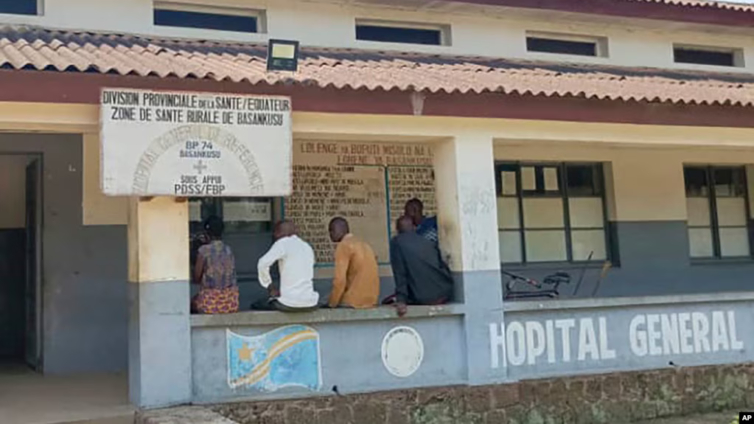
Doctors are investigating more than 1,000 illnesses that have emerged since late January in five villages in Congo's Equateur province, where high rates of malaria have complicated efforts to diagnose the cases and where officials have said they've been unable so far to confirm the main cause.
WHO emergencies chief Dr. Michael Ryan said during an online briefing Friday that for one of the villages there is "a very strong level of suspicion ... related to the poisoning of a water source."
Ryan did not clarify whether he was referring to contamination by accident, negligence or deliberate action. He also did not identify the village where the poisoning was suspected.
"We will not stop investigating until we are sure that the true cause or the absolute cause of what is occurring here is fully investigated," Ryan said.
Illnesses were first detected in late January in the village of Boloko after three children ate a bat and died within 48 hours.
Twelve cases and eight deaths in total have been recorded in Boloko, with no new cases recorded since January, officials say, adding that nearly half of deaths there occurred within hours of the onset of symptoms.
The village of Bomate in Basankusu health zone, around 200 kilometers from Boloko, has been hit the most: 98% of the cases and 86% of deaths have been recorded there, health officials say.
WHO said on Thursday that hundreds of the patients have tested positive for malaria, which is common in the region. In addition to common malaria symptoms such as fever and body aches, patients have also shown symptoms such as chills, sweating, stiff neck, runny or bleeding nose, cough, vomiting and diarrhea.
The health crisis has caused fear among residents, some of whom have said they fled the villages to avoid falling sick.
Experts say that access to the sick has been hindered by the remote locations of the affected villages and that several people died before medical teams were able to reach them.
Latest Stories
-
‘BECE is now more or less a placement examination’ – Daniel Fenyi
17 minutes -
NDPC to track implementation of government’s new economy programme
23 minutes -
‘There is no fight over limited spaces’ — GES assures on SHS placement
29 minutes -
Come for your hat when you finish our road – Tumu chiefs tell Mahama
30 minutes -
AGN Chair demands urgent climate adaptation and food systems integration on road to COP32
31 minutes -
The untapped role of Queen Mothers in African economic development
36 minutes -
Hyundai KOICA NextGen project launched in Ghana to boost automotive skills
46 minutes -
Upper West Regional Minister lauds 4 police officers for busting deadly gang
56 minutes -
Abu Jinapor demands transparency over GH¢49.72m evacuation cost
1 hour -
4,972 Ghanaians repatriated from 10 countries since 2025 – Ablakwa
1 hour -
Israeli strikes in southern Lebanese village kill 12
1 hour -
Ghana to launch Diaspora Consular Fund to support citizens in crisis – Ablakwa
1 hour -
Asiedu Nketiah urges political parties to rebuild public trust at inter-continental dialogue in South Korea
1 hour -
Heavy pitch, intense heat made Kotoko draw physically demanding – Eric Tinkler
2 hours -
Pregnancy School initiative lauded for reducing maternal mortality in Kwabre East
2 hours