

Audio By Carbonatix
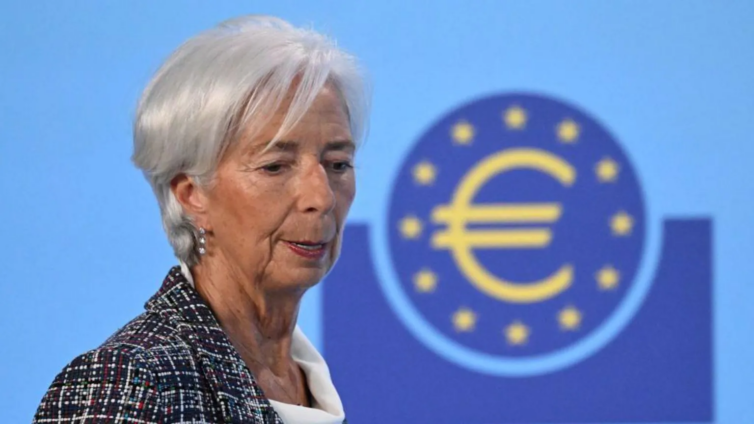
The European Central Bank (ECB) has cut interest rates for the sixth time in nine months as it seeks to bolster eurozone economic growth.
The bank stuck to its plan to lower rates in the face of economic challenges, including threats of US tariffs and plans to boost European military spending.
The ECB cut its main interest rate to 2.5% from 2.75%, and once again reduced its forecasts for economic growth in the eurozone.
The latest cut came as a sell-off of German government bonds spread to other bond markets, including the UK.
The sell-off came after Germany's move this week to increase military and infrastructure spending.
Political parties in talks to form a new government plan to pay for this by loosening Germany's fiscal rules, raising the prospect of a big increase in debt.
In response, longer term German bonds saw their biggest sell-off in years on Wednesday.
This pushed borrowing costs - as measured by the yields on the Germany's 10-year bonds - up by biggest daily amount since May 1997.
On Thursday, German borrowing costs - as measured by the yields on the country's bonds - continued to rise.
Yields continued to rise on Thursday, hitting 2.929% at one point - the highest level since October 2023.
The increase has had a knock-on effect on other countries, with UK borrowing costs also increasing.
UK government borrowing costs have already risen due to concerns about persistent inflation and interest rates not coming down as quickly as previously thought.
However, Lindsay James, an investment strategist at Quilters, said the market was still expecting the Bank of England to make two further rate cuts in 2025, "with recent inflation data reasonably encouraging".
Challenges ahead
With inflation getting closer to its 2% target, the ECB said its interest rate cuts were "making new borrowing less expensive for firms and households".
But it trimmed its prediction for eurozone growth, putting expansion in 2025 at just 0.9%, only slightly above the 0.7% pace recorded last year.
The ECB faces a number of upcoming challenges as it tries to get inflation to its 2% target.
The eurozone economy may suffer if the Trump administration goes ahead with plans to impose "reciprocal tariffs" on every country that taxes US imports.
Latest Stories
-
Prince Adu-Owusu: He felt the goodbye before it ended
48 seconds -
KNUST study warns sea defence is shifting coastal threats to unprotected communities
21 minutes -
Telecel Ghana launches 2026 SME Month to drive business growth
33 minutes -
Manya Krobo Community Bank records 131% rise in profit after tax
37 minutes -
Even John Hyde must die – A tribute to my friend
53 minutes -
‘Online pastor’ romance scam cases to be consolidated and moved to High Court
54 minutes -
NPP Ayawaso West Wuogon constituency election dispute escalates into court battle
55 minutes -
What happened to E-Blocks, Agenda 111 should not happen to 24-hour markets – Ahmed Ibrahim urges Ayariga
55 minutes -
VAST Ghana calls for nationwide action against cigarette-shaped lollipop
59 minutes -
Germany says Russia behind Leipzig airport drone attack
1 hour -
NSMQ 2026: Achimota School shatters Adisadel’s semi-final hopes to book penultimate spot
1 hour -
NSMQ 2026: Bright SHS makes history as first private school to reach semi-finals
1 hour -
Ghana, Serbia explore deeper cooperation in agriculture
1 hour -
Woman killed in Times Square stabbing, suspect shot dead by police
1 hour -
Hull City sign Ansah and close on Norton-Cuffy
1 hour