

Audio By Carbonatix
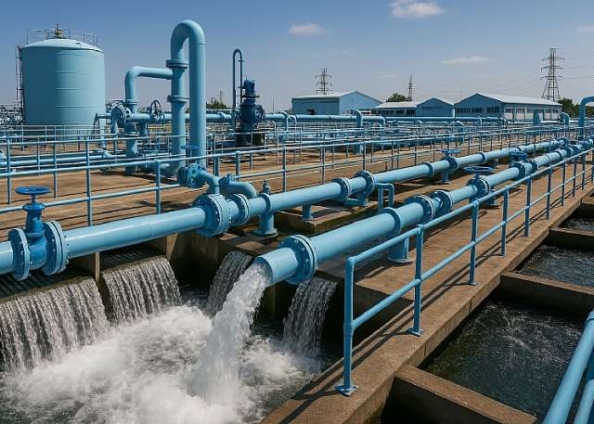
Managing Director of Ghana Water Limited (GWL), Adam Mutawakilu, has disclosed that replacing the country’s ageing water transmission pipelines would cost more than GH₵3.5 billion (US$356 million) — far beyond the company’s current financial capacity.
Speaking on the Joy Super Morning Show, Mr Mutawakilu said most of Ghana’s major transmission lines are old, weak and operating below capacity, posing a significant challenge to effective water distribution.
“Most of this transmission capacity utilisation is low. Most of the transmission lines are weak and need to be replaced, and that is a huge cost,” he said.
“We are talking about 356 million dollars to replace the old pipes and put in new pipes — that’s more than 3.5 billion Ghana cedis.”
He explained that the company’s annual revenue falls well short of what would be required to undertake such a large-scale overhaul.
“For example, we make almost 1.8 billion cedis — that’s about 100 to 150 million dollars for the whole year. This is the whole amount, not taking salaries or maintenance into account,” he said. “So, if you take it, you realise that we are not in good shape.”
His comments come amid recurring water shortages in Accra and parts of the Greater Accra Region, which have sparked public concern and political debate over infrastructure planning and investment.
Mr Mutawakilu noted that the combined impact of ageing treatment plants, deteriorating pipelines and limited revenue has left the utility struggling to meet the rising demand for water driven by population growth.
“The problem is not just the number of plants; it’s the transmission lines connecting them,” he said. “Without replacing these old pipelines, a lot of water is lost, and supply remains inconsistent, especially in urban areas.”
The GWL Managing Director urged policymakers to prioritise capital investment in both water production and distribution infrastructure, warning that further delays could worsen service disruptions and public dissatisfaction.
“Water is essential for life and development,” he said. “We must match infrastructure investment with our population growth, or these challenges will continue to escalate.”
Managing Director of Ghana Water Limited (GWL), Adam Mutawakilu, has disclosed that replacing the country’s ageing water transmission pipelines would cost more than GH₵3.5 billion (US$356 million) — far beyond the company’s current financial capacity.
Speaking on the Joy Super Morning Show, Mr Mutawakilu said most of Ghana’s major transmission lines are old, weak and operating below capacity, posing a significant challenge to effective water distribution.
“Most of this transmission capacity utilisation is low. Most of the transmission lines are weak and need to be replaced, and that is a huge cost,” he said.
“We are talking about 356 million dollars to replace the old pipes and put in new pipes — that’s more than 3.5 billion Ghana cedis.”
He explained that the company’s annual revenue falls well short of what would be required to undertake such a large-scale overhaul.
“For example, we make almost 1.8 billion cedis — that’s about 100 to 150 million dollars for the whole year. This is the whole amount, not taking salaries or maintenance into account,” he said. “So, if you take it, you realise that we are not in good shape.”
His comments come amid recurring water shortages in Accra and parts of the Greater Accra Region, which have sparked public concern and political debate over infrastructure planning and investment.
Mr Mutawakilu noted that the combined impact of ageing treatment plants, deteriorating pipelines and limited revenue has left the utility struggling to meet the rising demand for water driven by population growth.
“The problem is not just the number of plants; it’s the transmission lines connecting them,” he said. “Without replacing these old pipelines, a lot of water is lost, and supply remains inconsistent, especially in urban areas.”
The GWL Managing Director urged policymakers to prioritise capital investment in both water production and distribution infrastructure, warning that further delays could worsen service disruptions and public dissatisfaction.
“Water is essential for life and development,” he said. “We must match infrastructure investment with our population growth, or these challenges will continue to escalate.”
Latest Stories
-
Government promises support for Kumasi Central Market fire victims
2 minutes -
Vibes The Movie: Big Ghun’s Ghanaian film earns five nominations at 2026 REFFA
33 minutes -
MamaCare CEO warns unresolved conflicts among health workers could undermine maternal and neonatal care
57 minutes -
Health professionals urged to translate medical knowledge into practice to save mothers
1 hour -
Conflicts among care providers linked to maternal, neonatal deaths – Expert
3 hours -
GIS marks 10th TIME conference, champions improved teaching practices
3 hours -
BRICS Or Balance? What Ghana’s bid really means
3 hours -
GPRTU wants full TRAFFITECH-GH implementation to start in 2027
4 hours -
Mahama announces plans to import electric wheelchairs for PWDs
4 hours -
KGL U17 Colts 2026: Western beat Prempeh Elite Academy to set up final final with Greater Accra Region
4 hours -
Late Solanke strike salvages 10-man Spurs draw at Man United
4 hours -
Gender Ministry to monitor welfare of Nana Akua Addo’s children amid domestic violence case
4 hours -
Benedict Okyere Yeboah: Ghana’s football problem goes beyond sacking a coach
4 hours -
GPL 2026/27: Darkwah Wiafe’s winner sees All Blacks beat Kotoko
4 hours -
ITF World Tour : Patel Wins Boys’ Singles Final at J100 Accra
5 hours