

Audio By Carbonatix
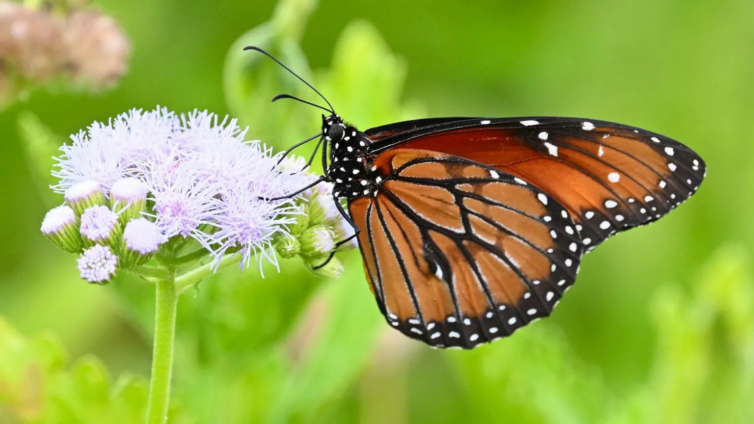
Butterfly populations in the US shrank by more than a fifth within the space of two decades, according to a new study.
Numbers fell by 22% between 2000 and 2020, according to research by Binghamton University in New York.
A third of species saw serious decline, with some, like Julia's Skipper, losing more than 90% of their populations.
However, the researchers say butterflies may be able to recover if urgent conservation measures are taken.
The study published in the journal Science measured butterfly "abundance" - the number of individuals of a species within a specific area. It analysed 12.6 million butterfly sightings from 76,000 surveys across 35 monitoring programmes.
This included data from citizen science programmes like the North American Butterfly Association's Fourth of July counts.
Using statistical models, they estimated population trends for 342 species.
The results showed that 33% were in significant decline, with many exhibiting extreme losses - 107 species declined by more than 50%.
"While the results aligned with global trends, seeing the extent of the decline at such a large spatial scale was sobering," said Prof Eliza Grames, an assistant professor of biological sciences at Binghamton University.
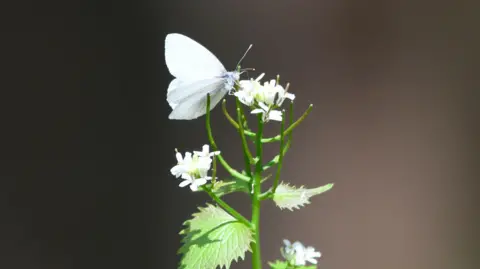
Some of the most affected species include the Florida white, Hermes copper, tailed orange, Mitchell's satyr, and West Virginia white, all of which have declined in abundance by more than 98% within the US.
The West Coast lady, once a common backyard butterfly, has declined by 80%, raising alarm as even this highly adaptable species struggled.
"That's alarming because it suggests even common butterflies aren't safe," Prof Grames said.
Habitat loss, pesticides, and climate change are key causes of this decline, according to the researchers.
Butterflies are crucial pollinators, supporting plants and crops. Experts say their decline could disrupt food production and entire ecosystems.
They also serve as indicators of environmental health - when butterfly numbers fall, it signals trouble for other species.
Southwest US most affected
Species are declining most severely in the US Southwest, one of the hottest and driest regions, researchers say. They believe drought may be a major contributor to these losses.
"Drought is a double threat - it harms butterflies directly and also affects their food and host plants," Prof Grames explained.
The results could help drive important conservation efforts, such as prioritising species for the International Union for Conservation of Nature (IUCN) Red List of Threatened Species and Endangered Species Act protection.
Despite the decline, there is hope for recovery.
"Butterflies can recover quickly because they have short generation times. Small actions like planting wildflowers, reducing pesticide use, or even leaving part of a backyard unmowed can significantly improve their chances," Prof Grames said.
She also stressed the need for government action.
"Insects are fundamental to life on earth, and we need conservation actions and policies that support insects."
Latest Stories
-
Valencia sack Corberan and chief executive
30 minutes -
Ronaldo demands lifetime bans over Jota chants
39 minutes -
Arsenal to contact Pro Ref over Konsa penalty
48 minutes -
No weekend game for Manchester derby VAR officials
58 minutes -
AI ‘kill switch’ may need to be mandatory, Anthropic co-founder says
1 hour -
‘Culture shift’ needed in how UK does business, PM urges
1 hour -
SHS placement crisis? GES says 95% of students are already placed
1 hour -
ITF World Tennis Tour Juniors: J60 stage begins in Accra
2 hours -
Absa Bank named winner of Bancassurance Leadership Award at 2026 Ghana Insurance Awards
2 hours -
Mr. Aloysius Kwesi Acquah Snr aka Kwesi Anfo
2 hours -
NACOC’s cocaine suspects arrest commendable, but it cannot run on ‘charity’ to fight drug cartels
2 hours -
Gov’t cannot deny what it has already set in motion – Former NaCCA boss challenges Mahama on Arabic, Chinese policy
2 hours -
Telecel Foundation marks Fetu Afahye with HealthFest
3 hours -
IEAG calls for urgent intervention to decongest ports
3 hours -
Strong financial, technical capacity non-negotiable for Accra-Kumasi Expressway – Agbodza
3 hours