

Audio By Carbonatix
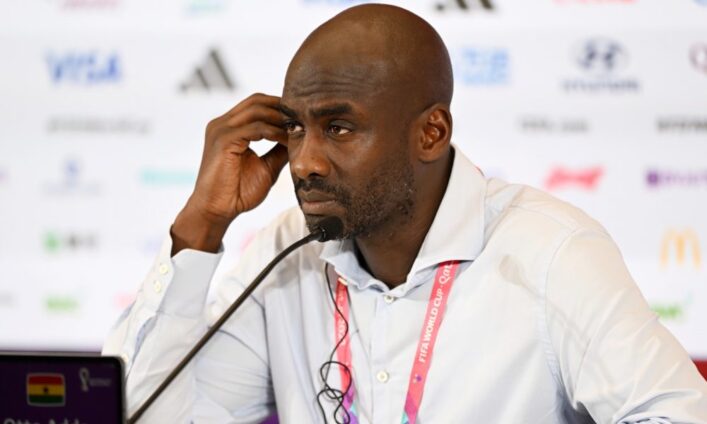
The sacking of Otto Addo as head coach of the Ghana national football team has followed a familiar national script—one that is as predictable as it is revealing. It is a script Ghana knows too well, one that begins with defeat and ends with dismissal.
There is a ritual in the Republic whenever the Black Stars lose. It begins with silence, moves quickly into analysis, escalates into outrage, and ends with the ceremonial sacrifice. This time, the chosen offering is Otto Addo.
Consider a simple story. A man owns a taxi that refuses to start. The engine coughs like a retired smoker, the tyres are smoother than campaign promises, and the fuel gauge has long resigned from duty. But every morning, when the car refuses to move, the owner sacks the driver. “Clearly,” he insists, “this man does not understand driving.” Ghana has just sacked another driver.
The losses to Austria and Germany were not pleasant. They exposed defensive gaps, tactical uncertainty, and moments when the Black Stars looked less like a team and more like a group assembled by emergency WhatsApp broadcast. But they also exposed something deeper—something often ignored in the rush to assign blame. Germany is not merely a football team; it is a system.
Players are developed through structure, coaches operate within defined philosophies, and performance is built over years, not improvised days before kickoff. Austria, too, has built a disciplined football identity that consistently delivers competitive performances. Ghana, by contrast, continues to rely on flashes of talent in the absence of a sustained, coherent system.
In Ghanaian football, the coach plays many roles. He is tactician, spokesperson, psychologist—and ultimately, shock absorber. When results go wrong, he absorbs everything: inconsistent player development, administrative uncertainty, media pressure, and the weight of national expectation. It is a burden that would challenge even the most accomplished managers.
To be fair, Otto Addo was not without fault. There were legitimate questions about tactics, debates about player selection, and moments when the team appeared disjointed. But even the most capable coach cannot produce consistent results within a system that lacks stability and long-term direction.
While the coach has been dismissed, the structures that shape Ghana football remain firmly in place. The domestic league continues to struggle for relevance and consistency. Grassroots development remains fragmented. Administrative direction shifts frequently, often without a clear long-term vision. These are systemic challenges, yet they rarely attract the same urgency as the decision to sack a coach.
It is easier to remove a coach than to reform a system. A coach is visible. He stands on the touchline, answers questions, and becomes the face of failure. A system, on the other hand, is abstract. It does not concede goals in public, and it cannot be dismissed in a press release. And so, it remains.
A new coach will now be appointed. Expectations will rise, hope will return, and optimism will once again dominate the conversation. We will be told that this appointment represents a fresh start, that this coach understands Ghana football, and that a new direction has been established. We have heard this before. Until results falter. And when they do, the cycle will begin again—hire, hope, pressure, dismissal.
The departure of Otto Addo may satisfy the national appetite for accountability in the short term. It signals action and provides a sense of closure. But it does not address the deeper structural issues confronting Ghana football. Success in modern football is not achieved through frequent coaching changes; it is built through structure, consistency, and long-term planning.
Until those foundations are strengthened, Ghana risks repeating a familiar pattern—one where the coach changes, but the outcome does not.
Latest Stories
-
Jetour set for wider presence in Ghana as Swiss Group plans more showrooms and workshops
3 seconds -
Tinting front windscreens is illegal – ACP Alexander warns motorists
6 minutes -
Your HR Department already has the answer. The problem is finding it
7 minutes -
AFCON 2027Q:‘Qualifying for one or two tournaments is not a sign of success’ – Carlos Queiroz
10 minutes -
Baffour Awuah sues Akwatia MP, Blakk Rasta over alleged false statements
13 minutes -
AFCON 2027Q: Alexander Djiku ruled out of Gambia game with injury
18 minutes -
AFCON 2027Q: The god of football is results – Carlos Queiroz
20 minutes -
Africa will not be forced to choose sides in global power rivalry – Ablakwa
24 minutes -
NPP demands review of GH¢2,650 cocoa price, questions statutory calculation
26 minutes -
AFCON 2027Q: ‘Better to stay home if you’re coming to complain about absent players’ – Carlos Queiroz
27 minutes -
First Deputy Minority Whip files private members’ motion for inquiry into Ghana-linked narcotics seizures
28 minutes -
KMA spearheads construction of new Kumasi Central Divisional Police Headquarters, seeks support for relocation
30 minutes -
Photos: GAF begins documentation and physical screening for 2026/27 enlistment
30 minutes -
Three arrested over alleged kidnapping and murder of 33-year-old in Teshie
32 minutes -
Alan Kyerematen calls for end to political ‘duopoly’ ahead of 2028 election
32 minutes