

Audio By Carbonatix
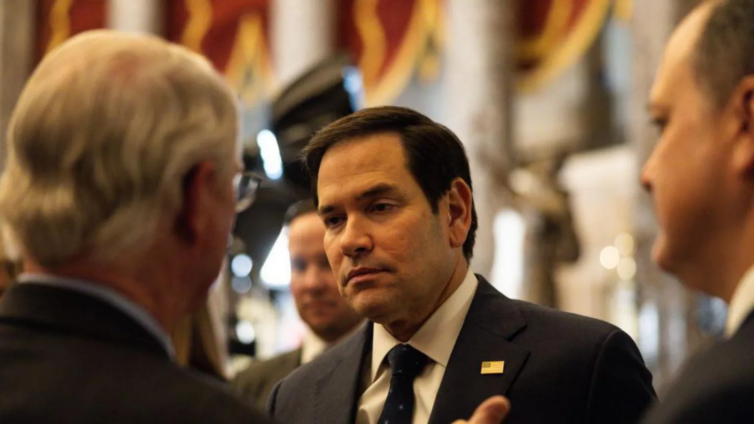
The vast majority of the US Agency for International Development's (USAID) programmes have been terminated after a six-week purge, Secretary of State Marco Rubio has announced.
On X, Rubio said that the initiatives "spent tens of billions in ways that did not serve" or harmed US interests.
The remaining programmes - just 18% - will now be administered by the State Department.
Humanitarian organisations around the world have warned that the controversial move to end long-running US aid programmes is already having dire consequences around the world, potentially endangering lives.
The Trump administration has repeatedly made clear that it wants overseas spending to be closely aligned with its "America First" approach.
Shortly after Trump returned to the White House on 20 January, thousands of USAID employees were put on leave, and those working overseas were recalled.
In an executive order signed on his first day, Trump also moved to freeze foreign assistance funding and ordered a review of USAID's work abroad, led by Elon Musk and the Department of Government Efficiency, or Doge.
Thousands of development contracts also were cancelled, and thousands of employees ultimately fired.
In his X post, Rubio said that after the review, the US was "officially ending" about 5,200 of USAID's 6,200 programmes.
"In consultation with Congress, we intend for the remaining 18% of programmes we are keeping....to be administered more effectively under the State Department," Rubio added.
Additionally, Rubio thanked Doge and State Department staff "who worked very long hours to achieve this overdue and historic reform".
Democrats and various humanitarian organisations have characterised the shutdown of USAID's programmes - which were funded by Congress - as illegal, prompting several lawsuits.
USAID was tasked with a wide variety of missions around the globe, ranging from famine detection to polio vaccinations and emergency food kitchens in conflict zones.
The freezes in funding and elimination of programmes is already having an impact.
In Sudan, for example, the freeze in humanitarian assistance has led to the shuttering of over 1,100 communal kitchens set up to help those left destitute by the country's ongoing civil war.
It is estimated that almost two million people have been affected.
In Oman, dozens of Afghan women who fled the Taliban government to pursue higher education now face return after their USAID-funded scholarships were abruptly terminated.
In another example, India's first medical clinic for transgender people shut operations in three cities after US President Donald Trump stopped foreign aid to it.
Latest Stories
-
Sammyflex TV’s Roland Amartey girds up for 2026 Ghana Music Awards UK coverage
4 minutes -
U.S. bank queried payments for Ghana ambassador’s residence renovated by company owned by embassy’s IT officer
23 minutes -
GoldBod to generate US$1.4bn in FX in September
40 minutes -
GAF 2026/2027 enlistment opens September 3 for degree holders
42 minutes -
Reparatory justice: Mahama announces high-level UN side event in September
58 minutes -
Bosome Freho Assembly invests first tranche Common Fund in water and education projects for 19 rural communities
58 minutes -
YIPs Ghana honours 5 outstanding students at 2026 Tertiary Achievers Awards
59 minutes -
NSMQ 2026: TAMASCO triumphs over St. Hubert and Labone to clinch ticket to the semi-finals
59 minutes -
US and Iran trade strikes for first time in weeks
1 hour -
Non-interest banking will not replace conventional banking – Dr Johnson Asiama
1 hour -
Non-interest banking products available to everyone, not just Muslims – Asiama
1 hour -
Dolly Parton laid to rest alongside husband in Nashville
1 hour -
Accra Mall celebrates Legends Reimagined with Weekend Vibes this September
1 hour -
Tibule Advertising marks ‘Gong Gong Awards’ debut with a win for indomie
1 hour -
Nurturing market-ready solutions that create jobs: KIC AgriTech Challenge Pro teams first pitch commenced
1 hour