

Audio By Carbonatix
A newborn’s first cry signals the start of a new life, filled with hope and possibilities.
However, for some parents, the joy of childbirth is met with unexpected challenges, including congenital conditions like clubfoot.
Each year, about 20,000 babies worldwide are born with clubfoot, with Ghana recording approximately 1,000 cases annually.
Despite being a treatable condition, clubfoot remains a burden in many parts of the country.
According to Programmes Manager of the CHAG/Hope Walks Clubfoot, Nana Adutwumwaa Adjetey, untreated cases are common.
“When you walk the streets of Accra, you see many untreated individuals with clubfoot. There are children with clubfoot and even adults who still have the condition. If each region records about 1,000 cases annually, that shows how much of a burden clubfoot is,” she noted.
One of the major challenges surrounding clubfoot treatment is the lack of awareness. Many parents, especially first-time mothers, struggle to recognize the condition in their newborns.
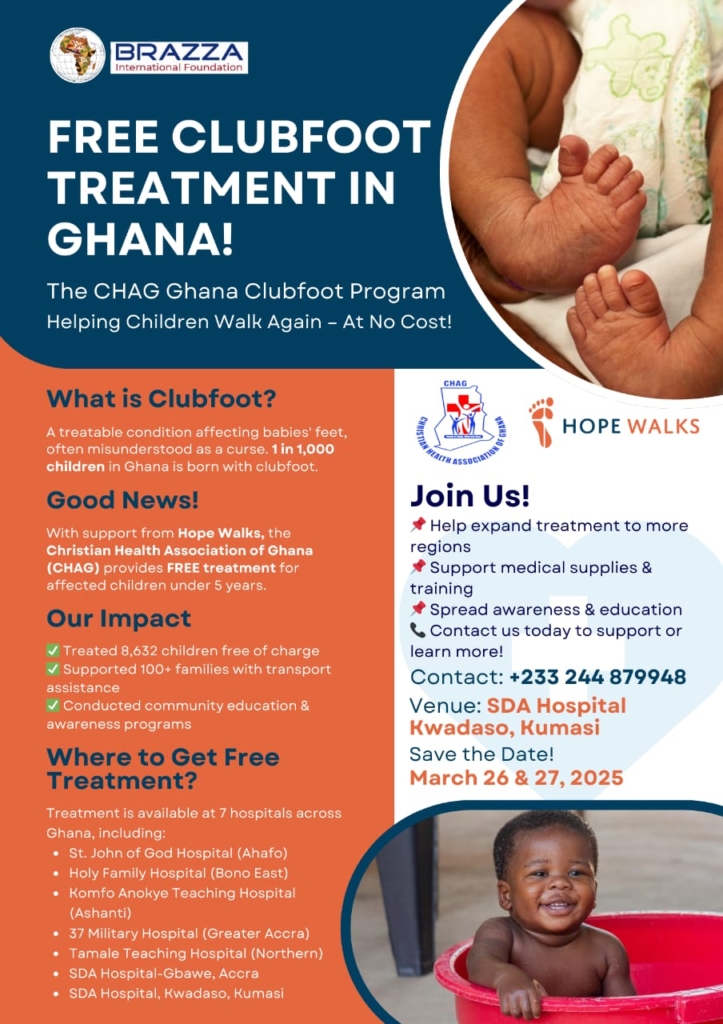
The Christian Health Association of Ghana (CHAG) with support from Brazza International Foundation, Hope Walks, and The Multimedia Group, will on 26th and 27th March, 2025 offer free treatment for children under five years. This exercise will take place at the SDA Hospital, Kwadaso in Kumasi.
“I didn’t know anything about clubfoot. I had never seen a child with such a condition before, so I didn’t recognize it in my own child,” a mother shared.
Another added, “For first-time mothers, it would be difficult for them to diagnose - unless they live in a community where people can help them identify that this is a deformity, that something is obviously wrong with the child’s foot.”
Medical experts stress the importance of early detection. An orthopedic surgeon at the 37 Military Hospital, Col. Delali Adzigbli, explained that clubfoot is usually identified during routine examinations by midwives immediately after birth.
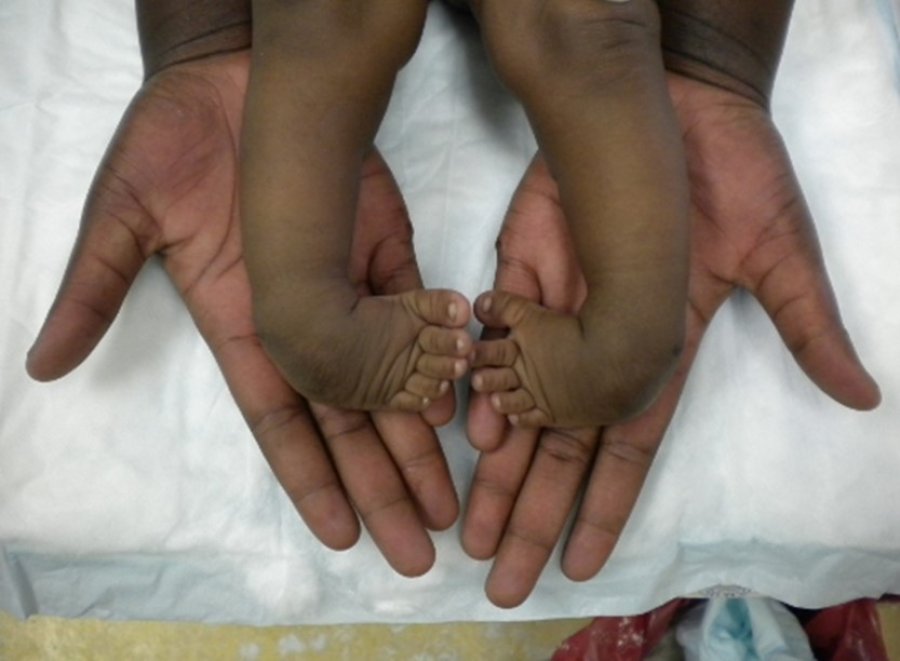
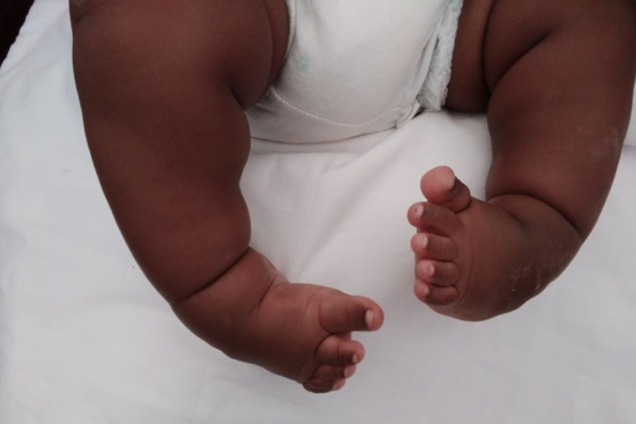
“When a child is born, the midwife is supposed to examine the baby from head to toe. As part of this examination, they check the feet - ensuring the baby has feet, counting the toes to confirm there are five or more, and assessing whether the foot’s position is natural or abnormal. What usually gives it away is that the foot looks twisted. When you see that deformity, you know the child has an abnormal foot,” he stated.
In Ghana, many myths and stigmas surround clubfoot, with some believing it is a curse or punishment for past sins. Some mothers have shared harrowing experiences of societal rejection and emotional trauma.
“People say all sorts of things about children born with clubfoot. But they are not river babies, nor are they cursed,” a health worker emphasized.
One mother recounted, “I was very disturbed and wished my baby would die.”
But experts insist that clubfoot is purely a medical condition and not a spiritual affliction.
Nana Adutwumwaa Adjetey reiterated that, “Clubfoot is not a spiritual condition. It is not a curse - it is a medical condition. It is simply a shortening of certain tendons. It is no fault of any woman that her baby is born with clubfoot.”
The good news is that clubfoot is treatable. The Christian Health Association of Ghana (CHAG), the country’s second-largest healthcare provider, has successfully treated about 8,000 children since 2008.
“Treatment is necessary to correct the condition. It can be corrected, and we have successfully treated thousands of babies with this deformity. We want to spread the word - any family with a child born with clubfoot should reach out to us. We will direct them to one of our treatment centers, where they will receive free corrective treatment,” Nana Adjetey assured.
She further explained the treatment process, stating, “As someone who is sick goes to the hospital for treatment, so is clubfoot treatable. We advise parents on how to maintain the corrective casts. These will be worn for a week before being changed, and the procedure continues.”
Experts believe clubfoot treatment should be widely accessible across Ghana’s healthcare system.
“We want to reach a point where every regional hospital, every teaching hospital, and every primary healthcare facility with doctors and physiotherapists integrates the treatment of clubfoot into their regular medical care,” Nana Adjetey emphasised.
If left untreated, clubfoot can significantly affect a person’s mobility, leading to lifelong challenges. Every child deserves a chance to walk. Families with children diagnosed with clubfoot are encouraged to seek immediate medical assistance.
Latest Stories
-
Eco SIM and sustainability, making mobile technology greener
12 minutes -
Daily Insight for CEOs: Building a future-ready organization
13 minutes -
The Hunger Project-Ghana commissions ICT Centre at Domi Achiansa Epicenter to bridge digital divide.
13 minutes -
Nabdam: Police arrest 14 for cultivating and distributing ‘wee’
13 minutes -
Afro-Arab Drive Green expands EV fleet to boost jobs through energy transition
17 minutes -
Sunyani Paramount Chief warns chiefs against cemetery land sales and encroachment
17 minutes -
Trump envoy Kushner arrives in Israel after rare Hamas talks on Gaza peace plan
18 minutes -
Burnham exchanged messages with person posing as Trump’s chief of staff
19 minutes -
Prof. Boima calls for shift in Africa’s approach to kidney care
19 minutes -
Stonebwoy: Afro Dancehall Pele
20 minutes -
Chamber of Mines engages Adamus, government over revoked mining leases
37 minutes -
Kwame Dadzie: Dear President Mahama, scrap ‘Black Star Experience’
48 minutes -
CSA urges Ghanaians to report cyber threats
57 minutes -
Top Zambian opposition figures arrested days after presidential vote
1 hour -
Agotime Kente Festival celebrates heritage, weaving and cultural identity
1 hour