

Audio By Carbonatix
Nigerian President Bola Ahmed Tinubu has sounded the alarm on the growing threats of violent extremism and unconstitutional changes of government in West Africa, warning that these challenges undermine the region’s democratic progress.
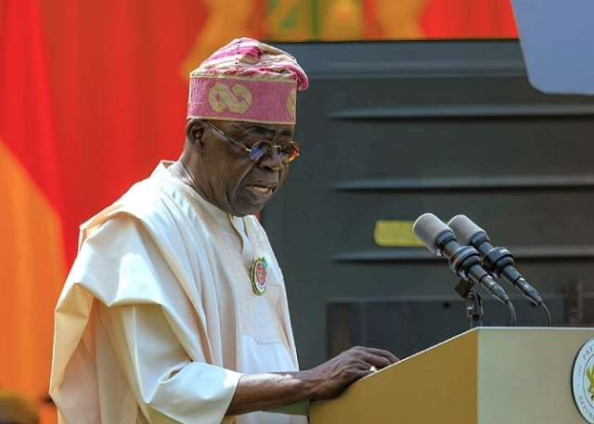
At the official launch of the Economic Community of West African States (ECOWAS) 50th Anniversary celebrations in Accra on Tuesday, Mr Tinubu emphasised the urgent need for collective action to address these issues.
As Chairman of the ECOWAS Authority of Heads of State and Government, Mr Tinubu reaffirmed his commitment to regional stability and democratic governance, calling on member states to strengthen cooperation and uphold the principles enshrined in the ECOWAS Treaty.
“Our region continues to grapple with new and evolving threats, violent extremism, climate change and food insecurity, and the wave of unconstitutional changes in our region seriously threatens the democratic gains we have painstakingly built,” President Tinubu said.
The ECOWAS 50th Anniversary celebrations brought together dignitaries from across the region, including President John Dramani Mahama and Ghana’s former President Nana Addo Dankwa Akufo-Addo.
In recent years, West Africa has faced numerous challenges, including violent Extremism where the rise of extremist groups has posed a significant threat to regional stability and security, unconstitutional changes, and the wave of illegal changes in government has undermined democratic progress and posed a significant challenge to regional stability.
Again, climate change and food insecurity that were presently plaguing the region were posing significant challenges to economic development and stability.
As a result, President Tinubu’s call to action emphasises the need for ECOWAS member states to strengthen cooperation and work together to address these pressing issues.
ECOWAS is a regional economic community that aims to promote economic integration and cooperation among its 15-member states in West Africa.
ECOWAS focuses on issues like: Economic development, Trade liberalisation, Infrastructure development and Peace and Security.
Its goals include creating a single market, improving living standards, and fostering regional cooperation.
Latest Stories
-
IMF urges tighter controls over GoldBod programme amid concerns over BoG losses
14 minutes -
Appointments Committee to vet Zanetor Agyemang-Rawlings today
18 minutes -
GMA strengthens competencies of seafarer examiners, instructors
20 minutes -
‘Crime is crime’ – Mahama Ayariga cautions MPs against shielding politicians from prosecution
26 minutes -
IMF cautions Ghana against early return to international capital markets
31 minutes -
GoldBod ‘losses’ have helped stabilise Cedi, contain inflation – Mahama Ayariga
37 minutes -
NDC formally notifies Speaker of James Agalga’s appointment as Majority Leader
42 minutes -
DGPP’s GH¢21.89bn ‘loss’ is accounting adjustment, not cash expense – Sources
47 minutes -
Tuba murder: Court adjourns case to September 28, as police prepare to forward docket to AG
48 minutes -
Debt restructuring key to Ghana’s economic recovery – IMF
53 minutes -
Let’s wait and see – Agalga refuses to take sides on extortion allegation as OSP probe begins
55 minutes -
FDA intensifies drive to ensure iodised salt reaches consumers
59 minutes -
HTU partners Praise Export to boost student training, employability
1 hour -
Samuel Abu Jinapor proposes independent body to fight galamsey
1 hour -
Government moves to review Minerals and Mining Act to strengthen regulation
1 hour