

Audio By Carbonatix
In a spirited lecture marking the importance of workers in national development, thought leaders, youth advocates, and civil society champions came together to spotlight the future of work in Ghana.
Held under the theme “Lessons from Experience: A Civil Society Leader’s Journey in a Changing World,” the event spotlighted the evolving role of civil society actors in shaping work and employment in today’s dynamic environment.
The gathering sparked a much-needed conversation between academia, civil society, and the country’s largest demographic, its youth, who make up an astounding 60 – 70 per cent of the population.
The lecture highlighted the effects of shifting global tides from the sudden pullout of USAID funding and rising U.S. tariffs to broader geopolitical tensions on Ghana’s development projects, job creation, and social equity.
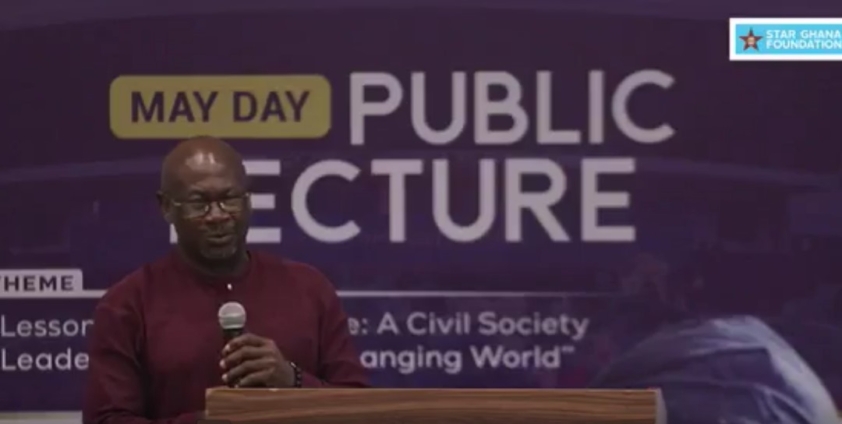
At the heart of the discussion, keynote speaker Dr. Ibrahim-Tanko Amidu delivered a stirring message to the youth to embrace volunteerism not just as a noble ideal, but as a launchpad for skills, leadership, and national unity.
He also advised the youth to look beyond partisanship and rather develop a sense of active citizenship to fight for development.
“Volunteer youth service builds bridges between people, between dreams and careers, and between passion and purpose,” he stated.
He also warned against the politicisation of student leadership, urging young people to focus on Ghana, not partisanship.
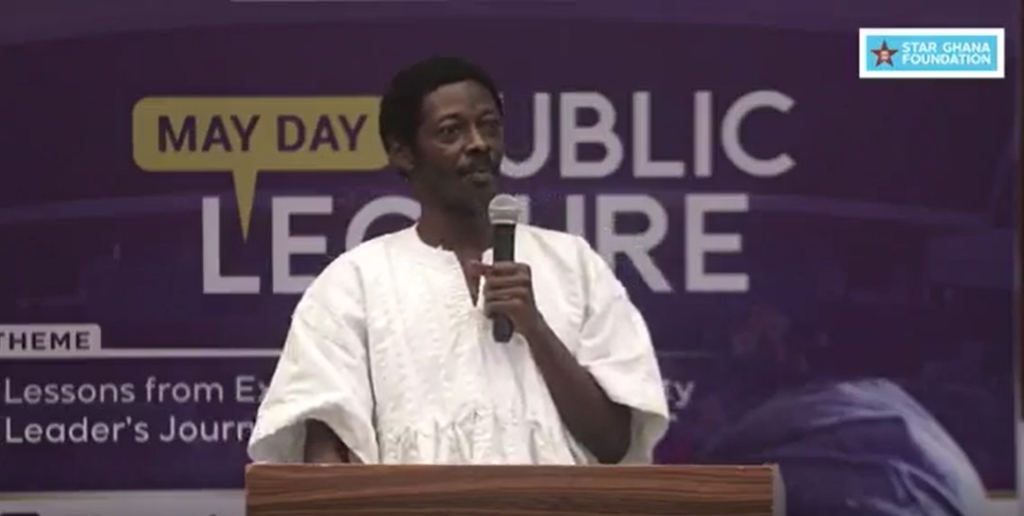
Dr. Farouk Braimah, CEO of People’s Dialogue on Human Settlements, delivered a passionate address on the overlooked struggles of youth in Ghana’s vast informal sector and offered valuable insights into issues that academia can investigate and develop solutions for the benefit of CSOs and employment in general.
“The current social protection and pension schemes don’t work for young people hustling in the informal space,” he said.
“We need a forensic overhaul to close the gap and level the playing field.”
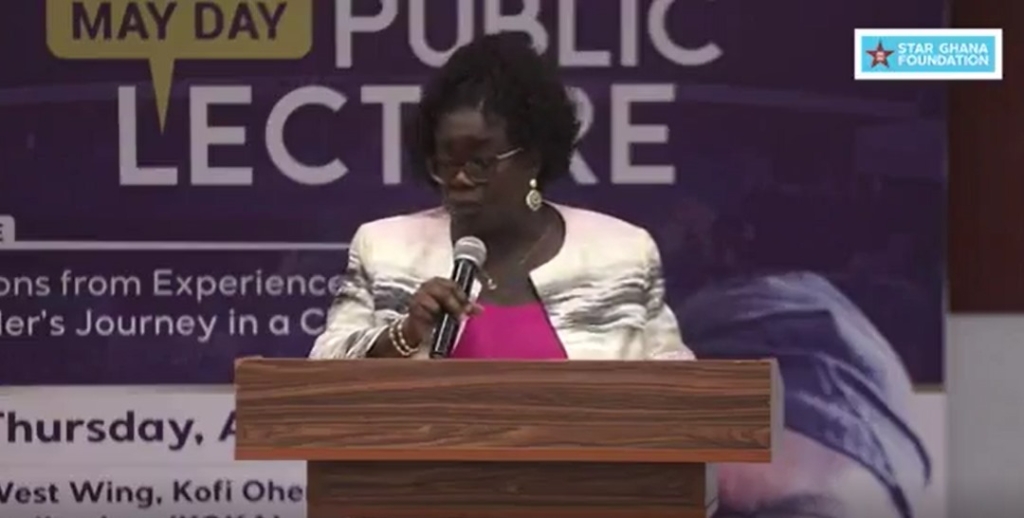
On his part, the acting Director of the Institute of Work, Employment and Society (IWES), Dr. Erika Mamley Osae, highlighted the university’s commitment to real-world partnerships with civil society groups on the frontlines of social change.
“This is not just about theory, it’s about transforming strategy into action,” she said. “Let’s unlock practical ideas and build real change, together.”
The lecture ended with renewed energy and a clear message, Ghana’s future of work must be built on inclusion, collaboration, and the unstoppable drive of its youth to promote national development.
Latest Stories
-
Food inflation never responded – Dr Yamson says Ghana must stop throwing money at short-term fixes
37 minutes -
Oil set for second weekly rise as unsettled US-Iran war crimps supply
56 minutes -
US teen drops lawsuit against Meta, Google and Snap ahead of trial
1 hour -
Meghan could return to acting once back in UK
1 hour -
Bali jails Swiss tourist for insulting sacred Day of Silence
1 hour -
At least 50 killed, mostly children, as overloaded boat capsizes in Nigeria
2 hours -
Cameroon president returns home after 10-week absence
2 hours -
Tunisia opposition protests against president amid economic discontent
2 hours -
Nii Lante Vanderpuye apologises to Sammy Gyamfi, NDC over GoldBod comments
4 hours -
US sanctions more Cuban companies and officials
4 hours -
There is something different this time – Dr Yamson hails Mahama govt’s economic management
4 hours -
Gold for Reserves has risky, but necessary – Dr Yamson backs Mahama govt’s gold strategy
5 hours -
‘You want the trade, but not the people?’ – Dr Yamson tears into South Africa’s xenophobia
5 hours -
Walmart sales under strain as US shoppers pull back
5 hours -
The Premier League’s new plan to end corner chaos
6 hours