

Audio By Carbonatix
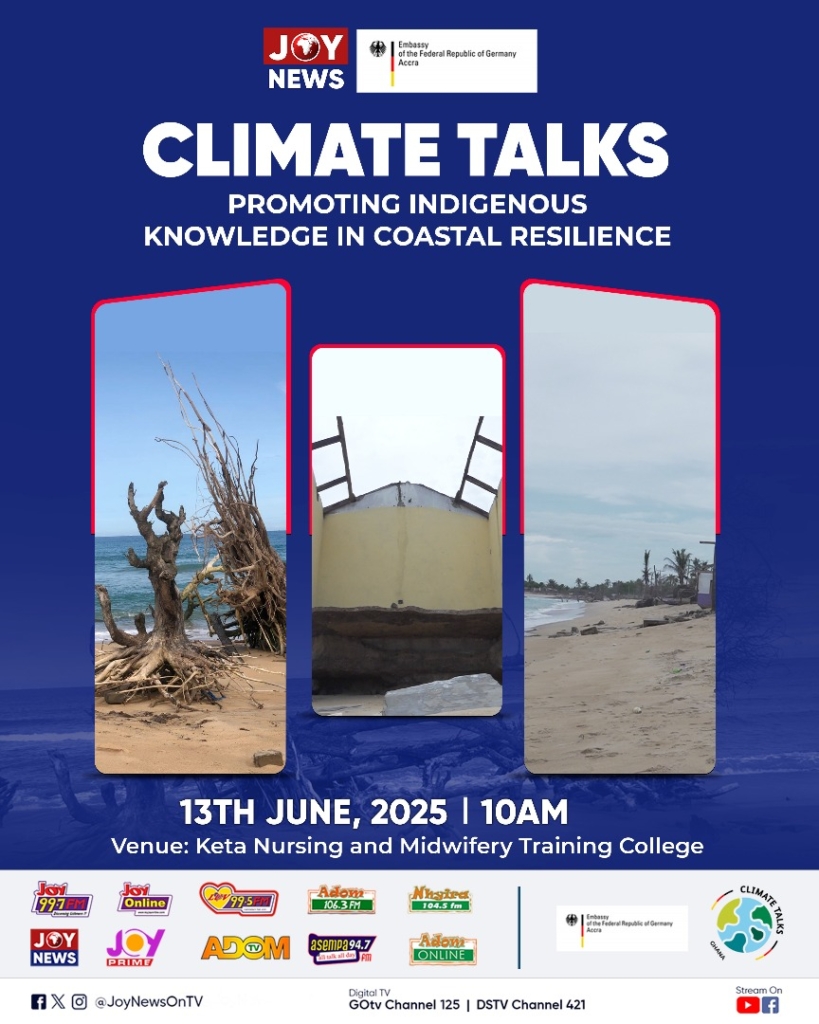
JoyNews, in collaboration with the German Embassy, is set to host the second edition of Climate Talks, which aims to encourage bold new steps to protect Ghana’s vulnerable coastal communities by integrating indigenous knowledge into national climate resilience efforts.
This edition will spotlight how Ghana is responding to the increasing threats of coastal erosion and sea-level rise, with a focus on grassroots solutions rooted in tradition.
Roughly 25% of Ghana’s population lives along the country’s 550-kilometre coastline, where the ocean plays a central role in livelihoods and culture.
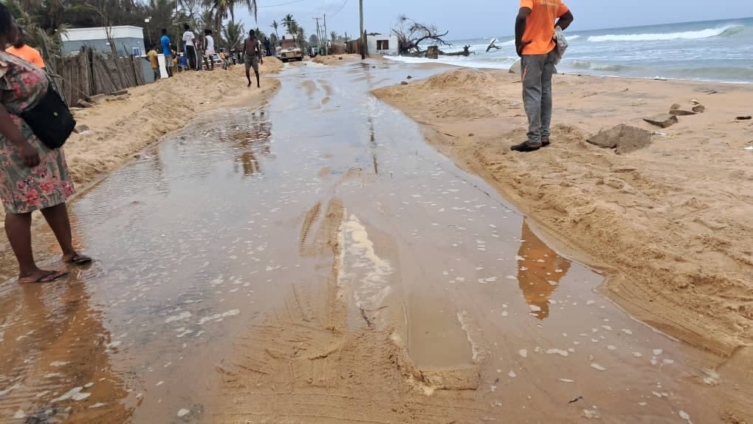
However, the coastline is receding gradually. Some communities, including Keta, Salakope, and Amutsinu, are losing up to 17 metres of land each year. In 2021 alone, nearly 4,000 people in the Keta district were displaced by severe tidal waves.
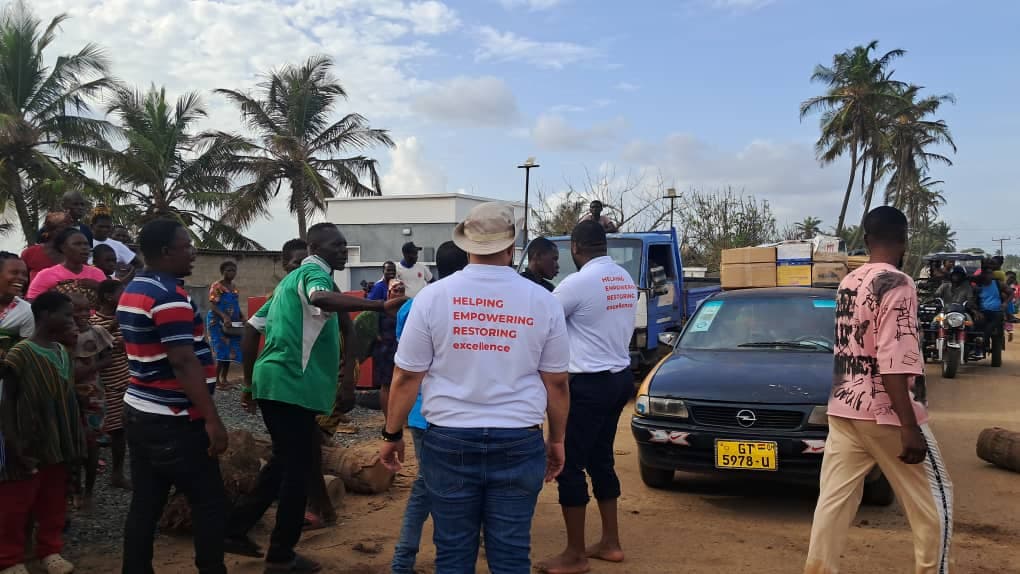
So far, Ghana’s response has leaned heavily on engineered solutions like sea defence walls. However, the Climate Talks dialogue is now turning its attention to the grassroots, emphasising the power of traditional ecological knowledge passed down through generations.
These practices, long used by local communities to manage land, water, and weather patterns, are being brought into the national spotlight.
The second edition of Climate Talks aims to shift perceptions, encouraging the public and policymakers alike to see local communities not merely as vulnerable populations but as vital knowledge holders and strategic partners in building coastal resilience.
The dialogue will be held at the Keta Nursing and Midwifery Training College Conference Hall in the Volta Region at 10:00 am on the 13th of June and broadcast live on JoyNews, JoyPrime, and Jubilee Radio.
Community members, traditional leaders, climate experts, government officials and the general public will come together to share, document, and validate time-tested indigenous techniques that have helped coastal communities survive and adapt.
The dialogue will raise awareness of the benefits of indigenous knowledge in climate adaptation planning, promote capacity-building for both policymakers and communities, and attract private investment into locally informed, climate-resilient infrastructure.
The main goal of this second edition is to ensure that indigenous knowledge is fully reflected in Ghana’s National Adaptation Plan (NAP) and its Nationally Determined Contributions (NDCs) under the Paris Agreement.
As climate change escalates and engineered solutions become increasingly costly, Ghana’s pivot toward indigenous knowledge could become a defining model for coastal resilience in the future.
Latest Stories
-
Nana B passport claims a diversionary tactic — Abu Jinapor
25 minutes -
Pope Leo diagnosed with cancer as doctors remove lobe of lung, Vatican says
25 minutes -
Legal Aid Commission takes free legal services to Techiman main lorry terminal
30 minutes -
Nana B denies seeking passport favour, accuses Ablakwa of failing to account for GH¢16.4m
34 minutes -
Young girls demand climate action, stronger protection against child marriage
46 minutes -
Ex-gang boss sentenced to 40 years for orchestrating Tupac Shakur’s murder
47 minutes -
From near-deferral to three awards: UMaT graduate’s academic journey
49 minutes -
Atta Akyea denies seeking presidential pardon for Wontumi in galamsey case
1 hour -
Photos: Mahama commissions 85-bed Police Hospital ward, donates two ambulances
2 hours -
GTEC directs Ghana’s public universities to reopen by October 16 and begin lectures on October 19
2 hours -
Star Oil donates GH¢1million towards construction of new CID facility
2 hours -
Court hands Adjetey Sowah, two others lifetime bans after Amputee Football legal dispute
2 hours -
NDC appoints Julius Kwame Anthony as a Deputy Communications Director
2 hours -
Ghana repatriates 120 Nigerians rescued from suspected cybercrime centres
2 hours -
NPP rejects Emelia Agbenyo’s appointment as Deputy EC Chair, demands withdrawal
2 hours