

Audio By Carbonatix
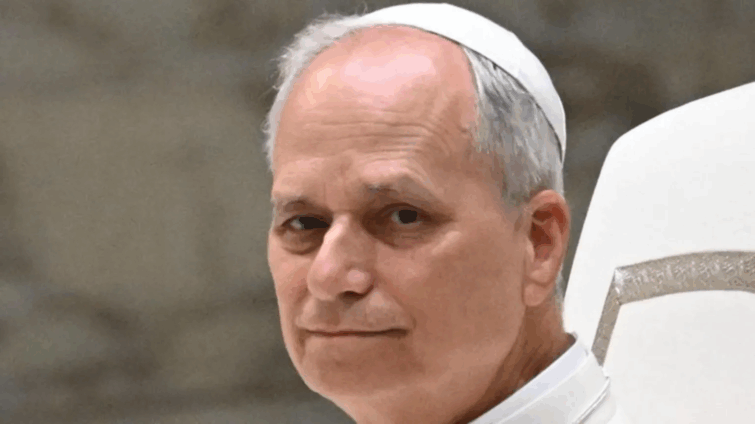
Pope Leo XIV has appointed the first Chinese bishop of his papacy, signalling that he will continue a historic agreement that sought to improve relations between the Vatican and China.
Both sides have hailed the appointment of Fuzhou Auxiliary Bishop Joseph Lin Yuntuan as an affirmation of their commitment to the 2018 accord, which was reached under the late Pope Francis.
The agreement gave Chinese officials some input on the appointment of bishops. However, its contents were never fully disclosed to the public.
Beijing insists that the state must approve the appointment of bishops in China, running contrary to the Catholic Church's insistence that it is a papal decision.
China has some 10 million Catholics.
Currently, they face the choice of attending state-sanctioned churches approved by Beijing or worshipping in underground congregations that have sworn allegiance to the Vatican.
On Wednesday, the Vatican said Yuntuan's ministry had been "recognised" by Chinese law.
"This event constitutes a further fruit of the dialogue between the Holy See and the Chinese Authorities and is an important step in the journey of communion of the Diocese," the Vatican said.
When asked about Yuntuan's appointment, foreign ministry spokesperson Lin Jian told reporters on Thursday that this showed how the 2018 agreement had been "smoothly implemented", state media reported.
China is willing to work with the Vatican to continue improving relations, he said.
The Pope's move shows a "willingness to support reconciliation instead of antagonism", Michel Chambon, a research fellow at the Asia Research Institute in Singapore who has written extensively about the Catholic Church, told Reuters news agency.
In September 2018, Pope Francis recognised seven bishops appointed by China. The Vatican also posthumously recognised an eighth bishop who died the year before.
China first broke off diplomatic ties with the Holy See in 1951, and many Catholics were forced to go underground during former communist leader Mao Zedong's rule, emerging only in the 1980s when religious practices were tolerated again.
Latest Stories
-
Government has improved sanitation in one-and-a-half years — Salaga South MP
4 hours -
Nkwanta North Assembly to appear before Parliament over DACF sanitation spending
4 hours -
Mourinho prints out ‘red card’ incidents after Real lose derby
4 hours -
Atletico beat 10-man Real in feisty Madrid derby
4 hours -
Twelve Tribes of Israel Ghana to mark 40 years with anniversary celebration
5 hours -
GPL 2026/27: Hearts held by Bechem as Kotoko, Samartex share spoils
5 hours -
My Story (Kwaku Antwi-Boasiako)
5 hours -
We expect growth rate to re-accelerate in second-half of 2026 – IC Insights
5 hours -
The ungodliness and unrighteousness underlying the National Cathedral mess!
6 hours -
T-bills auction: Government fails to achieve target; yield on 91-day-bill remains unchanged
6 hours -
It’s Ghana’s shame to denigrate Nkrumah when the whole world honours him as African of the Century – Asiedu Nketiah
6 hours -
No other nationalist can compare to Nkrumah – Asiedu Nketiah
6 hours -
Collateral Registry: Foreign banks accounted for GH¢19.9bn of secured credit in quarter 2, 2026
6 hours -
This government should expect scrutiny – Asiedu Nketiah
6 hours -
Two-year-old girl dies in domestic fire at Cantonments
7 hours