

Audio By Carbonatix
The Vatican has returned 62 indigenous artefacts to Canada, 100 years after they were taken from tribes to appear in a missionary museum in Rome.
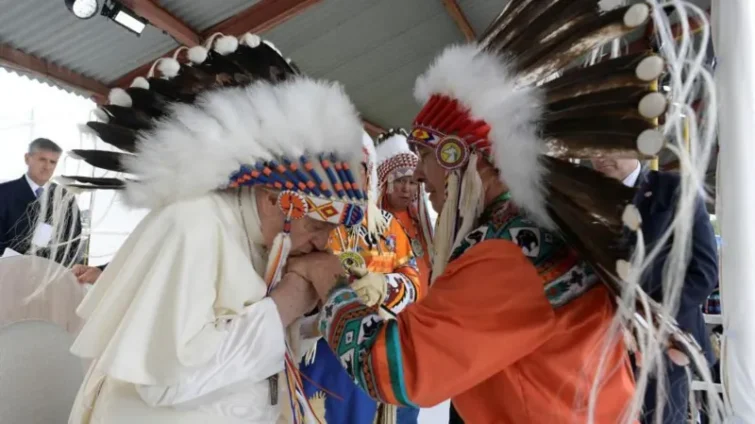
The items were given by Pope Leo XIV on Saturday to the Canadian Conference of Catholic Bishops (CCCB), which says it plans to return them to their original native communities.
The move comes three years after Pope Francis issued a historic apology to Canada's First Nations for the church's role in the "genocide" and suppression of indigenous identity through the residential schools programme.
A joint statement from the Vatican and the CCCB says the Pope "desires that this gift represent a concrete sign of dialogue, respect and fraternity".
The statement adds that the artefacts "bear witness to the history of the encounter between faith and the cultures of the indigenous peoples".
The items, which came from several different communities around Canada, had been sent by missionaries to Rome to appear in a 1925 exhibition that displayed over 100,000 items.
Among the artefacts being returned is an Inuit kayak that had historically been used to hunt whales in Canada's far north, and a set of embroidered gloves that came from the Cree Nation.
Canada's ambassador to the Holy See told CBC News that the items are currently in storage in Rome, and will be flown back to Canada on 6 December.
In 2022, Pope Francis made a "penitential pilgrimage" across Canada, where he offered an apology to local tribal leaders. During the trip, the communities requested the return of their artefacts.
The CCCB says the items will be transferred to Canada's National Indigenous Organizations which "will then ensure that the artefacts are reunited with their communities of origin".
The cost of repatriating the items has been prepaid by the tribes, which plan to hold ceremonies before they can be officially returned, according to CBC.
Canadian Foreign Minister praised the move, calling it, "an important step that honours the diverse cultural heritage of Indigenous peoples and supports ongoing efforts toward truth, justice, and reconciliation".
The items had been held in the Vatican Museum's ethnographic collection, known as the Anima Mundi museum. The church has described the items as "gifts" that were given by tribal leaders. Critics have disputed this characterisation, given the power imbalance at the time they were transferred.
The items were taken to Europe during a time when Canadian law, as well as Catholic decrees, prohibited native spiritual practices, leading to a ban on certain items used during ceremonies.
Latest Stories
-
UN housing expert urges Ghana to strengthen Rent Control Department amid housing affordability concerns
6 minutes -
Delta-BCI partnership reaches 166,000 people with breast cancer education
15 minutes -
Power restoration fault suspected in Kumasi Central Market fire
5 hours -
The 7-foot giant of Ngleshie Amanfro: Seven-foot Ghanaian Ephraim Saawa dreams of joining the national basketball team
6 hours -
Government promises support for Kumasi Central Market fire victims
6 hours -
Vibes The Movie: Big Ghun’s Ghanaian film earns five nominations at 2026 REFFA
7 hours -
‘I’m a fulfilled man’—Justice Korbieh on missing out on Supreme Court despite two nominations
7 hours -
MamaCare CEO warns unresolved conflicts among health workers could undermine maternal and neonatal care
7 hours -
Health professionals urged to translate medical knowledge into practice to save mothers
7 hours -
Retired judge Justice Francis Korbieh charges 1,568 new lawyers to uphold integrity
9 hours -
Conflicts among care providers linked to maternal, neonatal deaths – Expert
9 hours -
GIS marks 10th TIME conference, champions improved teaching practices
9 hours -
BRICS Or Balance? What Ghana’s bid really means
9 hours -
Adamus Resources launches breast cancer awareness campaign in Nzema
9 hours -
GPRTU wants full TRAFFITECH-GH implementation to start in 2027
10 hours