

Audio By Carbonatix
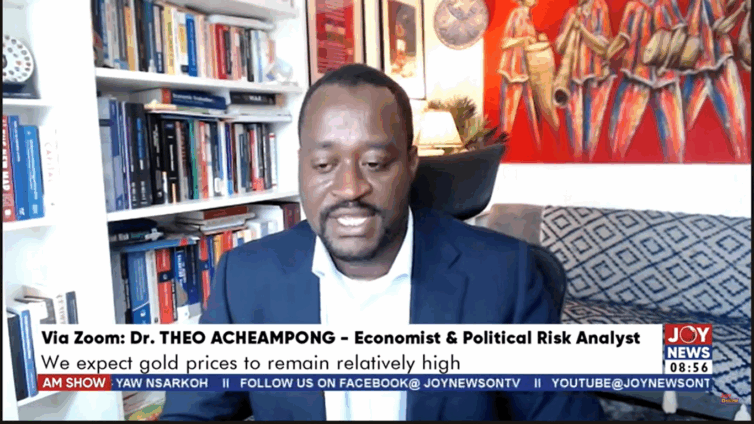
Economist and political risk analyst, Dr Theophilus Acheampong, has hinted at the possible reintroduction of the controversial GH₵1 energy levy, citing mounting financial pressure on Ghana’s energy sector and the growing impact of global geopolitical tensions.
Speaking on JoyNews’ AM Show on Tuesday, 24 June, Dr Acheampong suggested that senior government officials, including the Ministers for Finance and Energy, are likely assessing the fiscal situation and the implications of escalating global conflicts, particularly in the Middle East.
“I think the Finance Minister, the Energy Minister, and the rest of the team would be analysing and assessing the impact. I won’t be surprised if the GH₵1 levy comes back in the coming weeks,” he stated.
He acknowledged that although the previous implementation of the levy faced public opposition, certain segments of the population were relatively accommodating, giving the government possible grounds to revive it—especially if oil prices continue to rise.
The levy, initially introduced earlier this year to support the ailing energy sector, was suspended following widespread backlash from civil society groups and the Minority in Parliament. Nonetheless, Ghana’s energy sector remains in deep financial distress.
“We have serious challenges within Ghana’s energy sector and we need to do something about it,” Dr Acheampong warned.
He also raised concerns over the lack of transparency and accountability in the use of previous energy-related levies, particularly those collected under the Energy Sector Levies Act (ESLA).
“There are concerns as to how monies that have been collected in the past have been utilised, particularly with ESLA,” he observed.
Dr Acheampong urged that any reintroduction of the levy should be accompanied by clear mechanisms for parliamentary oversight and transparent reporting.
“Once we have further assurance and safeguards around the one cedi levy and what it will be used for, and the Minister accounts to Ghanaians through Parliament, perhaps we’ll be looking at some possible solutions to addressing the crisis in the energy sector,” he suggested.
He noted that Ghana continues to grapple with persistent energy problems, including generation shortfalls, rising utility debts, and high dependence on imported fuel.
Ongoing conflicts in regions like Iran, and their potential impact on global oil prices, have further exposed the country’s energy vulnerabilities.
Latest Stories
-
CSSPS placement results to be released tomorrow – Education Ministry
4 minutes -
His Excellency Professor Yaw Safo Boafo
5 minutes -
NSA Board Dissolution: Olympic, Paralympic representation expected to remain on new board
15 minutes -
When English became the safest Ghanaian language
28 minutes -
Nurses and midwives indispensable to resilient health system – Bawumia
32 minutes -
About 565,000 BECE candidates qualify for SHS placement – CSSPS
32 minutes -
Virtual InfoSec Africa renews partnership with Cyber Security Authority
36 minutes -
TMA is highest authority in Tema, TDC must comply with its regulations — President
59 minutes -
Cyanide, unregistered cigarettes hidden under bags of millet, soya beans in major highway bust in Techiman
1 hour -
Security agencies call on civilians to volunteer information to combat crime
1 hour -
New maternal units commissioned in North Tongu to improve access to care
1 hour -
Enterprise Insurance reaffirms industry leadership with 4 wins at 6th CIIG
1 hour -
GES release national harmonised prospectus for 2026/27 SHS admissions
1 hour -
Presidency orders TMA, TDC to end dispute over Tema development authority
1 hour -
Ayew brothers among Ghanaians without clubs after transfer window closes
2 hours