

Audio By Carbonatix
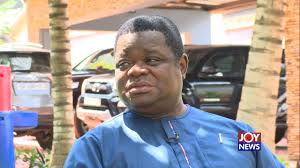
The Director of the Institute of Statistical, Social and Economic Research (ISSER), Prof Peter Quartey, has warned that the rising preference for black market and forex bureau transactions is fuelling under-invoicing and tax evasion in Ghana.
Speaking on Joy FM’s Super Morning Show on Monday, July 21, Prof Quartey cautioned that many importers and traders deliberately avoid the formal banking system to conceal the true value of their transactions and evade taxes.
“Unfortunately for our brothers and sisters in the Ghana Union of Traders' Associations (GUTA) and the rest, they prefer to transact in cash. They don’t want to use the banking system because when you do that, government can track the value of your imports, so you pay the appropriate taxes,” he explained.
“So, they prefer to deal in the black market, deal in physical cash, where issues of under-invoicing and all those can happen so they beat how much tax they pay. That is the problem,” Prof Quartey added.
No Dollar Shortage in Banks
His comments come in response to recent complaints from business operators, particularly importers, who claim there is a shortage of US dollars in the banking system.
Prof Quartey dismissed those claims, clarifying that there is no scarcity of foreign currency in the formal sector. According to him, banks are encouraging electronic transfers and cheque payments over large-scale cash withdrawals to improve safety and financial accountability.
“If you have an account and you want to import with all the necessary documentation, there is no problem—there is no limit on how much you can pay. It is only those who insist on physical cash without having deposited any, that are having difficulties,” he explained.
Call for Transparency
Prof Quartey urged traders, importers, and exporters to use the regulated banking system to ensure transparency and support national revenue mobilisation efforts.
He emphasised the need for collective education and awareness to promote cashless transactions and reduce reliance on informal forex markets, which, he warned, distort the economy and undermine tax collection.
“We are saying we are moving cashless, yet people want to trade in forex using huge sums of physical cash. It is not safe and it is not sustainable,” he cautioned.
Prof Quartey’s remarks come at a time when the government is intensifying efforts to clamp down on tax evasion and illicit financial flows.
Latest Stories
-
Ghana Women’s Movement announces protest over alleged intimidation of women
24 seconds -
‘I was waiting for the list to believe my Black Stars call-up was real’- Ronald Donkor
3 minutes -
Mahama has ordered NACOC back into port container inspections – Tanko-Computer
7 minutes -
Photos: Vice President joins ECOWAS Parliament, calls for stronger regional cooperation
7 minutes -
Two arrested over alleged GH¢30k bribe attempt in narcotics case
10 minutes -
Bodi, Juaboso and Bibiani SHSs qualify for 2026 National Public Speaking Competition
12 minutes -
Energy Committee Ranking Member backs TOR turnaround, urges government to sustain local crude supply
13 minutes -
Ghana Water ordered to pay $235m over Teshie desalination plant dispute
14 minutes -
Ghana overlooking therapeutic value of flowers despite $1.49m import bill – Parks and Gardens Administrator
20 minutes -
NPP demands immediate removal of institutional heads over cocaine trafficking cases
25 minutes -
Parliament’s Energy Committee commends TOR for using local engineers in ongoing development
38 minutes -
Share intelligence you have with authorities to deal with drug trafficking – NDC to NPP
45 minutes -
‘You promised 24-Hour economy not 24-hour cocaine trafficking’ – Nana B to Mahama
50 minutes -
Nana Konadu dedicated her life to community transformation — Yaa Asantewaa Agyeman-Rawlings
50 minutes -
Protect the customer by changing who owns the loss
59 minutes