

Audio By Carbonatix
Across West Africa, the criminalisation of people who use drugs, sex workers, and people with diverse sexual orientations (PWDSO) continues to deepen cycles of poverty, stigma, disease, and violence.
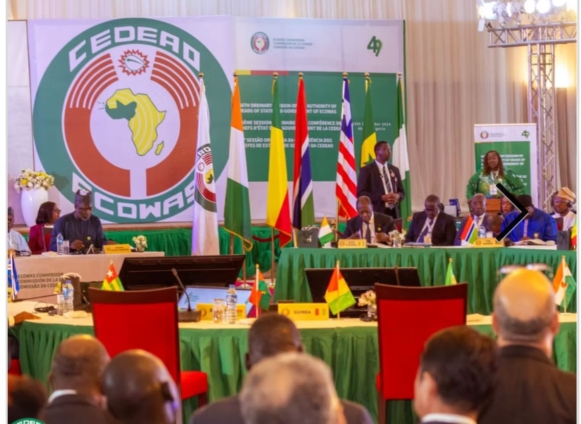
As advocates continue to raise awareness for these communities, the West Africa Drug Policy Network (WADPN) and its partners have called on ECOWAS and national governments, particularly in Ghana, Nigeria, and Burkina Faso, to take decisive steps toward decriminalisation and protection of human rights.
In Ghana and Nigeria, punitive drug laws have contributed to prison overcrowding, HIV prevalence, and the isolation of people from healthcare systems. According to the West Africa Commission on Drugs, chaired by the late Kofi Annan, former UN Secretary General, drug use should be treated primarily as a public health issue, not a criminal one.
Decriminalisation does not encourage drug use; it redirects funding from punishment to harm reduction, rehabilitation, and community care. Countries like Portugal and Uruguay have demonstrated that such policies lead to improved health outcomes and reduced crime rates.
Senegal stands alone in West Africa with a comprehensive and regulated framework for sex work. Despite its limitations, this model has helped reduce HIV transmission, enabled access to health services, and improved tracking of violence and abuse.
By contrast, in Ghana, Nigeria, and Burkina Faso, sex workers face arbitrary arrests, harassment, and limited legal recourse, often exacerbated by moralistic laws and a lack of public health infrastructure.
WADPN and its partners have called for national agencies to decriminalise sex work, adopt rights-based regulatory approaches, and recognise sex workers as legitimate members of society with the right to safety, health, and dignity.
The PWDSO community across West Africa faces state-sanctioned discrimination. In Nigeria, the Same-Sex Marriage (Prohibition) Act has led to increased violence, extortion by police, and a climate of fear. Ghana's recent anti-human rights bill and Burkina Faso's silence on legal protections reflect the dangerous trend of targeting people for who they are.
These legal environments are in direct violation of the African Charter on Human and Peoples’ Rights, which guarantees dignity, equality, and freedom from discrimination for all people. The ACHPR Resolution 275 affirms the need for protection of individuals from violence based on their real or perceived sexual orientation or gender identity.
ECOWAS must go beyond its current commitments to drug control and regional security. It must: Adopt a regional human rights and health strategy for key populations, support member states in drug law reform and harm reduction scale-up, create mechanisms to monitor abuses against sex workers and PWDSO, and hold governments accountable to international human rights treaties.
Decriminalisation is not just a legal question; it is a question of life or death. We urge ECOWAS and national governments to: Amend repressive laws, expand community-led health services, fund rights-based education and policing reforms, and include affected communities in decision-making.
As advocacy campaigns draw global attention to the struggles and resilience of marginalised groups, West Africa must not be left behind. Justice, health, and dignity for all cannot wait.
Latest Stories
-
SUNU Assurances Ghana LTD extends support to Paediatric Ward of Holy Family Hospital, Techiman
8 minutes -
Newspring Assemblies of God founder to host 2026 HigherLife Breakfast Meeting in Kumasi
9 minutes -
Government targets 100,000 jobs through new care economy programme – Opare-Addo
14 minutes -
Religious Affairs Ministry begins national database of shrines, religious sites
26 minutes -
GMA pushes for implementation of port optimisation measures at Tema Port
31 minutes -
Public sector reform must prioritise staff welfare – Civil Service head
35 minutes -
LEAP expansion brings relief to 4,372 more vulnerable residents in Jirapa
42 minutes -
President Ruto’s State backing fuels Nairobi’s historic 2029 World Athletics Championships bid
47 minutes -
Veep commissions five envoys, charges them to advance Ghana’s interests abroad
47 minutes -
19-year-old man jailed 15 years for robbery at Asokore Mampong
50 minutes -
Woman killed, 14 injured after vehicles collide on Accra–Kumasi highway
1 hour -
Regulatory burden threatens SME growth, job creation – ILAPI study
1 hour -
22-year-old man sentenced to 10 years for robbery in Kumasi
1 hour -
EOCO inaugurates new audit committee to strengthen financial oversight
1 hour -
Mahama pledges to expand STEM education, complete stalled UTAS laboratory
1 hour