

Audio By Carbonatix
A new study by the Institute for Fiscal Studies (IFS) has revealed that high transportation costs remain one of the biggest challenges confronting rice farmers in Ghana, significantly affecting their ability to market their produce and earn fair returns.
The findings, presented in a new policy document on Ghana’s rice sector, were based on field research conducted by the IFS team in the Volta and Oti Regions. The team engaged directly with rice farmers and millers to understand the real challenges facing the sector and how these issues impact its growth.
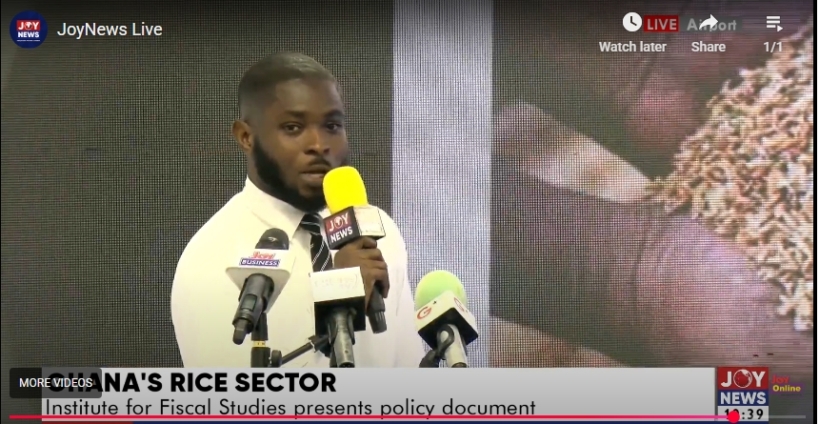
Presenting the findings, a Research Assistant at the Institute, Mr Frederick Amu, said marketing remains a major concern for rice farmers, with transportation costs standing out as a key burden.
“Another problem or challenge we faced with our engagement with these rice farmers is a marketing challenge,” Mr Amu explained. “This marketing challenge translates into high costs that these rice farmers mostly bear when they are transporting their rice produce to the final consumers. Sometimes they would have to split the cost of transport because when the transport takes produce to these consumers, it commands high prices, so they would sometimes have to take the transport cost themselves.”
He noted that the high cost of transporting rice from production areas to market centres often reduces farmers’ profit margins and discourages them from expanding production. In some cases, farmers are forced to absorb part of the transport costs to make their produce more competitive in the market.
Mr Amu added that apart from transportation, other marketing-related issues continue to compound the struggles of local rice producers. These include limited access to buyers, competition from imported rice, delayed payments, and low prices for locally produced rice.
He further observed that imported rice continues to dominate consumer preference, leaving local farmers at a disadvantage despite their efforts to meet demand. The combination of these challenges, he said, weakens the market position of local rice farmers and threatens the sustainability of the sector.
Latest Stories
-
Missing records of illegal gold purchases in Ghana raise concern – Duncan-Williams
22 minutes -
Duncan-Williams warns of powerful interests targeting GoldBod
53 minutes -
We need to pray for GoldBod – Duncan-Williams
1 hour -
Strong favourites or tougher task – will Arsenal defend their title?
2 hours -
Passengers escape death as VIP travelling from Kumasi to Sunyani catches fire
2 hours -
Ariana Grande leaves problems at home as her tour hits the UK
2 hours -
Multiple suspects at large after five shot at Virginia State University, police say
2 hours -
Three killed as Russia launches fresh aerial attacks across Ukraine
2 hours -
Boxing: John Laryea disqualified in WBA Featherweight title eliminator
2 hours -
Hawaii battles strong winds and rain as Hurricane Lala threat looms
3 hours -
Twelve killed as Polish bus veers off Hungarian motorway
4 hours -
Building Ghana better: Why architects must be at the heart of national development
6 hours -
GMet warns of severe rainstorm across northern Ghana
7 hours -
Semenyo eyes bigger targets after breaking Yeboah’s Ghanaian Premier League record
7 hours -
Health Ministry reviews NDC manifesto commitments
8 hours