

Audio By Carbonatix
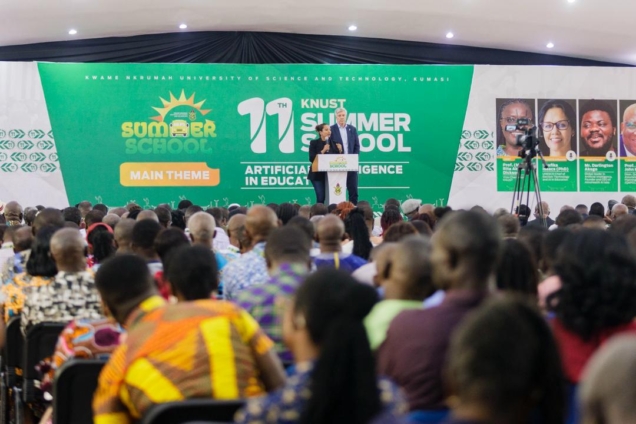
Students at the Kwame Nkrumah University of Science and Technology are expected to take courses in Artificial Intelligence (AI) starting next academic year, as the university resolves to incorporate the tenets of technological advancement in its operations.
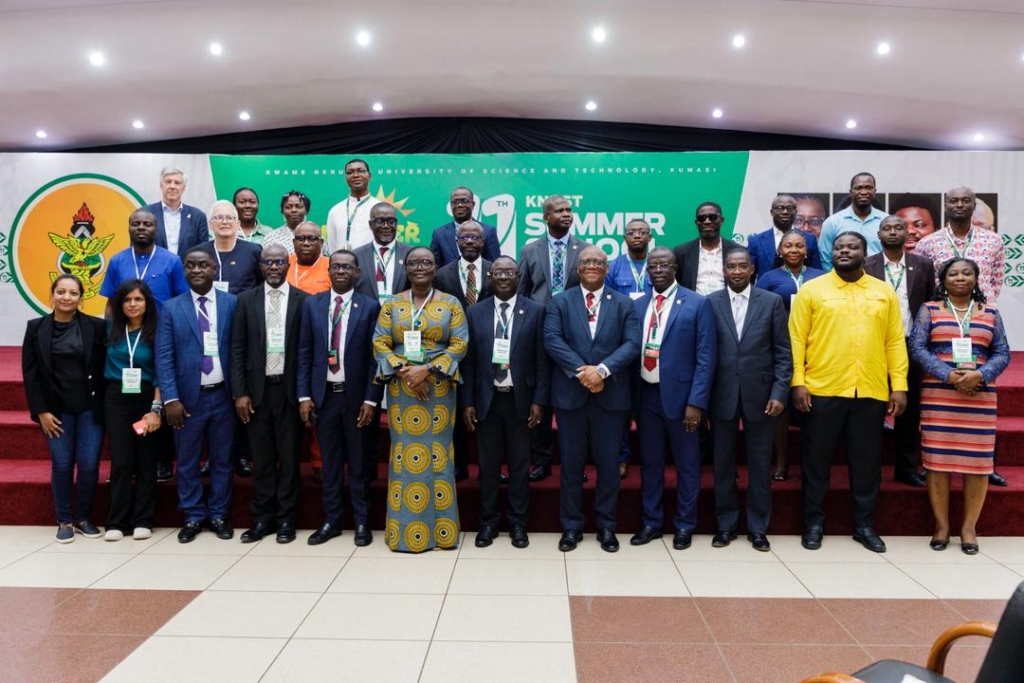
This was revealed by the Vice-Chancellor, Prof. Rita Akosua Dickson during the 11th Summer School of the University held on the theme “Responsible AI in Education”.
Speaking at the opening of the 3-day event, Prof. (Mrs.) Dickson emphasized that the students will be credited for the course while equipping them with the needed skills for the technological revolution.
“This micro-credential course, which will have 1 credit hour will equip graduates with the knowledge and ethical grounding needed to apply AI responsibly across all disciplines,” Prof. Dickson said.
The VC emphasized the University’s commitment to ethical and inclusive technology education as she highlighted that universities must guide AI development to reflect local realities and foster sustainable learning.
She further stressed that academia plays a central role in ensuring AI serves humanity, not just technological advancement.
The Vice-Chancellor also underscored the importance of interdisciplinary research and partnerships in preparing students and faculty for emerging technologies.
A keynote speaker at the event, Darlington Ahiale Akogo, who is the founder and CEO of MinoHealth AI Labs, emphasized academia’s moral responsibility in AI innovation.
“Academia must not only teach AI but guide its conscience, and if we want AI systems that understand our classrooms and cultures, then the research and data must come from our own academic spaces,” Mr. Akogo said.
He called for stronger collaboration between universities, industry, and policymakers to ensure AI solutions are ethical and contextually relevant.
Senior representative from UNESCO’s Section for Technology and AI in Education, Dr. Shafika Isaacs, reinforced the need for ethics in AI.
“Universities must become the testing ground for ethical innovation the space where we ask, ‘What kind of intelligence are we really building, and for whom?’” she quizzed.
She emphasized that global AI guidelines are only effective when adapted to local educational contexts, languages, and cultures.
Dr. Isaacs urged African universities to create AI ecosystems that are inclusive and culturally relevant, ensuring no learner is left behind.
The Summer School highlighted that academia’s role extends beyond innovation, with universities acting as guardians of ethical AI.
Latest Stories
-
Bekwai MP donates GH¢100,000 to hospital for specialist equipment
3 minutes -
Van Vicker sues Lil Win for defamation, demands GH¢10m
9 minutes -
FIFA/ FIBA agency Pep Sports moves to admit Ghana’s 7-Foot Basketball talent to its Ultra-Modern Sports campus after MyJoyOnline report
11 minutes -
GAUA strike disrupts academic plans at University of Ghana as students, parents express frustration
16 minutes -
Dad’s Army/African Polistas crowned champions of 2026 Accra Polo Club Trustees’ Cup
23 minutes -
Mahama approves Integrated Basic Education Model, with funding expected in 2027 under GETFund formula
26 minutes -
Money-driven elections fuelling corruption – Haruna Iddrisu
30 minutes -
Excessive borrowing ‘cracked’ Ghana’s economy under Akufo-Addo – Haruna Iddrisu
39 minutes -
NPP’s silence on economic indicators suggests Mahama is doing better – Haruna Iddrisu
52 minutes -
GoldBod must be more accountable to Ghanaians – Haruna Iddrisu
1 hour -
Affi Agbenyo’s EC appointment is constitutionally appropriate, but politically, people have the right to remind us – Haruna Iddrisu
1 hour -
Accra Mall brings Soulful Weekend Vibes to October with Live R&B and Jazz
2 hours -
Education is critical to Ghana’s future and development – Haruna Iddrisu
2 hours -
Who’s Emelia Affi Agbenyo, the 43-year-old newly sworn-in Deputy EC Chair?
2 hours -
Haruna Iddrisu calls for limits on annual university accommodation fee increases
3 hours