

Audio By Carbonatix
It was a regular Tuesday morning when 54-year-old carpenter Ntiamoah Wireko suddenly dropped his hammer on the floor. His speech slurred, his right arm went limp, and his face dropped. His family assumed it was just exhaustion.
By the time they rushed him to the hospital, three hours later, doctors confirmed that he had suffered a major stroke.
Today, Ntiamoah is alive, but his life has changed drastically. He can no longer walk or speak properly as he once did. The man who built furniture for others now depends entirely on his wife for care and daily support.
His story mirrors that of thousands of Ghanaians whose lives are altered every year by stroke, a silent emergency that strikes fast and without warning.
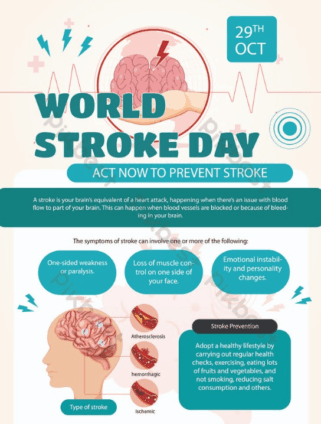
As Ghana joins the world to mark World Stroke Day today, October 29, health experts are renewing calls for greater awareness and faster emergency response to stroke cases, a condition that remains one of the leading causes of death and disability globally.
This year’s campaign, led by the World Stroke Organisation (WSO), carries a powerful theme: “Every Minute Counts.” The message is urgent: recognize the signs early, act fast, and save a life.
A Race Against Time
According to the World Stroke Organization (WSO), one in four people will experience a stroke in their lifetime. Every 30 minutes, someone who could have been saved either dies or is left permanently disabled, simply because treatment did not come soon enough.
Time, experts say, is the single most critical factor in stroke care. The sooner a patient receives medical attention, the higher their chances of survival and recovery.
Doctors stress that time is the most critical factor in stroke care. The longer the brain is deprived of blood, the more likely it is to suffer irreversible damage.
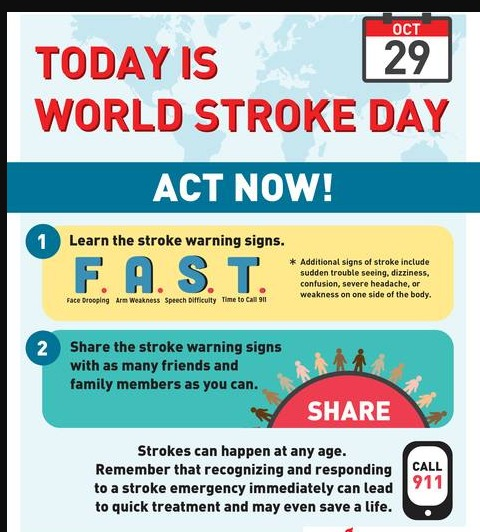
That’s why the FAST rule remains the cornerstone of awareness campaigns, a simple way for anyone to spot the signs:
• Face drooping
• Arm weakness
• Speech difficulty
• Time to call for help
Ghana’s Silent Burden
In Ghana, the story is even more troubling. Stroke has quietly climbed into the top five causes of death and hospital admissions, according to the Ghana Health Service (GHS). Behind these numbers are families torn apart, breadwinners who can no longer work, parents who can no longer speak, and children forced to become caregivers.
Experts link the rise in stroke cases to lifestyle factors such as uncontrolled blood pressure, poor diet, lack of exercise, smoking, and diabetes. Yet, the real crisis lies in the system’s readiness to respond.
Only a few major hospitals, mostly in Accra and Kumasi, have dedicated stroke units or the specialists and equipment needed for rapid intervention. For patients in rural areas, the odds are even worse. Many never make it to a hospital in time for life-saving treatment
Awareness still a challenge
The other silent killer is misinformation. Many Ghanaians still attribute stroke to spiritual causes or delayed medical care, because they think it’s “just stress.” Doctors warn that this mindset is costing lives.
Education must go beyond once-a-year campaigns; it should be woven into everyday community life, from churches to market squares.
Call for Policy Action
The World Stroke Organisation is calling on governments, including Ghana’s Ministry of Health, to prioritize stroke prevention and treatment in national health policies. This means scaling up blood pressure screening, ensuring affordable medications, and expanding stroke units in every regional hospital.
It also means investing in rehabilitation services for survivors, many of whom are left disabled without support. Small lifestyle changes can save lives and spare families the emotional and financial toll that stroke brings.
Prevention Is Possible
The encouraging truth is that nine out of ten strokes can be prevented.
Simple habits make a big difference:
1. Keep blood pressure in check.
2. Stay active; even 30 minutes of walking daily helps.
3. Eat fruits and vegetables.
4. Quit smoking and limit alcohol.
5. Go for regular health checkups.
A Community Responsibility
As Ghana joins the rest of the world to mark World Stroke Day 2025, the call to action is clear: awareness saves lives. The conversation shouldn’t end today. It should echo in classrooms, workplaces, and on the airwaves, in every local language we speak. Because when it comes to stroke, every minute truly counts. When you see the signs, act FAST. Because time lost is brain lost.
Latest Stories
-
Ghana needs a law to sustain constitutional reforms – CDD-Ghana
2 hours -
COVID fumigation audit: Auditor-General has a lot of questions to answer – Akwatia MP
2 hours -
Stranded Ghanaian medical graduates in Cuba appeal to Mahama for immediate return
2 hours -
GNFS contains fire outbreak at Teshie Lekma Road near Lekma Hospital
8 hours -
Samia Nkrumah rejects the narrative that Ghanaians were happy after Nkrumah’s overthrow
10 hours -
A Mother’s pain: Tribute by Ivan Baidoo’s mother
10 hours -
‘Forgive us for staying away’ — Samia Nkrumah leads family back to Nkroful, pledges to preserve Nkrumah’s legacy
10 hours -
Ernest Nuamah scores twice as Lyon beat Rennes
10 hours -
‘My dear Ivan’ – A father’s tribute to a son tragically killed
10 hours -
GNPC Explorco advances Voltaian Basin drilling preparations with 13.5km access road
10 hours -
Cabinet approves facility manager for Borteyman Sports Complex – Kofi Adams
11 hours -
Sanitation is improving; critics may be ‘living in another world’ – Salaga South MP replies Bekwai MP
11 hours -
Government must do more to tackle sanitation crisis – Bekwai MP
11 hours -
World Cleanup Day: GFF begins sanitation education in local communities
12 hours -
EU Ambassador, IGP discuss stronger cooperation on policing and security
12 hours