

Audio By Carbonatix
Stroke survivors and advocates have urged government to improve healthcare access and support systems to reduce disability.
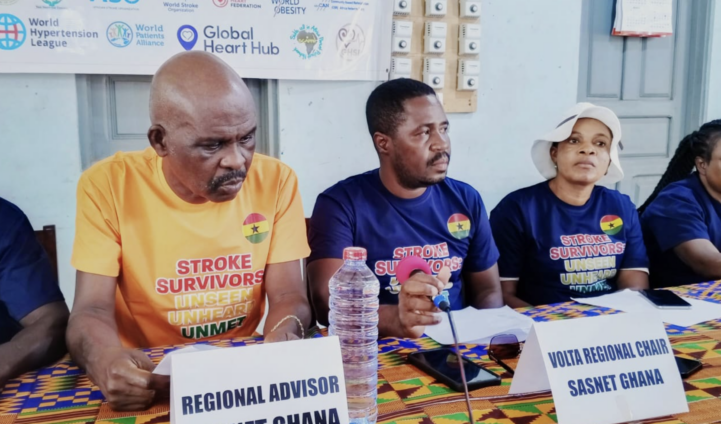
The call was made at a News conference in Ho to mark the National Stroke Survivors Day, observed annually on March 16.
The event, organised by Stroke Association SupportNetwork – Ghana (SASNET Ghana), brought together stroke survivors, caregivers, health professionals and stakeholders to highlight challenges confronting persons living with stroke.
Mr Callistus Edoh, Volta Regional Chairman of SASNET Ghana, said the day was set aside to raise awareness on stroke and advocate for improved care.
He explained that this year’s theme, “Stroke Survivors: Unseen, Unheard and Unmet,” reflected the invisible struggles, lack of representation and gaps in healthcare services.
“Many survivors face cognitive, emotional and financial challenges that are often overlooked, while access to rehabilitation and assistive technology remains limited,” he stated.
Mr Ebenezer Ad Adams, Executive Director of SASNET Ghana, said stroke survivors continued to struggle with unclear National Health Insurance Scheme (NHIS) coverage.
“Some pay for rehabilitation; others pay partially, while many cannot afford assistive devices like wheelchairs, which are essential for mobility,” he noted.
He called on the government to expedite action on the Assistive Technology Policy and expand support through the Livelihood Empowerment Against Poverty (LEAP) programme.
Mr Adams also urged authorities to clarify the provisions under the Ghana Medical Trust Fund, popularly known as “Mahama Care,” to ensure that stroke-related services are adequately covered.
He revealed that more than 16,000 stroke survivors were registered nationwide, with over 500 in the Volta Region alone, stressing that the actual figures could be higher.
Stakeholders noted that stroke remained a leading cause of disability and death in Ghana, with survivors often facing long-term physical and economic hardship.
They called for increased investment in healthcare infrastructure, including the provision of MRI and CT scan machines, and the training of more neurologists to improve diagnosis and treatment.
Mr Edoh cited a recent case, where a stroke patient was reportedly denied oxygen due to NHIS coverage issues, describing the situation as unacceptable.
Mr Samuel Sedodo, Vice President, SASNET GHANA, also emphasised the need for intensified public education on stroke prevention, early detection and management, urging the government to act swiftly to save lives.
Latest Stories
-
UTAG-UG threatens strike on October 19 over unpaid allowance
1 minute -
Let The Constitution direct Chieftaincy to deliver “All Development Is Local”
1 hour -
John Jinapor outlines renewable energy, nuclear power priorities for 2027
2 hours -
Ghana explores centre of excellence for hearing, communication and cochlear implant care
3 hours -
Schizophrenia-related disorders lead mental health cases recorded in Ghana
3 hours -
Dutch authorities enlist Ghana in hunt for fugitive drug lord Bolle Jos
3 hours -
Ghana housing finance conference adopts communiqué to improve affordable housing access
8 hours -
Special Initiatives Minister urges Wa Technical Institute to enrol more girls as EU-backed solar training lab opens
8 hours -
In the matter of my first year at the Bar
8 hours -
ActionAid Ghana calls for an end to child marriage, greater investment in girls’ rights
8 hours -
Newsfile to tackle World Cup visa scandal, beach demolitions, education strikes, BRICS bid
9 hours -
UK-Ghana Trade & Investment Summit: Trade Resource Centre to help businesses maximise UK-Ghana trade opportunities
9 hours -
Embassy of Denmark celebrates World Maritime Day
9 hours -
Linking LEAP to productive inclusion could cut extreme poverty by 2030 – UNICEF
10 hours -
Trade Ministry backs use of creative arts to rehabilitate prison inmates
10 hours