

Audio By Carbonatix
Finance Minister Dr Cassiel Ato Forson has reaffirmed the government's commitment to ensuring universal access to quality primary healthcare, announcing that the first phase of the Free Primary Healthcare Policy is now being implemented in 150 underserved districts across the country.
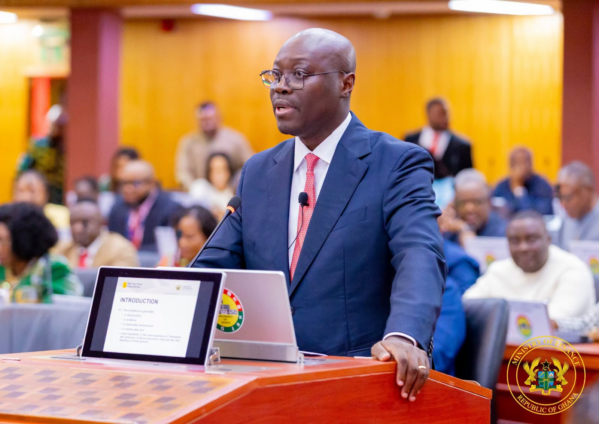
Speaking during the presentation of the 2026 Mid-Year Budget Review to Parliament on Thursday, July 23, Dr Forson said the government was making significant investments in healthcare infrastructure, medical equipment and community outreach to improve access to essential health services, particularly in rural and hard-to-reach communities.
He said the initiative reflects the government's determination to ensure that access to healthcare is not determined by a person's income or geographical location.
"Government remains committed to ensuring that every Ghanaian has access to quality primary healthcare, regardless of income or location."
The Finance Minister noted that following the official launch of the Free Primary Healthcare Policy in April 2026, implementation had begun with a focus on districts where access to healthcare services remains limited.
"Following the launch of the Free Primary Healthcare Policy in April 2026, the first phase of implementation is targeting 150 underserved districts across the country."
Dr Forson disclosed that the government has already supplied more than 24,000 pieces of medical equipment to health facilities to improve the quality of healthcare delivery.
According to him, the equipment is intended to strengthen diagnostic services, emergency response, maternal healthcare and neonatal care across the country.
"Mr. Speaker, Government has distributed more than 24,000 pieces of medical equipment to strengthen diagnostic, emergency, maternal and neonatal care."
The distribution forms part of broader efforts to improve the capacity of primary healthcare facilities and ensure patients receive timely and effective medical care.
Recognising the logistical challenges faced by health workers in rural areas, Dr Forson said the government has also deployed additional transport and outreach resources to improve service delivery.
"We have also deployed motorbikes, tricycles and mobile outreach equipment to improve healthcare delivery in hard-to-reach communities."
The vehicles and mobile equipment are expected to support community health workers in reaching isolated settlements where residents often travel long distances to access healthcare services.
The Finance Minister further announced that the government has expanded community-based screening programmes for non-communicable diseases, which continue to place an increasing burden on Ghana's healthcare system.
"In addition, community screening for hypertension, diabetes, cancers and other non-communicable diseases has been expanded."
He said these initiatives are aimed at promoting early detection and treatment, reducing complications and improving health outcomes through preventive care.
Dr Forson also revealed that the government is expanding healthcare infrastructure by establishing health kiosks and container-based health posts while upgrading existing primary healthcare facilities across the country.
He said these projects are intended to bring essential health services closer to communities that currently have limited access to medical care.
Latest Stories
-
Ballon d’Or Power Rankings: Lamine Yamal leads race for Golden Ball ahead of Rodri and Kane
30 minutes -
‘Nothing worked for us’ – Gideon Mensah takes responsibility for Gambia defeat
49 minutes -
2026 Women’s Super Cup: FC Savannah beat Epiphany Warriors to win trophy for first time
2 hours -
AFCON 2027Q: ‘The last time Ghana won was eight games ago’ – Carlos Queiroz
3 hours -
AFCON 2027Q: Gambia defeat doesn’t make me a loser – Carlos Queiroz
3 hours -
2027 AFCONQ: Late goals seal 2-0 for Côte d’Ivoire against Somalia
3 hours -
AFCON 2027Q: My resignation won’t solve Ghana football issues – Queiroz
3 hours -
Morocco call off Ghana friendly after Black Stars’ AFCON setback
3 hours -
‘We have to say sorry’ – Queiroz apologises after Ghana’s humiliating defeat to Gambia
3 hours -
New Yorker identified as Yaw Boahene, 57, killed after bag was caught in subway train doors
3 hours -
Former American Idol contestant and pastor found guilty of murdering wife
4 hours -
Trump rules out joint US-China venture to develop AI
4 hours -
‘Beating Ghana did not surprise me’ – Gambia boss
4 hours -
OpenAI agents get rebrand – as ‘dots’ – while safety worries delay new model
4 hours -
US ban on Canadian alcohol and dairy takes effect as trade war drags on
4 hours