

Audio By Carbonatix
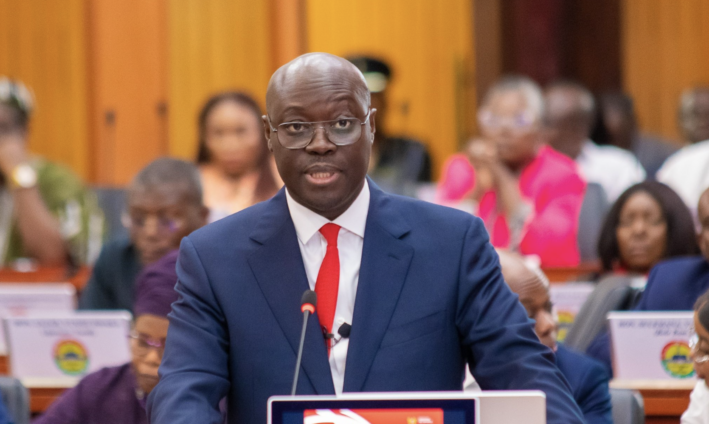
There are moments in a nation's economic life when leadership is measured by the necessity of bold decisions. Since his appointment as Minister for Finance by John D. Mahama, Dr. Cassiel Ato Forson (MP) has led through such a moment, inheriting an economy still recovering from one of its most severe crises in a generation, and choosing the harder path of discipline over the easier one of delay.
Economic management, perhaps more than most areas of public service, demands this kind of leadership. It requires an ability to confront uncomfortable realities, impose discipline where expediency may be more attractive, coordinate institutions around a common national purpose and remain attentive to the human consequences of policy.
As Ghana’s Minister for Finance, Dr Cassiel Ato Forson (MP) has exercised responsibility at a particularly consequential period in our economic history. His birthday therefore provides more than an occasion for goodwill. It offers an opportune moment to reflect on the demands of economic leadership, the progress Ghana has made in restoring stability, and the importance of recent interventions aimed at placing one of our most strategic national industries, cocoa, on a stronger, more sustainable footing.
Discipline in the Service of Economic Recovery
Ghana’s recent economic circumstances are well known. The country emerged from a period characterised by severe fiscal pressures, high inflation, debt distress, elevated borrowing costs, exchange-rate uncertainty and weakened confidence. Restoring stability from such conditions was never going to be achieved through a single policy intervention. It required sustained fiscal adjustment, monetary and fiscal coordination, debt management, expenditure restraint, improved revenue mobilisation and, critically, the rebuilding of confidence in the institutions charged with managing the economy.
The emerging indicators are encouraging, even if the work of consolidation is far from complete. Ghana Statistical Service data show that real GDP grew by 6.0 per cent in 2025, while year-on-year growth in the first quarter of 2026 reached 6.4 per cent. Headline inflation, which stood at 23.8 per cent at the end of 2024, had moderated substantially to 5.3 per cent by June 2026.
Fiscal performance has similarly strengthened. Ministry of Finance data indicate that the primary balance on a commitment basis improved from a deficit of about 3 per cent of GDP in 2024 to a 2.6 per cent surplus in 2025. Public debt also declined markedly relative to GDP, while Ghana’s external reserve position strengthened significantly.
In its assessment of the economy, the Bank of Ghana has pointed to easing inflationary pressures, stronger external buffers and the continued importance of fiscal discipline in sustaining macroeconomic stability.
These developments should neither invite complacency nor be reduced to political boastfulness. Macroeconomic stability is fragile when it is not institutionalised. What matters is whether the gains can be protected against commodity shocks, geopolitical disruptions, fiscal pressures and the temptation to abandon discipline when circumstances improve. Dr Ato Forson has demonstrated that these gains will be protected.
That is why the Finance Minister’s emphasis on fiscal correction and institutional credibility deserves attention. In the 2026 Mid-Year Fiscal Policy Review, Government reaffirmed its fiscal anchors and maintained the approved appropriation without seeking a supplementary estimate. The broader objective is clear: stability must become the foundation upon which
Ghana builds productive investment, jobs and economic transformation. For those of us entrusted with the leadership of parastatals, this principle has direct meaning. Every state institution ultimately operates within the macroeconomic environment created by national policy. Inflation affects operating costs. Interest rates affect financing. Exchange-rate movements influence international trade. Fiscal pressures influence the capacity of the State to support strategic sectors. Therefore, the consequences of economic management affect every public institution, business, household, and farming community.
Value for Money as a Philosophy of Public Leadership
An equally important dimension of Dr Forson’s stewardship has been the emphasis on expenditure discipline, accountability and value for money. The decision to place a Value for Money Office Bill before Parliament is significant because it seeks to institutionalise a principle that should be fundamental to public administration: government expenditure must be judged not simply by how much is spent, but by what that expenditure achieves. The proposed framework is intended to strengthen scrutiny around economy, efficiency, effectiveness, equity and sustainability in the use of public resources.
For state-owned enterprises and public institutions, this philosophy is particularly important. Public resources are held in trust. Financial discipline must therefore go beyond compliance with accounting procedures. It must inform procurement, investment decisions, operational expenditure, project selection and the deployment of institutional assets. A cedi spent inefficiently is not merely an accounting loss; it is a resource denied to another legitimate national priority, a position the Finance Minister has made clear over and over again.
Value for money should consequently be understood as a philosophy of responsible leadership, as exemplified by the minister. It asks institutions to distinguish between expenditure that merely consumes resources and expenditure that builds enduring capacity. It demands that public managers pursue efficiency without compromising institutional purpose. And it recognises that public confidence grows when citizens can see a reasonable relationship between resources committed and outcomes delivered.
This philosophy is especially relevant to Ghana’s cocoa industry, where the financial choices made by institutions ultimately affect hundreds of thousands of farming households and the wider economy.
Securing the Future of Ghana’s Cocoa Economy
Few commodities are as closely connected to Ghana’s economic history and international identity as cocoa. For generations, cocoa has supported rural livelihoods, generated foreign exchange, sustained employment across an extensive value chain and contributed materially to Ghana’s export earnings. It has built communities, supported national development and established Ghana’s reputation in international markets as a dependable supplier of premium-quality cocoa.
Yet history alone cannot guarantee the future of the industry. The cocoa economy today operates amid increasingly complex realities: volatile international prices, climate pressures, production uncertainty, rising input costs, changing sustainability requirements, financing constraints, and intensifying competition for value in the global chocolate industry. Ghana must therefore continually adapt its institutions and commercial structures if cocoa is to remain both profitable for the farmer and sustainable for the State.
Recent developments illustrate the urgency of reform, a reform led by the Hon Finance Minister under the guidance of the President. In February 2026, Government convened an emergency Cabinet meeting to address financial and commercial pressures in the cocoa sector. The Ministry of Finance subsequently outlined a broad reform programme focused on producer pricing, cocoa-purchase financing, institutional balance-sheet sustainability, local processing and tighter expenditure discipline.
One of the most important reforms concerns producer pricing. Government has proposed a mechanism under which the producer price will respond more systematically to movements in international cocoa prices, exchange rates and other relevant market variables, while guaranteeing farmers not less than 70 per cent of the gross Free-on-Board price. This direction was reaffirmed in the 2026 Mid-Year Fiscal Policy Review and, significantly, has since been incorporated by the Minister for Finance into the new cocoa legislation passed by Parliament.
The principle is therefore no longer merely a policy aspiration; it has been codified in law, subject to presidential assent. This represents an important step towards giving greater predictability, transparency and institutional permanence to producer pricing. Cocoa pricing cannot sustainably operate in isolation from the market into which Ghana sells its beans. At the same time, market adjustment must never lose sight of the farmer whose labour makes the entire industry possible. By embedding the minimum farmer share within the new legal framework, the reform seeks to balance market responsiveness with a clear and enduring commitment to protecting producer interests.
The central policy challenge is to protect farmers' incomes while ensuring that the system through which cocoa is purchased, financed, and sold remains commercially viable. A producer price that is disconnected from realised market conditions may appear attractive in the short term but can eventually create liquidity constraints, delay payments to farmers and threaten the sustainability of the entire purchasing system. Recognising this delicate balance, the Minister for Finance has moved beyond policy pronouncement to institutionalise a more sustainable pricing framework in the new cocoa legislation.
The framework links producer pricing more closely to prevailing international market conditions while guaranteeing farmers a defined share of the gross Free on Board value. With Parliament having passed the Bill and the legislation now awaiting presidential assent, this important reform is set to be codified into law, providing greater predictability, discipline and sustainability in the determination of cocoa producer prices.
This is why reform of cocoa financing is equally important.
Government has proposed a new financing framework for cocoa purchases and related operations, moving towards greater reliance on domestic financing instruments and reducing structural dependence on arrangements that constrain commercial flexibility. The Ministry of Finance’s February reform statement envisaged domestic cocoa bonds and a revolving financing structure, while the Mid-Year Review subsequently outlined a new COCOBOD legislative framework designed to restore long-term financial sustainability and operational efficiency. That legislative process has since advanced decisively, with Parliament passing the new COCOBOD legislation, thereby providing the statutory foundation for the revised financing, pricing and operational framework envisaged under the Government’s cocoa-sector reforms.
Just as consequential is the renewed ambition to add value. Government has directed that, beginning with the 2026/27 crop season, at least 50 per cent of Ghana’s cocoa beans should be processed locally. This policy direction has now been given legislative backing through the new cocoa-sector law passed by Parliament, signalling a deliberate shift towards greater domestic processing, value creation, and retention of more of the economic benefits of cocoa within Ghana.
For Ghana, this represents an important strategic proposition. Our long-term cocoa story cannot be confined to increasing the volume of raw beans exported. We must progressively capture more value through grinding, processing, semi-finished products, manufacturing, branding and access to new markets. At Cocoa Marketing Company (Ghana) Limited, we understand this relationship.
Leadership, Legacy and a Birthday Note
The enduring test of economic leadership is rarely whether every decision is immediately popular. It is whether decisions are grounded in evidence, responsive to changing realities and capable of protecting institutions from short-term choices that compromise their future.
As Ghana continues the work of consolidating economic recovery, strengthening public institutions and repositioning the cocoa sector for a new era, Dr. Cassiel Ato Forson’s contribution should be considered within this broader context of responsibility.
On the occasion of his birthday, we in Ghana’s cocoa industry recognise and appreciate his attention to the sector and the policy interventions being pursued to strengthen its financial foundations, improve farmer outcomes, expand local value addition and secure the industry’s long-term sustainability.
There remains much work ahead. Cocoa markets will continue to change. Ghana’s fiscal circumstances will continue to demand prudence. Reform is moving from policy statements into disciplined execution. But leadership is ultimately measured by the willingness to confront the difficult questions of the present while building institutions capable of serving generations yet to come. The Finance Minister has proven he measures up!
I therefore wish Dr Cassiel Ato Forson (MP) good health, wisdom and strength as he continues in the service of our country.
And on this special day, those of us who serve within Ghana’s cocoa industry have every reason to say: “The cocoa sector appreciates you, Hon. Minister.”
******
The writer, Wisdom Kofi Dogbey, is the Managing Director, Cocoa Marketing Company (Ghana) Limited
Latest Stories
-
Nchiraa Yam festival turns deadly: Two killed, 14 injured as police restore calm
18 seconds -
I draw inspiration for my songs from Reggae music – Lyrical Joe
2 minutes -
AI must not replace human judgment in public spending – BoG Governor
5 minutes -
Ghana should withdraw from 2027 AFCON – Kojo Addae Mensah
14 minutes -
Team Ghana departs Accra for Angola ahead of Karting Africa Trophy
21 minutes -
AIT President Prof Clement Dzidonu urges lifelong learning as AI reshapes work and education
23 minutes -
FWSC to meet striking teacher unions on Tuesday
25 minutes -
NPP won’t force candidates to step down – Miracles Aboagye
38 minutes -
Black Stars: Building in the sinking sands
40 minutes -
Low inflation on paper, high cost of living: How Presidents Mahama and Trump are facing stark economic reality
48 minutes -
NPP will negotiate with popular non-politicians to secure winnable candidates – Miracles Aboagye
52 minutes -
Only 5% of Ghanaians can afford housing without support – Gov’t
52 minutes -
Nigeria launches rescue after military plane crashes with 32 aboard
59 minutes -
GES digitalisation already exists; restore discontinued platforms – Adutwum spokesperson
59 minutes -
Police launch manhunt for 7 after deadly Bunkprugu violence
1 hour