

Audio By Carbonatix
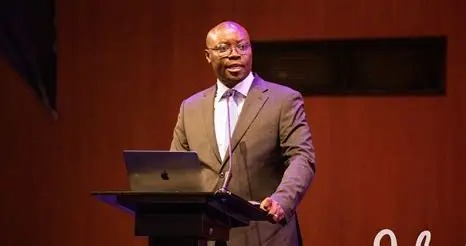
Finance Minister Dr Cassiel Ato Forson says Ghana can generate more sustainable revenue through better tax policies, stronger compliance, and efficient administration rather than imposing higher taxes on citizens and businesses.
Presenting the 2026 Mid-Year Budget Review in Parliament on Thursday, July 23, Dr. Forson argued that the government's recent tax reforms demonstrate that increasing tax rates is not the only way to improve domestic revenue mobilisation.
"The lesson here is simple. Better policy, stronger compliance, and smarter administration will always deliver more sustainable revenue than higher taxes," he stated.
According to the Finance Minister, the government's approach has focused on modernising Ghana's tax system to restore investor confidence, revive private enterprise, provide relief to households and businesses, and increase domestic revenue without introducing additional tax burdens.
As part of the reforms, he noted that the government abolished what it described as "nuisance taxes," including the Electronic Transfer Levy (E-Levy), Betting Tax, COVID-19 Health Recovery Levy, Emissions Tax and VAT on motor insurance.
Dr Forson also highlighted comprehensive Value Added Tax (VAT) reforms, describing them as the first major overhaul of the system since 2015.
He said the reforms have removed distortions in the tax regime, improved efficiency, strengthened compliance and left businesses with more working capital to invest, expand operations and create jobs.
On customs administration, the Finance Minister said the introduction of artificial intelligence-powered systems has significantly improved compliance, reduced leakages and enhanced revenue collection.
"Since the introduction of the AI-powered customs reforms, monthly customs revenue has increased by approximately 17%, reflecting stronger compliance, more effective enforcement and significantly reduced leakages," he said.
Dr Forson further revealed that the government has amended the management of the Tax Refund Account to prevent its misuse and ensure resources are used solely for legitimate tax refunds.
Despite scrapping several taxes and introducing no new tax measures, the Finance Minister said non-oil tax revenue rose from 12.6 per cent of GDP in 2024 to 13.1 per cent of GDP in 2025.
"In simple terms, the government collected more taxes in 2025 even after abolishing the nuisance taxes, including the E-Levy," he told Parliament.
He maintained that the results validate the government's strategy of prioritising policy reforms, improved compliance and smarter tax administration over increasing tax rates.
Latest Stories
-
Ghana lacks sufficient power generation redundancy – Energy Minister
2 minutes -
CPA assures consumers of safety of registered sanitary towels on the Ghanaian market after complaints
14 minutes -
‘They all point decisively to guilt’ – AG urges court to reject Adu Boahene’s no-case submission
23 minutes -
Documents falsified to evade tax on Abramovich’s wealth, BBC finds
33 minutes -
Today’s front pages: Monday, October 12, 2026
40 minutes -
BoG proposes new rules to ensure banks can always pay customers when they need their Money
2 hours -
Hotline Documentary: ‘Silent Football’ to air on JoyPrime and JoyNews today
2 hours -
NDPC examines how evidence shapes Ghana’s development planning and policy decisions
2 hours -
Education Ministry calls urgent talks to break GAUA strike deadlock
2 hours -
NCCE engages women in North East Gonja on rule of law, anti-corruption
3 hours -
NDPC reviews 2004 planning guidelines to reflect changes in decentralised system
3 hours -
Trade Ministry commends Prisons Service for using art to drive inmate rehabilitation
3 hours -
Books, brushes and second chances: Dr Abena Asomaning launches three titles to support prison outreach
3 hours -
Treasury bill auction oversubscribed by 53.5% as yields fall across maturities
3 hours -
NPP warns aspirants premature campaigning could jeopardise eligibility for primaries
3 hours